
That nagging backache you feel after a day at your desk? It’s not just a sign of a hard day’s work. It’s a signal your body is sending you, and we’re here to help you listen.
Here in our clinics, we see it every day. Office workers, lab technicians, construction folks—heck, even other healthcare providers—they come in thinking that pain is just part of the job description. We’re here to tell you, with all the confidence in the world, that it’s not.
That persistent shoulder ache from reaching for a tool, the twinge in your lower back when you stand up—these aren't random. They’re predictable signs that your work environment is putting unnecessary strain on your body. And we know how to fix them.
The Slow Burn of Workplace Strain
Most injuries we treat don't come from a single, dramatic event. They’re the result of a slow burn—the accumulation of small, repetitive movements and postures over months or even years.
It’s easy to dismiss these minor aches, but they are early warnings. The real culprits are often hiding in plain sight:
- Your Workspace: The height of your chair, the position of your monitor, the layout of your tools. These either support you or work against you, all day long.
- Your Habits: How you sit, how often you get up, the way you twist to grab something. These micro-movements add up to major strain.
- A Lack of Awareness: Most people don't notice how fatigue tanks their posture or how they compensate for a poorly arranged desk. This is where the trouble really starts.
Below is a quick-glance table breaking down common physical risks we see and the simple, effective physical therapy and ergonomic solutions to counter them.
Common Workplace Risks and Proactive Fixes
| Common Risk | Who's Affected? | A PT's Solution |
|---|---|---|
| Prolonged Sitting | Office workers, call center staff, designers | An ergonomic chair with lumbar support, setting timers to stand every 30-60 minutes, and performing simple desk stretches for the hips and spine. This is a non-negotiable. |
| Repetitive Reaching | Warehouse staff, retail employees, administrative assistants | Reorganizing the workspace to keep frequently used items within arm's reach. We often recommend a "work zone" analysis to minimize twisting and over-extending. |
| Awkward Neck/Shoulder Posture | Anyone using a laptop or non-adjustable monitor | A separate monitor, keyboard, and mouse. The top of the screen should be at eye level to keep your neck in a neutral position. No excuses! |
| Static Standing | Retail cashiers, assembly line workers, lab techs | Anti-fatigue mats are a must. We also teach "active standing"—shifting weight, doing calf raises, and taking short walking breaks to improve circulation. |
These are just a few examples, but they illustrate a key point: small changes in your environment and habits can prevent significant pain down the road.
It’s not just about posture, either. Think about the physical environment. Simple hazards like a cluttered walkway or a poorly lit stairwell are major contributors to injury. According to the National Safety Council, there were millions of nonfatal workplace safety incidents in the U.S. recently, with slips, trips, and falls being a primary driver. You can review more workplace safety statistics to see just how common these preventable problems are.
The biggest shift we see in our patients is when they stop reacting to pain and start proactively designing a safer work life. That’s when they take back control, and we love to see it.
This guide is designed to give you that control. We’ll show you how to see your workspace through our eyes—the eyes of a physical therapist—and make simple changes that yield huge results.
How to Spot Risks in Your Own Workspace
Let's teach you to see your workspace the way we do—through the eyes of a physical therapist. This isn't about a formal audit with a clipboard. It’s about developing an intuition for what’s causing that nagging daily strain.
It’s about becoming your body's best advocate.
Most people don’t connect the crick in their neck at 3 PM with how their monitor is positioned, but that’s exactly the connection we need to help you find. The first step is simply to start paying attention to your body during the workday.
Think about your small, repeated movements. Are you constantly twisting to grab your phone? Do you spend hours looking down at a laptop, forcing your neck into an unnatural forward bend? These subtle, repetitive motions are often the real culprits behind persistent pain.
Finding Your Personal Pain Points
Let's get practical. At the end of the day, ask yourself a few key questions:
- Where do I feel tight or sore right now? Is it your lower back, your neck, your wrists? Be specific.
- What was the most physically strenuous part of my day? Was it typing that long report, or was it sitting through three back-to-back meetings?
- When did I first notice the discomfort? Did it build slowly, or did it pop up after lunch?
Connecting your symptoms to your actions is the most powerful skill you can learn. We had a client, a programmer, who came to us with severe wrist pain. It turned out the angle of his keyboard forced his wrists into a stressful, extended position for eight hours a day.
A simple keyboard tray and some targeted advice was all it took to relieve months of pain.
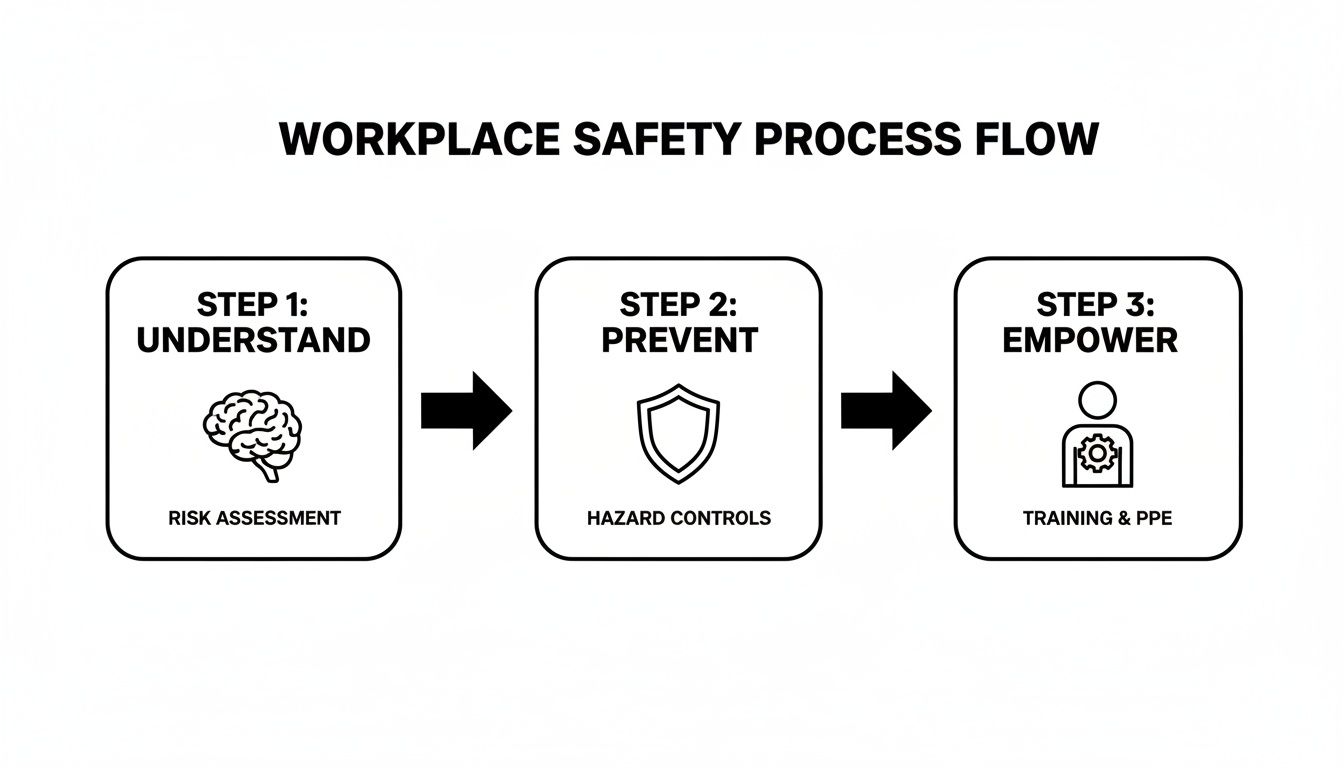
As you can see, it all starts with understanding the risks. From there, you can move to active prevention and empower yourself with the right training and knowledge.
From Subtle Signs to Big Problems
It's easy to ignore the small aches. But they are your body's early warning system. Overuse injuries, which make up a huge percentage of workplace issues, don't happen overnight. They build up from micro-stresses that go unaddressed day after day.
We often tell our patients, "The best posture is your next posture." Your body craves variety. The real danger isn't just sitting or standing; it's staying in any one position for too long.
Think about a teacher we worked with who had chronic low back pain. Her issue wasn't just standing all day. It was standing in one spot while leaning over her students' desks to help them.
By learning to move around the classroom more and using a stool for one-on-one help, she found significant relief. It wasn't a huge change, but it was the right one.
Becoming your own risk assessor means you can catch these patterns early. Once you identify a task that causes strain, you can start looking for ways to modify it. This proactive approach is the heart of effective injury prevention in the workplace.
Mastering Ergonomics for Any Work Setup
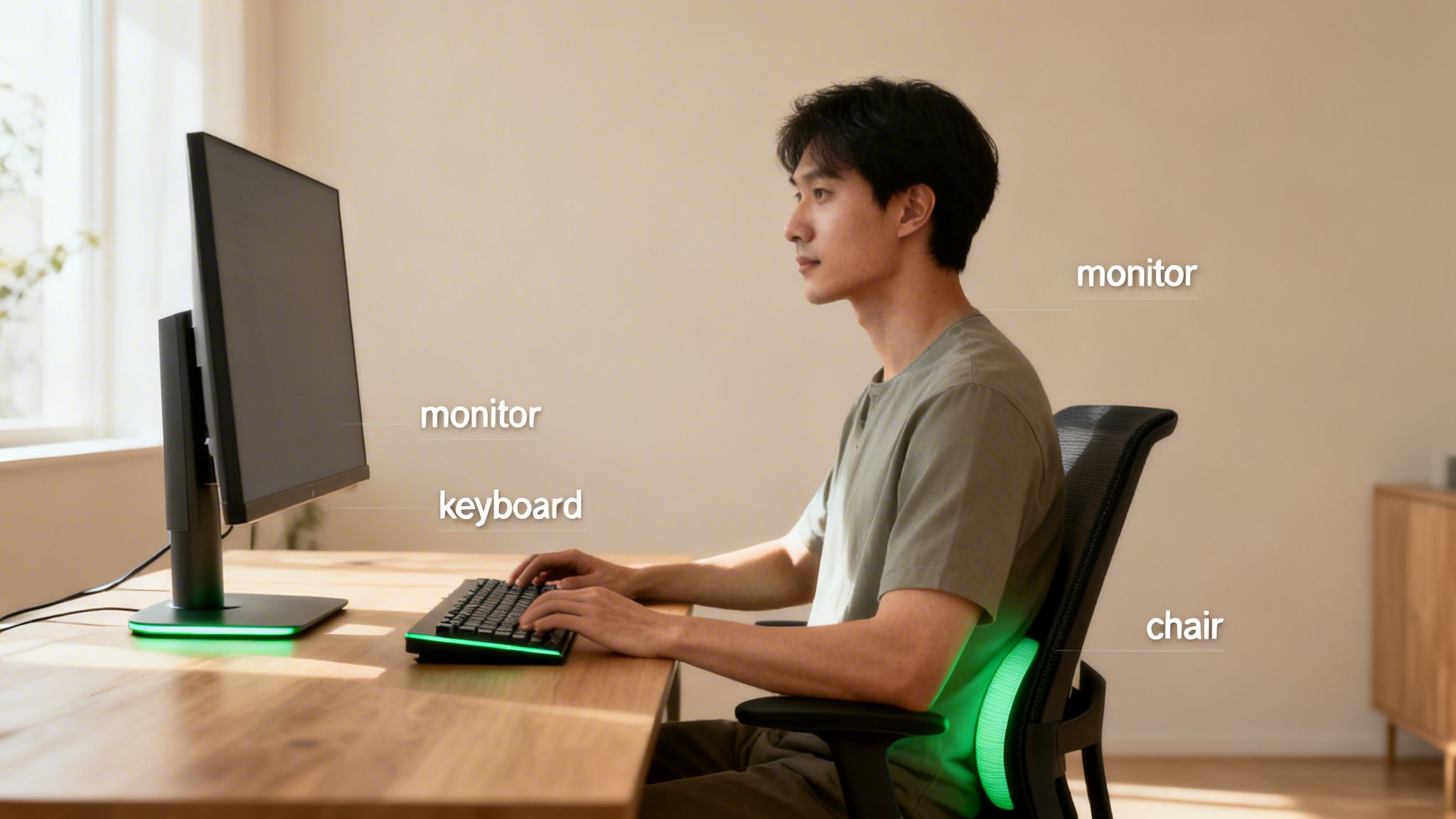
Most people hear ergonomics and immediately think about buying a fancy, expensive chair. But that’s missing the point entirely.
From our perspective in the clinic, ergonomics is simply about making your work environment fit you—not forcing your body to fit your environment. Whether you're in a corner office or working from the kitchen table, the principles for preventing pain are the same. You can often achieve a perfect setup with things you already have.
Ergonomics for the Desk Worker
For anyone who spends their days at a computer, nagging pain in the neck, shoulders, and wrists is a common complaint. In nearly every case, it’s the direct result of a workstation forcing the body into awkward postures for hours at a time.
We can fix that. These aren’t just casual suggestions; they are the non-negotiable rules we give our patients to find immediate relief and build a foundation for long-term injury prevention in the workplace.
- Monitor at Eye Level: Your screen needs to be directly in front of you. The top of the monitor should be at or just below your eye level. This one adjustment stops you from craning your neck down—the main cause of what we call "tech neck." A stack of books or a cheap monitor stand works wonders.
- Elbows at 90 Degrees: Adjust your chair so your elbows naturally rest at a 90-degree angle when your hands are on the keyboard. This ensures your shoulders stay relaxed and aren’t hunched up toward your ears.
- Support Your Lower Back: A good chair has lumbar support that fits into the natural curve of your low back. If yours doesn't, just roll up a towel or grab a small cushion. It’s a simple trick that makes a huge difference in preventing back pain.
- Feet Flat on the Floor: Your knees should also be at about a 90-degree angle with your feet planted firmly on the ground. If your feet are dangling, use a footrest or even a sturdy box.
It’s the small, repetitive tasks like typing that lead to big problems when the setup is wrong. In fact, musculoskeletal disorders from these types of micro-stresses account for roughly 28% of all serious work-related injuries. That number shows just how debilitating these everyday activities can become without proper ergonomics.
Ergonomics for Physically Demanding Roles
Ergonomics is not just for office jobs. If your role is physically active—think warehouse staff, construction workers, or nurses—it’s all about moving your body efficiently to minimize strain.
The core principle is leverage, not brute force. Your body is a system of levers, and using it correctly means you can get the job done with less strain and a much lower risk of injury.
When lifting, the power must come from your legs, not your back. Bend at your hips and knees, keep the object close to your body, and straighten your legs to lift. Never twist while holding a heavy load. Instead, pivot your feet to turn your entire body.
Pacing is also a form of ergonomics. Rushing through physically demanding tasks is a recipe for disaster, especially when fatigue sets in. Fatigue destroys good form, and poor form is how injuries happen.
For a deeper look at how these principles apply to any job, you can explore our professional workplace ergonomics program.
Building Movement Into Your Workday
The human body was designed to move. It was not, however, designed to sit in one position for eight hours straight. Here in the clinic, we see the consequences of that modern reality every single day.
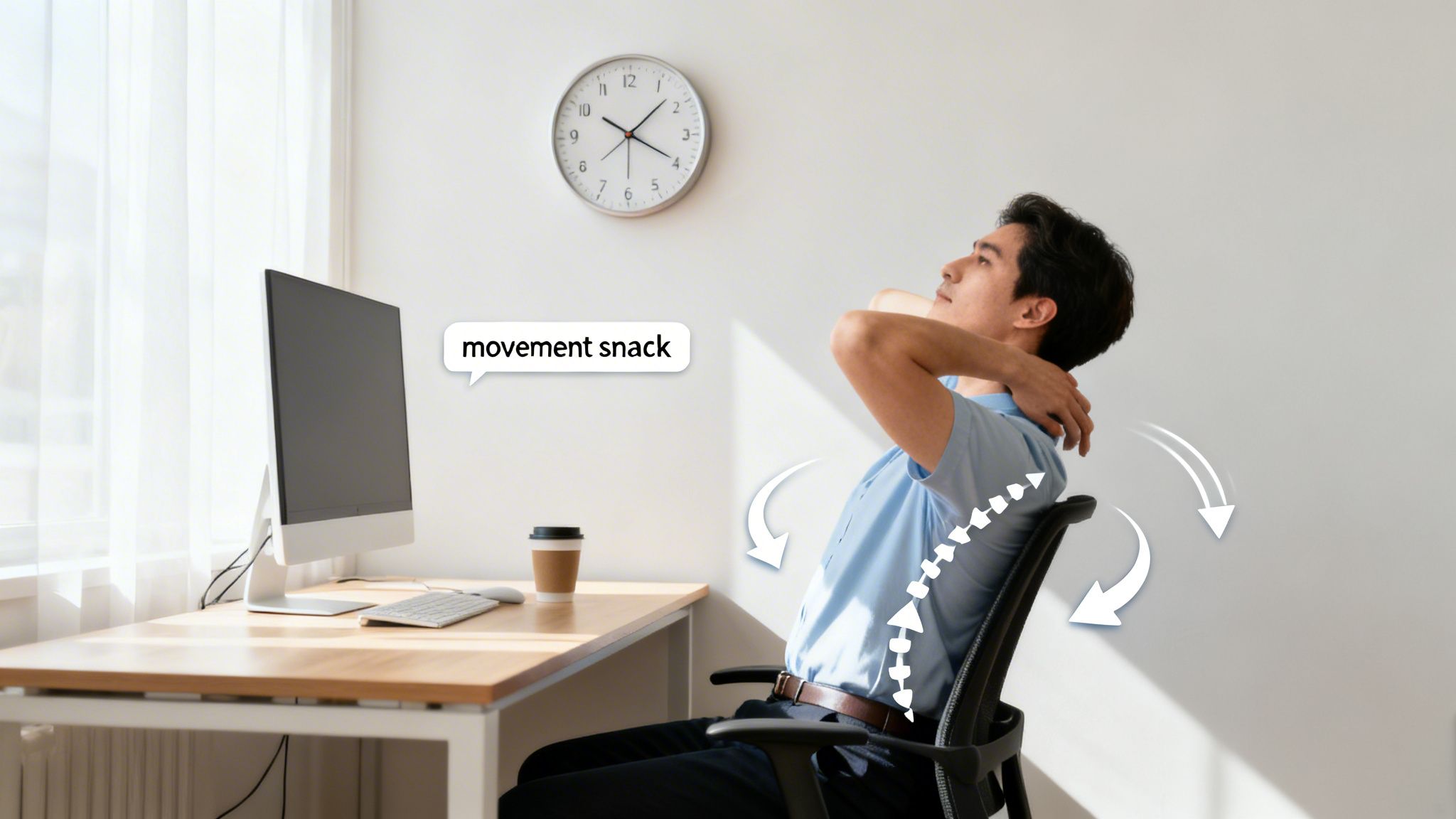
The old "tough it out" mindset is the enemy of long-term health. It's time we build a better habit, and that habit is simple: movement. We're not talking about a grueling workout, but small, consistent “movement snacks” built right into your workday.
Why Movement Snacks Matter
Think about how you feel after sitting through a long meeting or grinding on a project. You’re stiff, your energy is tanking, and your posture has probably collapsed forward. That’s your body crying out for a change.
These small, intentional breaks are incredibly effective. A simple 30-second stretch can reset your posture, ease muscle stiffness, and boost your energy better than another cup of coffee. The real goal is to make these movements so routine you don’t even have to think about them.
To support your spine all day, incorporating regular exercises for core stability also makes a huge difference. A strong, stable core is the foundation for all good movement and a key piece of preventing those nagging workplace aches and pains.
Simple Moves to Start Today
You don't need a gym or any special equipment for this. These are moves you can do right at your desk, on a call, or during a quick mental break.
- The Chin Tuck: Sit up tall and gently pull your head straight back, as if you're trying to make a double chin. You should feel a light stretch in the back of your neck. Hold for 5 seconds and repeat 5 times. This is the perfect antidote to "tech neck."
- Shoulder Blade Squeezes: Whether you’re sitting or standing, squeeze your shoulder blades together like you're trying to hold a pencil between them. This is great for opening up your chest and fighting that all-too-common slouch. Hold for 5 seconds, then relax.
- The Seated Cat-Cow: Sit on the edge of your chair with your feet flat. As you inhale, arch your back and look up toward the ceiling (cow pose). As you exhale, round your spine and drop your chin to your chest (cat pose). This is fantastic for your spinal mobility.
We always tell our patients, "The best posture is your next posture." The real key is variety. Don't chase perfect posture; aim for frequent movement.
Your workday doesn't have to be a source of physical strain. By building these small habits, you can turn it into an opportunity for gentle, consistent activity. And if you're looking for more ways to improve your body's resilience, our guide on the best balance exercises for seniors has tips that can benefit anyone looking to enhance their stability.
Remember, small, consistent efforts are far more powerful for injury prevention in the workplace than occasional, intense workouts.
Creating a Culture of Proactive Wellness
An effective injury prevention program isn't just a policy you stick in a handbook. It's a mindset. It's a shared value that has to take root with everyone, from the newest hire on the floor to the C-suite.
This is about building an environment where people’s health and well-being are genuinely prioritized, not just paid lip service.
For individuals, that means learning to listen to your body. That nagging ache in your shoulder? Don't just push through it. It's an early warning sign. Addressing these small discomforts before they spiral into something chronic is the single smartest thing you can do for your long-term health.
The Power of Speaking Up
For managers and leaders, this is where you can make the biggest impact. Fostering a culture where your team feels safe to report discomfort isn't just being nice—it’s a game-changing business strategy.
When an employee can say, "My wrist starts to ache after a few hours of work," without worrying they'll be seen as a complainer, you've opened the door for simple, early solutions.
Most of the time, an early fix is incredibly straightforward.
- Early Reporting: Encourages your team to flag minor issues before they become major injuries that lead to lost time.
- Simple Solutions: A different mouse, a monitor stand, or even a quick chat about better posture can often solve the problem entirely.
- Reduced Downtime: You prevent the need for extended leave, frustrating workers' compensation claims, and lost productivity.
This proactive culture completely flips the script—you stop reacting to injuries and start actively preventing them. It’s a collective responsibility that protects both your employees and your bottom line.
A proactive approach means you solve tomorrow's big problems today, when they are still small. An early ergonomic fix can prevent months of pain, frustration, and lost productivity down the road.
From Reactive to Proactive
Think of it like this: a small spark is much easier to put out than a full-blown fire. When a team member flags early signs of physical strain, it’s a golden opportunity to make a small adjustment that costs next to nothing in time or money.
But if you ignore that spark? It can easily grow into an injury that sidelines a valuable employee for weeks, or even months.
Implementing a full range of workplace health and safety tips is a critical piece of the puzzle here. It sends a clear message that you’re committed to your team's well-being beyond just basic compliance.
Ultimately, real injury prevention in the workplace comes down to buy-in from everyone. When employees know their role is to listen to their bodies, and managers know their role is to create a supportive environment, the entire workplace becomes safer and healthier. That’s a win-win that pays off in both human and financial terms.
When to Partner With a Physical Therapist
Making smart adjustments to your workspace and building more movement into your day are fantastic first steps. We love seeing patients take that kind of initiative.
But sometimes, even the best self-care strategies aren’t enough. You hit a wall, and you need an expert eye to figure out what’s really going on under the surface. Knowing when to call in a professional can be the difference between a nagging annoyance and a chronic, work-limiting problem.
Signs It’s Time for a Deeper Look
So, how do you know when that nagging ache has crossed the line? In the clinic, we tell our patients to watch for a few tell-tale signs. If any of these sound familiar, your body is sending a clear signal that it needs more than just a quick fix.
- Pain That Lingers or Gets Worse: If that ache in your back, neck, or wrists isn't getting better after a week or two of trying the basics, it’s time for an evaluation. Pain that sticks around has a cause.
- The Same Injury Keeps Coming Back: Is the same shoulder or knee pain flaring up every few months? This pattern almost always points to an underlying issue with your movement mechanics or workstation setup that needs to be properly addressed.
- Numbness, Tingling, or Radiating Pain: Sensations like pins and needles or pain that shoots down your arm or leg can indicate nerve irritation. Don’t wait on this one—get it checked out.
Ignoring these symptoms is like driving with the check engine light flashing. Sooner or later, a small problem can turn into a major breakdown. Partnering with a physical therapist is a proactive move to get to the root of the issue.
Think of a physical therapist as a movement detective. We’re trained to analyze how you move, find the source of the strain, and build a plan to fix it for good. It’s not just about treating pain; it’s about optimizing your body for the demands of your job.
What to Expect During an Assessment
A professional assessment for injury prevention in the workplace goes way beyond just telling you to “sit up straight.” We dig much deeper.
We’ll watch you move, talk about the specific demands of your job, and assess your strength, flexibility, and unique movement patterns. We want to understand your body and your work.
From there, we create a personalized plan that might include:
- Manual Therapy: Hands-on techniques to release tight muscles, calm irritated tissues, and improve joint mobility.
- Targeted Exercises: Specific movements designed to strengthen weak areas, correct imbalances, and build stability where you need it most.
- Precise Ergonomic Advice: Custom recommendations for your chair, desk, and monitor setup based on your unique body and movement profile.
This isn’t just about getting you out of pain after an injury. It’s about building resilience so you can perform your job effectively and without discomfort, day in and day out. Investing in your body's health is one of the smartest career moves you can make.
For a closer look at how we diagnose and treat these types of issues, check out our guide on orthopedic physical therapy.
Your Questions on Workplace Injuries Answered
In the clinic, we hear a lot of the same questions from patients trying to navigate workplace aches and pains. We believe that good information is the first step toward feeling better, so we've pulled a few of the most common scenarios we see every day.
These are straightforward answers from our physical therapy team, based on years of helping people just like you.
My Company Won't Buy Me an Ergonomic Chair. What Can I Do?
This is a common one, but don't feel stuck. You have more control over your setup than you might think, and it doesn't require expensive gear to make a huge difference.
You can create a surprisingly supportive setup with items you already have. A rolled-up towel or a small cushion placed in the curve of your low back provides instant lumbar support. If your feet don't touch the floor, grab a stack of old textbooks or a small box to use as a footrest. The goal is to get your knees to a comfortable 90-degree angle.
The single most effective thing you can do is break up long periods of sitting. Set a timer to get up and walk around for a minute or two every 30-60 minutes. These micro-breaks are free, and they work wonders.
Are Standing Desks Actually Better for You?
They can be a great tool, but they aren't a magic bullet. The real win isn't just standing all day—it's varying your posture.
We've treated plenty of patients who swapped one problem for another. Standing in one position for hours can lead to its own issues, like foot pain, tired legs, and low back strain. A better approach is to alternate between sitting and standing throughout your day.
If you’re using a standing desk, get the height right. Your elbows should rest at a relaxed 90-degree angle. We also highly recommend wearing supportive shoes and using a good anti-fatigue mat.
What's the Most Important Tip for a Physically Demanding Job?
If we had to pick just one thing, it’s this: master proper body mechanics, especially when it comes to lifting.
Always, always lift with your legs—not your back. That means bending at your knees and hips while keeping your back straight. Hold the object as close to your body as you can. And crucially, never twist your spine while holding a load. Instead, pivot your feet to turn your entire body.
It also pays to treat your body like an athlete's. A few minutes of dynamic stretching, like leg swings and arm circles, before a shift can warm up your muscles and dramatically reduce your risk of a strain or sprain.
Can I See a PT Even if I'm Not Currently Injured?
Absolutely. In fact, it’s one of the smartest things you can do for your long-term health. Think of a physical therapist as a movement expert who can give your body a "tune-up" to prevent problems before they ever start.
We can perform an assessment to spot subtle imbalances or risky movement patterns you'd never notice on your own. From there, we build a personalized program to improve your resilience and optimize your body for the unique demands of your job. It's a proactive investment in staying pain-free and performing at your best.
At Joint Ventures Physical Therapy, we believe proactive care is the best care. If you're dealing with a nagging ache or want to prevent one from starting, our team is here to help you build a personalized plan that fits your life and work. Schedule an appointment today and let’s get you moving better.