
You’re doing the math in your head.
If the knee pain settles down by next week, maybe you can keep the race on the calendar. If the shoulder loosens up after a few days off, maybe you can get back to lifting. If the dizziness is “just stress,” maybe you can push through and hope it fades.
That’s usually the moment people start looking for sports therapy and rehab. Not when things are catastrophic, but when the body stops cooperating with the life they want to live.
That Moment When Your Body Says No
It often starts with something small.
A runner feels a sharp pull on the outside of the knee halfway through a long run. A tennis player notices their serve has lost pop because the shoulder doesn’t trust overhead motion anymore. A new parent gets back into strength training and finds that core control, balance, and pressure management aren’t where they used to be.
The frustrating part isn’t only pain. It’s uncertainty.
You don’t just want to know what hurts. You want to know whether it’s safe to keep moving, whether you’re making it worse, and how long it’ll take to get back to your normal training without second-guessing every step or rep.
That’s where sports therapy and rehab matter. Done well, it’s not passive care and it’s not a generic list of exercises pulled from a handout. It’s a guided process built around your specific goal.
Maybe your goal is finishing a marathon block. Maybe it’s returning to a cutting sport after surgery. Maybe it’s getting through a workday, then picking up your kids and still having enough in the tank for the gym.
You don’t need a plan that only quiets symptoms. You need a plan that explains the problem, loads the right tissues, and gets you back to confident movement.
Good rehab gives you structure when everything feels vague. It tells you what to stop, what to keep doing, what to build first, and what milestones matter.
That’s reassuring for a reason. Recovery usually improves when the plan gets clearer.
What Exactly Is Sports Therapy and Rehabilitation
Sports therapy and rehab is the branch of physical rehabilitation focused on active people and the demands they place on their bodies. That includes competitive athletes, but it also includes recreational runners, lifters, court-sport players, cyclists, dancers, active adults, and anyone who wants to move at a higher level than “getting through the day.”
More than fixing pain
The simplest way to understand sports rehab is this.
A general musculoskeletal exam asks, “What’s painful?” A sports rehab exam also asks, “What does your sport require, and what’s missing between where you are now and where you need to be?”
That difference changes everything.
If your knee hurts while going downstairs, that matters. If your sport asks you to decelerate, cut, land on one leg, and re-accelerate under fatigue, that matters too. Sports rehab has to account for both.
A useful analogy is a performance mechanic. A good mechanic doesn’t only replace the worn part. They look at the whole system, identify why that part failed, and make changes so the same breakdown is less likely to happen again.
That’s what strong sports therapy and rehab should do for the human body.
A long clinical tradition
This isn’t a new idea dressed up in modern language. Sports therapy and rehabilitation trace back to ancient Greece, where physicians such as Herodicus and Galen used massage and therapeutic exercise to care for athletes and gladiators. In the United States, formalization accelerated after World War I with the first physical therapy department established at Walter Reed Hospital in 1918 (history of sports therapy and rehab).
That history matters because it shows the field was built around one central principle from the start. Movement can be both treatment and preparation.
What a patient should expect
At a practical level, sports rehab usually includes several layers of care:
- Diagnosis through movement: Not just where it hurts, but how you squat, run, land, rotate, balance, and transfer load.
- Tissue recovery: Calming down irritated structures, restoring mobility, and improving muscle activation where needed.
- Strength progression: Building capacity in the muscles and tendons that need to tolerate your sport.
- Skill-specific return: Rehearsing the exact demands of your activity, from sprinting to overhead work to rotational power.
- Resilience planning: Addressing the training habits, mechanics, and load errors that likely contributed to the problem.
Clinical reality: The athlete who “feels fine” at rest often isn’t ready for sport. Readiness shows up under load, speed, fatigue, and complexity.
That’s why a motivated patient usually does best with a rehab process that doesn’t stop when the pain drops. It keeps going until the body can perform again.
How Sports Rehab Differs From General Physical Therapy
A lot of patients ask a fair question. Isn’t this all just physical therapy?
Yes and no.
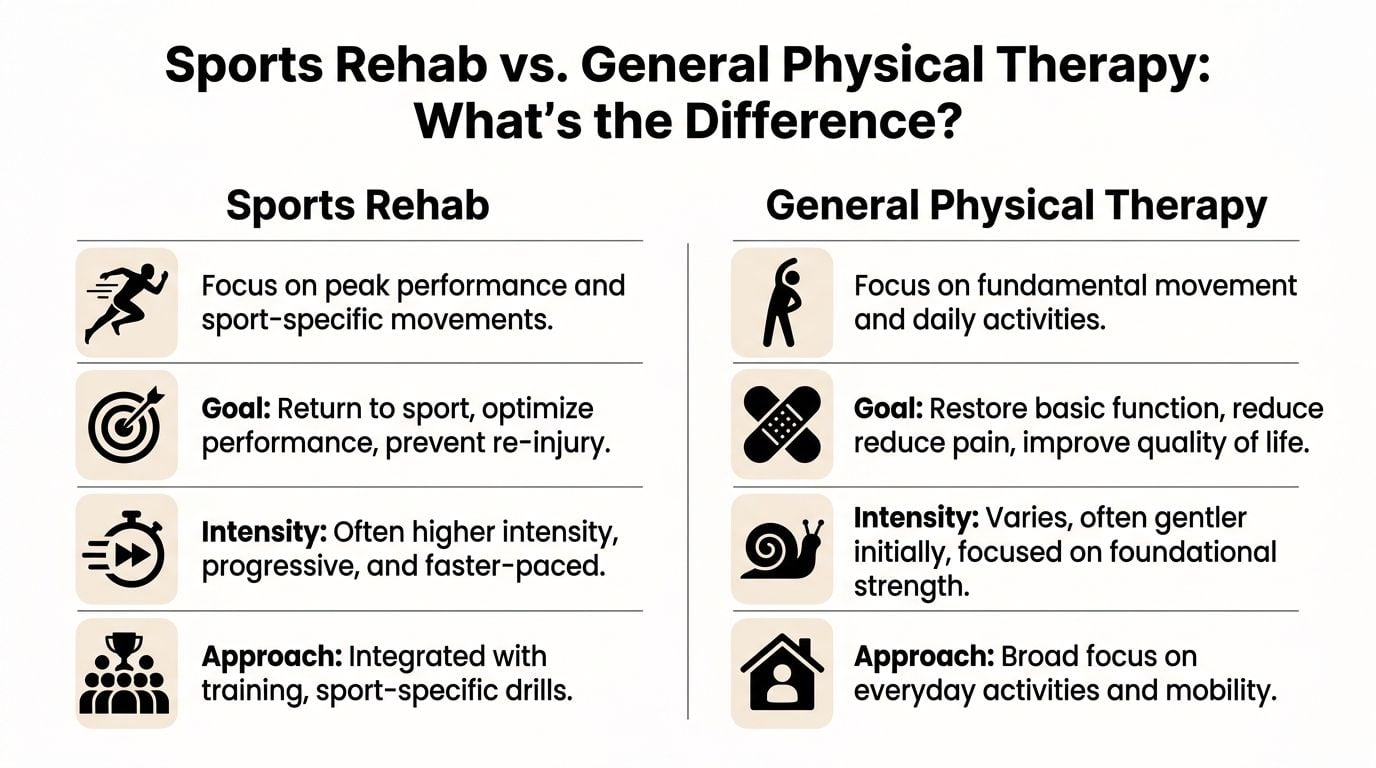
Sports rehab is part of the broader PT world, but the endpoint is different. General PT often aims to restore comfortable daily function. Sports rehab aims to restore high-demand performance and reduce the chance that the same issue shows up again when training intensity rises.
Physical therapy is a large profession with more than 1.6 million registered PTs worldwide, and the PM&R specialty was formalized in 1949 to blend exercise rehabilitation with sports medicine. That specialization became especially important as professional teams adopted sports therapy and saw documented reductions in injury rates and faster recovery times (history of PM&R and sports rehab).
The biggest difference is the finish line
If you sprain an ankle and your only goal is walking comfortably to work, the rehab plan can be relatively straightforward.
If you sprain an ankle and your goal is returning to soccer, basketball, trail running, or Olympic lifting, the finish line moves much farther away. You need much more than pain reduction.
You need force absorption, single-leg control, rotational stability, speed tolerance, and confidence.
Side-by-side comparison
| Category | Sports rehab | General physical therapy |
|---|---|---|
| Primary goal | Return to sport, training, or high-level activity | Restore basic function and reduce pain |
| Testing | Performance-based and activity-specific | Function-based for daily living |
| Exercise design | Progressive loading tied to sport demands | Foundational strength and mobility |
| Pacing | Often more aggressive when appropriate | Often more conservative early on |
| Return criteria | Based on movement quality and objective testing | Often based on symptom improvement and daily function |
| Mindset | Build a resilient athlete | Restore a comfortable baseline |
Why specialization matters for active people
An active patient usually needs someone who can spot the gap between being “better” and being ready.
That gap is where many setbacks happen. Pain fades, activity resumes too fast, mechanics fall apart under fatigue, and the same tissue gets overloaded again.
Sports rehab clinicians are trained to ask better return questions:
- Can you produce force?
- Can you absorb force?
- Can you repeat it?
- Can you do it on the involved side without compensation?
- Can you do it at the speed your sport requires?
If you’re comparing options, it helps to understand the broader orthopedic side of the profession too. This overview of orthopedic physical therapy is a useful starting point for seeing where sports-focused care fits.
The wrong rehab plan isn’t always bad care. Sometimes it’s care aimed at a different finish line than yours.
That distinction matters when the goal is not just feeling okay, but performing well.
Common Conditions We Treat and Who Can Benefit
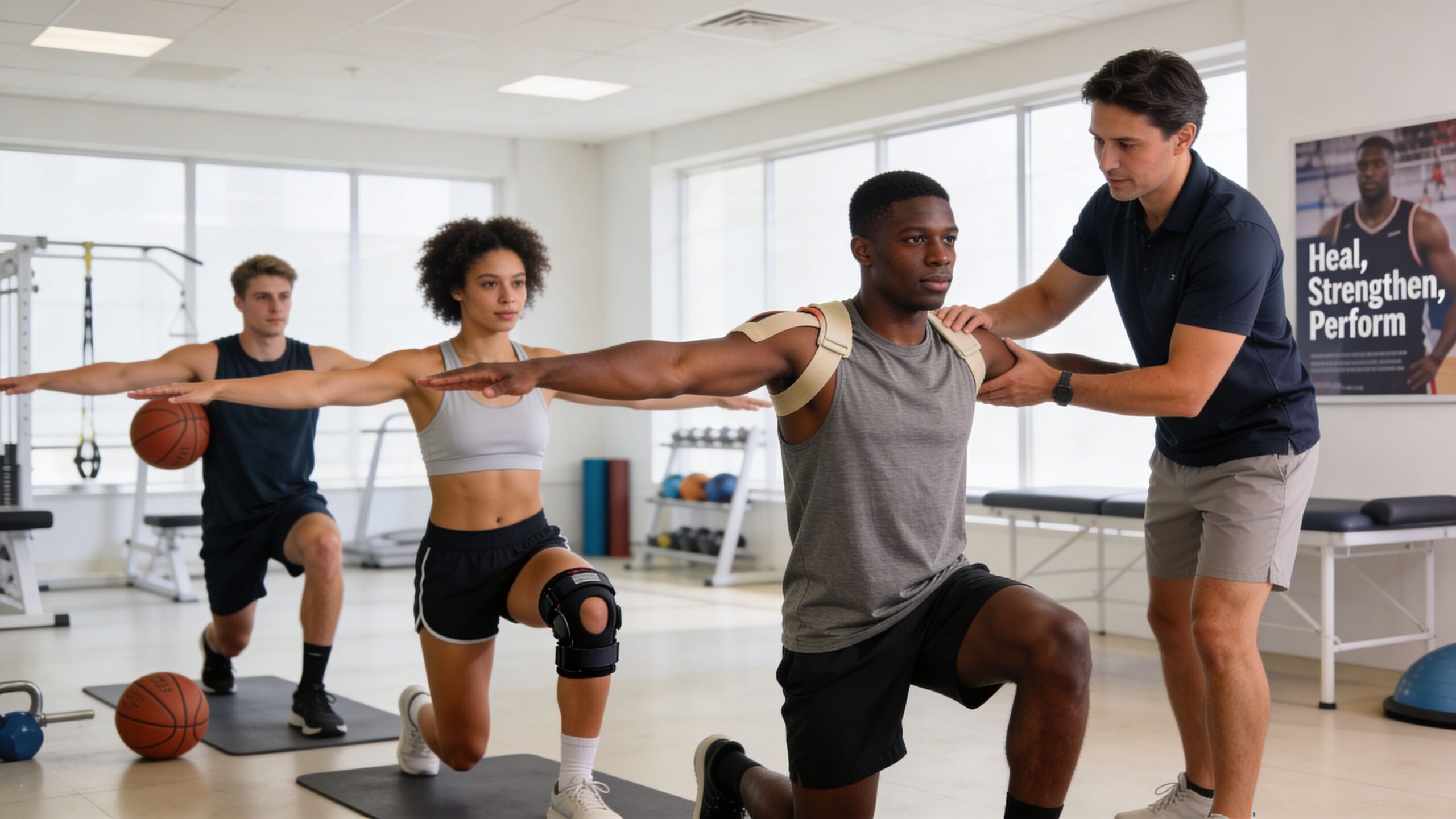
Sports therapy and rehab isn’t only for varsity athletes or people coming off surgery. It’s for anyone whose activity level matters to them.
That includes the obvious injuries, but it also includes people who feel stuck, deconditioned, or just not quite themselves in motion.
The classic sports injuries
Some conditions show up again and again because certain sports load certain tissues in predictable ways.
- ACL rehab and post-surgical knee recovery: These patients need staged progression, strength rebuilding, landing mechanics, cutting preparation, and objective return-to-play decisions.
- Runner’s knee, Achilles pain, and calf issues: These often respond best when we look beyond the painful spot and assess training volume, stride mechanics, hip strength, ankle mobility, and load tolerance.
- Shoulder pain in overhead athletes: Throwers, swimmers, lifters, and racquet-sport athletes usually need more than cuff strengthening. They often need scapular control, thoracic mobility, trunk contribution, and a sane return to overhead volume.
- Ankle sprains: Easy to dismiss, easy to under-rehab, and very capable of lingering if balance, single-leg control, and confidence don’t come back fully.
- Low back pain in active adults: This doesn’t always mean rest. It often means figuring out which movements irritate the back, which loads it tolerates well, and how to rebuild capacity without flaring things up.
Not injured, but not moving well
A lot of people seek sports rehab because they want to prevent the next problem.
That’s smart. Waiting until a tendon is angry or a knee is swollen makes everything harder.
Common examples include:
- Runners training for a new distance
- Lifters whose technique breaks down under heavier loads
- Golfers who want better rotation and less back stiffness
- Court-sport athletes who feel explosive on one side and shaky on the other
- People restarting exercise after a long layoff
For field and court athletes, practical habits outside the clinic matter too. If you play soccer or football recreationally, these essential football injury prevention tips are a helpful complement to a structured rehab or prevention plan.
Life stages matter too
Sports rehab also serves people who don’t always identify as athletes, even though their goals are absolutely performance goals.
Postpartum return to exercise
Returning to running, lifting, or impact after pregnancy isn’t just about “getting cleared.” It’s about pressure management, pelvic floor coordination, trunk strength, and graded return to load.
A well-designed plan helps people rebuild confidence without guessing.
Youth athletes
Young athletes need treatment that respects growth, skill development, and the demands of school sports schedules. They may recover quickly in some ways, but they also benefit from education on training habits, warmups, and recovery.
Active adults
Some patients just want to hike, ski, play pickup basketball, train before work, or keep up with their kids without pain. They still benefit from the same sports rehab thinking. The activity may be different, but the principles are the same.
If your body has to do more than basic daily tasks, you deserve a rehab plan that accounts for more than basic daily tasks.
A good fit for more than one body type
Sports therapy and rehab can also be relevant for patients dealing with dizziness, jaw pain, pelvic floor issues, or movement limitations that affect exercise capacity. The common thread is not the diagnosis alone. It’s the goal of returning to confident, capable movement.
That’s why a cookie-cutter plan usually falls short. The runner, the postpartum patient, the swimmer, and the office worker training for their first triathlon may all need rehab. They won’t need the same roadmap.
Your Toolkit for Recovery Evidence-Based Treatments
No single treatment fixes every injury. Good sports therapy and rehab relies on a toolkit. The clinician picks the right tools for the problem in front of them, then changes those tools as your body adapts.
That’s an important point. The treatment that helps in week one often isn’t the treatment that gets you ready for week eight.
Therapeutic exercise is the foundation
If a rehab plan doesn’t include progressive exercise, it’s incomplete.
Exercise restores strength, tolerance, coordination, and confidence. It teaches tissue to handle load again. It also gives patients something passive care never can. A way to participate directly in their own progress.
That doesn’t mean every exercise should be hard from day one. It means the plan should move in a logical sequence.
You might start with restoring range and muscle activation. Then you progress to strength. Then control. Then power. Then speed and sport-specific patterns.
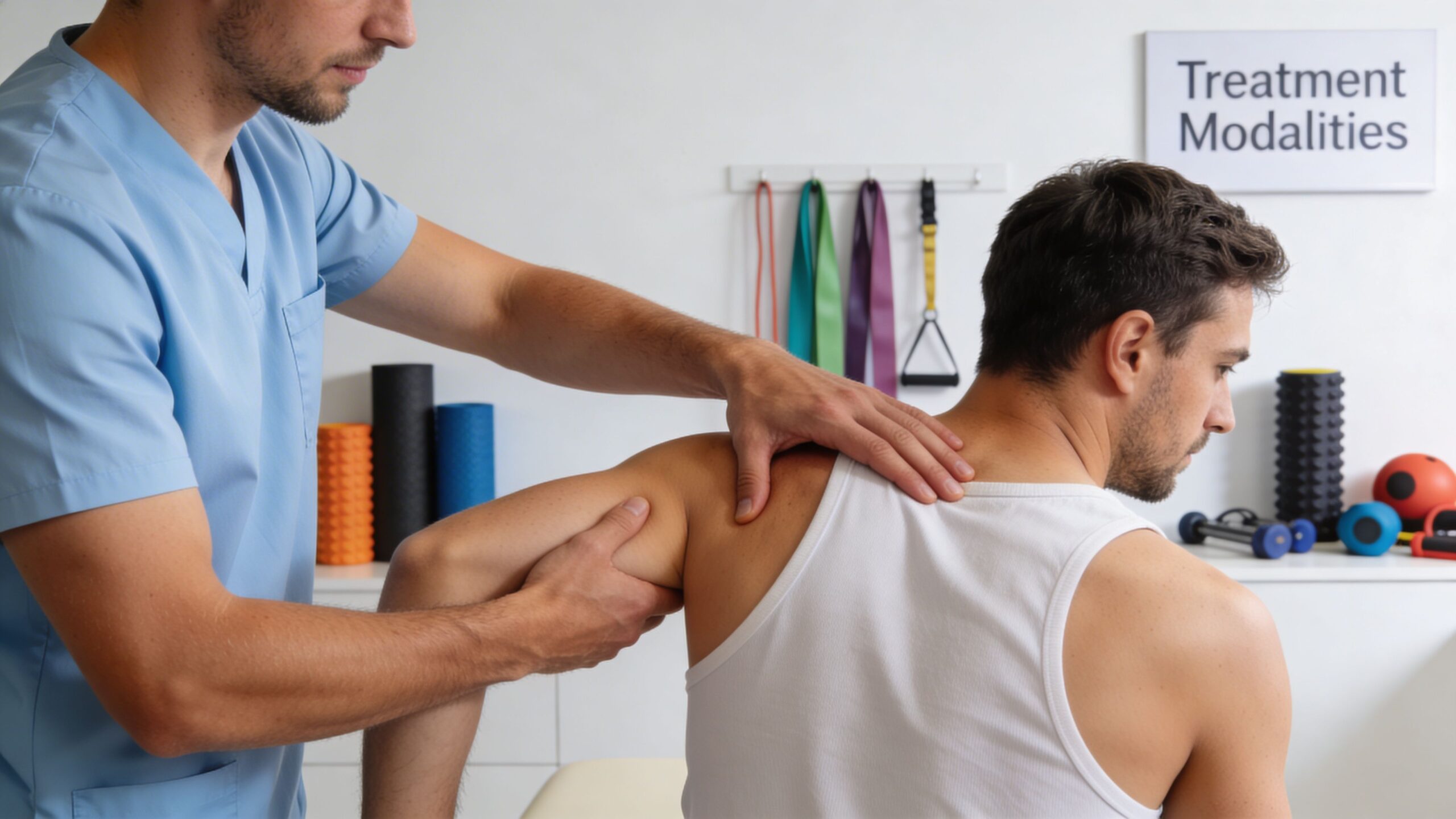
Manual therapy has a role, but it’s not the whole plan
Hands-on care can be useful when the body is guarded, painful, or stiff.
Manual therapy may help reduce threat, improve local mobility, and make movement easier in the short term. Soft tissue work, joint mobilization, and targeted hands-on techniques can create a window where exercise becomes more effective.
But manual therapy works best as a bridge, not as the whole house.
A useful rule: If a treatment feels great for a day but doesn’t improve what you can do, it’s support, not the main event.
Dry needling and targeted symptom modulation
Trigger point dry needling can be helpful for selected patients with muscle-related pain, guarding, or stubborn movement restriction. It isn’t magic, and it isn’t needed for everyone.
Used appropriately, it can reduce local irritability and help a patient tolerate the movement work that drives lasting change.
Blood Flow Restriction training
Blood Flow Restriction, or BFR, lets patients build strength with loads as low as 20 to 30 percent of one-repetition max, and in post-surgical cases such as ACL reconstruction it can accelerate quadriceps strength recovery by up to 50 percent faster than standard rehab while protecting healing tissue (BFR in sports rehab).
That’s why BFR is so useful in the right situation.
When a knee, shoulder, or post-operative limb can’t yet tolerate heavy loading, low-load BFR creates a way to train strength without asking healing tissue to handle more than it should.
BFR isn’t for every patient. It has to be dosed and monitored correctly. But in the right hands, it’s one of the most practical bridges between protection and performance.
Specialized care for specific systems
Some problems need a more specific lens than standard orthopedic rehab.
Gait and running analysis
For runners and walkers, inefficient mechanics can keep feeding the same issue. Looking closely at cadence, stride pattern, loading strategy, and hip or trunk control can uncover why an injury keeps returning. A focused gait analysis can be especially useful when symptoms repeatedly flare during mileage build-up.
Vestibular rehab
If dizziness, imbalance, or motion sensitivity is affecting workouts or everyday movement, vestibular therapy becomes the priority. These plans use graded visual and head-motion exercises, balance training, and habituation work to reduce symptoms and restore confidence.
Pelvic floor therapy
Athletes and active adults with leaking, pressure, pelvic pain, or reduced core control often need pelvic floor rehab, not more random ab exercises. Coordinating breath, trunk pressure, hip function, and pelvic floor response is often the missing piece.
Aquatic therapy
Water can create a safer environment for movement when impact tolerance is low. Patients who can’t yet handle land-based loading often move more comfortably in the pool, then transition back to land as capacity improves.
Recovery tools outside the clinic
Patients also ask about adjuncts like sleep, heat, cold, compression, and sauna use. Those can support recovery, but they shouldn’t replace rehab.
If you’re curious about where sauna fits, this review of sauna benefits for athletes gives useful context. Think of it as a recovery support, not a substitute for tissue loading, strength work, or movement retraining.
One local option for these kinds of services is Joint Ventures Physical Therapy, which offers one-on-one care that includes orthopedic rehab, sports rehab, pelvic floor therapy, vestibular treatment, aquatic therapy, and trigger point dry needling.
The best treatment plan doesn’t use every tool. It uses the right ones in the right order.
The Journey Back to Play What to Expect From Your Care Plan
Patients do better when they know what the process will feel like.
Patients often come in wanting two things at once. Relief now, and a clear path forward. A strong care plan gives both.
The first visit should be specific
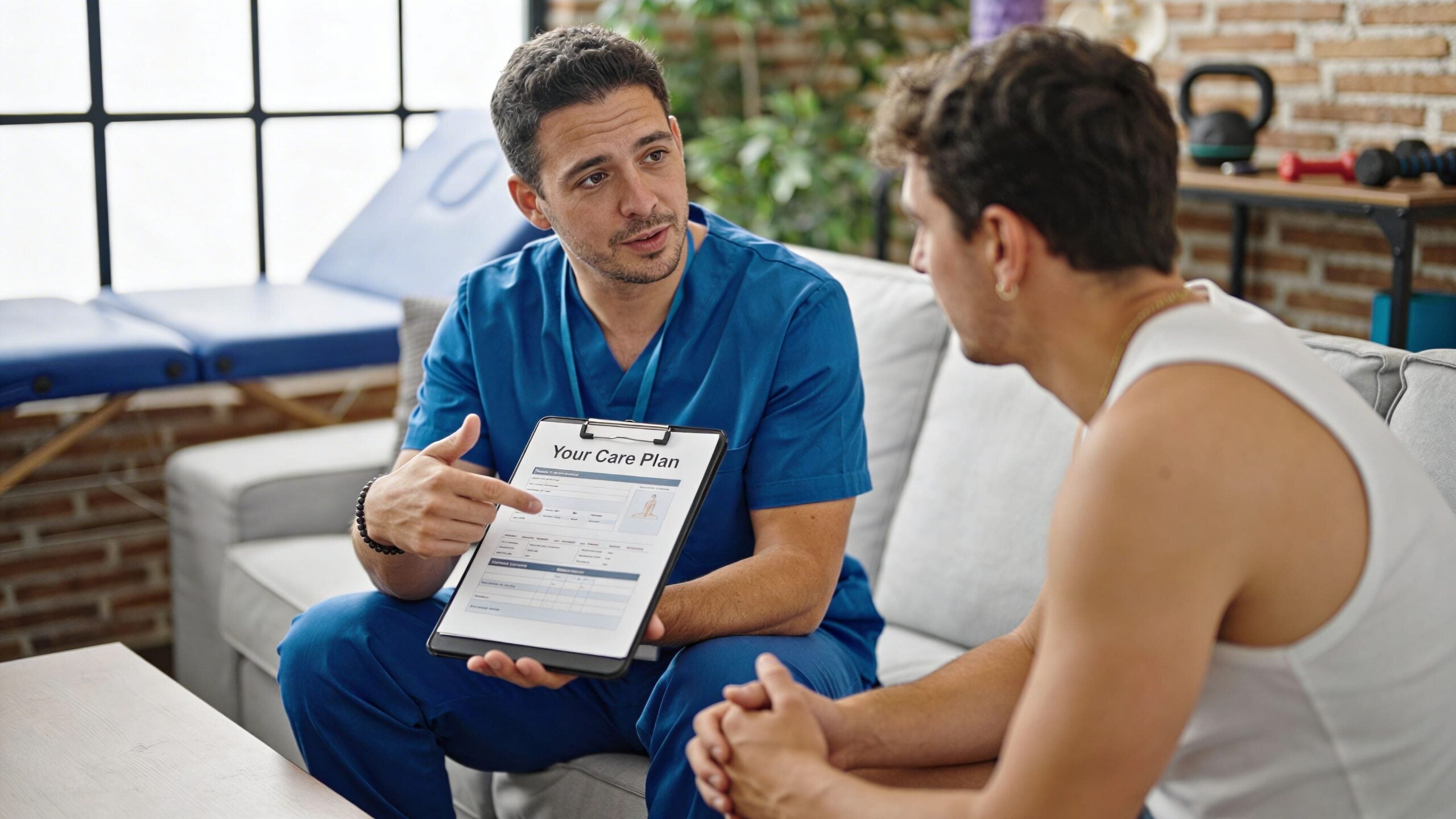
A good evaluation goes beyond “where does it hurt?”
It should cover what happened, what you’ve tried, what activities matter most to you, what movements reproduce symptoms, and what the body is doing well versus poorly. The exam should identify your limiting factors, not just give a diagnosis label.
For one patient, the bottleneck is strength. For another, it’s tendon irritability. For another, it’s fear of loading after surgery. Those plans should not look the same.
Early rehab sets the tone
The first phase usually focuses on calming the problem enough to let progress begin.
That may include mobility work, pain-modifying strategies, activity modification, basic strength, and clear guidance on what you can keep doing. Patients often expect complete rest or immediate hard training. Both can be wrong.
The right amount of load usually sits in the middle.
Progress has to be measured
Progress has to be measured, and expert sports rehab distinguishes itself by focusing on objective metrics.
Expert physical therapists are identified by superior patient-reported outcomes on measures such as the LEFS, and they use objective tools like force plates and isokinetic dynamometers to guide treatment, often aiming for more than 90 percent limb symmetry before return-to-sport clearance (sports specialist competency guidance).
That means your progress shouldn’t rely only on “it feels a little better.”
It should also include what you can now do:
- Move farther
- Load more
- Balance better
- Produce more force
- Land with more control
- Tolerate more sport-specific work
The safest comeback is built on evidence from your body, not optimism alone.
This video gives a helpful look at how a structured rehab process supports return to activity.
The middle phase is where athletes get impatient
Once pain has dropped, people naturally want to jump ahead.
This is usually the stage where rehab shifts from symptom control to capacity building. Strength gets heavier. Balance gets less predictable. Drills become more athletic. Tempo and complexity increase.
This phase matters because it exposes the hidden deficits that basic rehab can miss.
Common mistakes in the middle phase
| Mistake | What usually works better |
|---|---|
| Returning based on pain alone | Use function and performance testing too |
| Skipping strength progression | Rebuild capacity before speed and impact |
| Doing random online drills | Follow exercises tied to your exact deficits |
| Avoiding all discomfort | Accept tolerable training stress when clinically appropriate |
Return to play isn’t one decision
It’s a series of checkpoints.
You may first return to modified training, then controlled sport drills, then full practice, then unrestricted competition. Each step asks a little more of the body and reveals whether the system is ready.
That’s how athletes come back with more confidence. Not because someone said “you’re fine,” but because the body has already proven it.
Partnering with Joint Ventures for Recovery and Performance
The right clinic fit matters as much as the treatment approach.
Patients aiming for a serious return to activity usually need uninterrupted attention, clear progression, and a therapist who can connect symptoms, training demands, and performance goals in the same plan. That’s especially important when the issue isn’t isolated to one joint, but involves running mechanics, pelvic floor function, concussion concerns, balance, TMJ, or long-standing movement compensation.
At Joint Ventures, the care model is built around one-on-one treatment sessions with an expert clinician from start to finish. That structure supports the kind of detailed coaching and exercise progression sports rehab often requires.
It also helps when patients want more than injury treatment alone. Some people need prevention and performance services before anything goes wrong. Others want a tune-up after a race cycle, a Titleist golf assessment, a running performance evaluation, concussion baseline testing, or orthotic fitting that supports current training.
If that kind of proactive care is part of your goal, this overview of sport performance physical therapy is a useful next read.
Another factor people appreciate is the administrative side. Access can break a plan just as quickly as poor programming can. Early and late appointment options, multiple Greater Boston locations, and a team that helps verify insurance and streamline billing can remove friction that often delays treatment.
That practical support matters more than many realize.
The best rehab plan in the world won’t help much if scheduling, uncertainty about benefits, or logistical stress makes it hard to show up consistently.
Frequently Asked Questions About Sports Rehab
Do I need to be an athlete to benefit from sports rehab
No. You just need a movement goal that matters to you.
If you lift, run, play recreational sports, hike, dance, bike, or want to return to exercise safely after time away, sports therapy and rehab can be a good fit.
Is sports rehab only for injuries
No. It also helps with prevention and performance.
A lot of people come in before a race build, after recurring minor flare-ups, or when they feel a weakness, asymmetry, or technique issue that hasn’t become a true injury yet.
Do kids and adults need different rehab plans
Yes.
The broad principles overlap, but youth athletes need programming that respects growth, training age, sport schedules, and communication style. Adults may need more attention to workload history, prior injury, recovery habits, and job stress that affects training tolerance.
Will I need a referral
That depends on your insurance plan and the specifics of your situation.
A clinic can usually help clarify this quickly, which is one reason front-desk support matters. Patients shouldn’t have to decode the process alone.
What if cost or convenience is a concern
That’s a real issue, especially in cities.
Research on access barriers has shown that clinic proximity and cost can limit PT use even in dense urban areas, which is why transparent education and upfront insurance verification can help people start and complete care plans (urban barriers to physical therapy access).
If access feels like the obstacle, ask practical questions early:
- What will my visits likely cost
- Does the clinic verify benefits before care starts
- Are there appointment times that fit work or school
- Is the location realistic for repeated visits
- Will I get a home plan for the days I’m not in clinic
Can physical therapy help prevent re-injury
Yes, when it goes beyond symptom relief.
The prevention side of rehab usually includes strength deficits, balance, impact control, mobility restrictions, training errors, and return-to-sport testing. Prevention is rarely about one magic exercise. It’s about improving the system that handles load.
How long will rehab take
That depends on the diagnosis, the irritability of the problem, your starting point, and your goal.
The better question is often this: what milestones should you hit along the way? A good rehab plan gives you those checkpoints so progress doesn’t feel vague.
If you’re dealing with pain, recovering from surgery, or trying to return to training without guessing, Joint Ventures Physical Therapy can help you build a clear plan. The team provides one-on-one care, performance-focused rehab, and practical support with scheduling and insurance so you can focus on getting back to the activities that matter most.