
Your workday starts in Back Bay or the Seaport with a laptop, a packed calendar, and a headache you're trying to ignore. By lunch, your neck feels tight. By evening, you've skipped your run along the Charles, turned down dinner plans, or powered through another meeting with one eye on the screen and the other half-closed.
That pattern is common in Boston. Long desk hours, commuting posture, jaw clenching, sport training, and stress often pile onto the same structures around the neck, jaw, and upper shoulders. The result isn't just “a headache.” It's a recurring problem that can limit work, workouts, and sleep.
For many people, the right next step isn't another generic stretch or another cycle of temporary relief. It's a focused evaluation that looks for the mechanical drivers of the pain and builds a treatment plan around them. In headache physical therapy in Boston, that usually means identifying whether the headache is coming from the cervical spine, tension patterns, the jaw, or a migraine presentation with meaningful neck involvement.
Are Headaches Holding You Back in Boston
A lot of Boston professionals describe the same loop. They wake up fine, get through a few hours at a desk in Fort Point or Downtown Crossing, then feel pressure build at the base of the skull or behind the eyes. They stretch a little, take something over the counter, and keep working. The headache eases, then returns the next day.

That cycle also shows up outside the office. Runners preparing for a spring race, students carrying heavy backpacks, and active adults who spend the week at a computer and the weekend on the court or in the gym often notice that headaches track with neck stiffness, jaw tension, or postural fatigue. In Boston, those triggers are easy to accumulate.
What this often looks like in real life
- At work: You finish a long block of screen time and notice your head feels heavy, your neck won't rotate comfortably, and concentration drops.
- During training: Your easy run feels fine at first, but later in the day your upper traps and suboccipitals tighten and the headache arrives.
- At night: You clench your jaw, wake up sore around the temples, and start the next morning already behind.
Physical therapy can help when the headache has a musculoskeletal driver. The point isn't to chase symptoms blindly. The point is to figure out what keeps provoking them.
Headache treatment works better when it's specific. A neck-driven headache needs a different plan than a jaw-driven headache, and both differ from a migraine plan with neck involvement.
Boston already has a strong clinical footprint for headache care. Boston Children's Hospital operates a dedicated Chronic Headache Program in Pain Medicine, which reflects how established headache treatment is in major medical centers here. That same city-level reality matters for outpatient care too. Many adults want a practical local option that helps them work, train, and function without building their week around pain.
Why a PT approach can make sense
A strong headache rehab plan looks beyond generic neck exercises. It asks better questions.
| Common complaint | What it may point toward |
|---|---|
| Pain starts after desk work | Cervical loading or motor-control issues |
| Temple pain with jaw tension | TMJ contribution |
| Headache with dizziness | Vestibular or cervicogenic overlap |
| Pressure with neck stiffness | Upper cervical mobility restriction |
That's where a more specialized approach changes things. Instead of treating all headaches as the same problem, the exam looks for the structures and movement patterns that are driving the pain.
When to See a Physical Therapist for Your Headaches
You get through a full day in Boston, finish the commute home, and feel the headache build in the same familiar way. It starts with neck tension, jaw clenching, a sense of pressure behind the eyes, or a foggy off-balance feeling. That pattern is often a good reason to get assessed by a physical therapist, especially when symptoms keep returning despite stretching, massage, or medication.
Physical therapy is often a strong fit for cervicogenic headache, tension-type headache, and some migraine presentations with neck involvement, while new neurologic deficits, sudden onset, fever, or trauma warrant medical evaluation before PT according to headache guidance summarized in this Migraine Disorders clinical discussion.
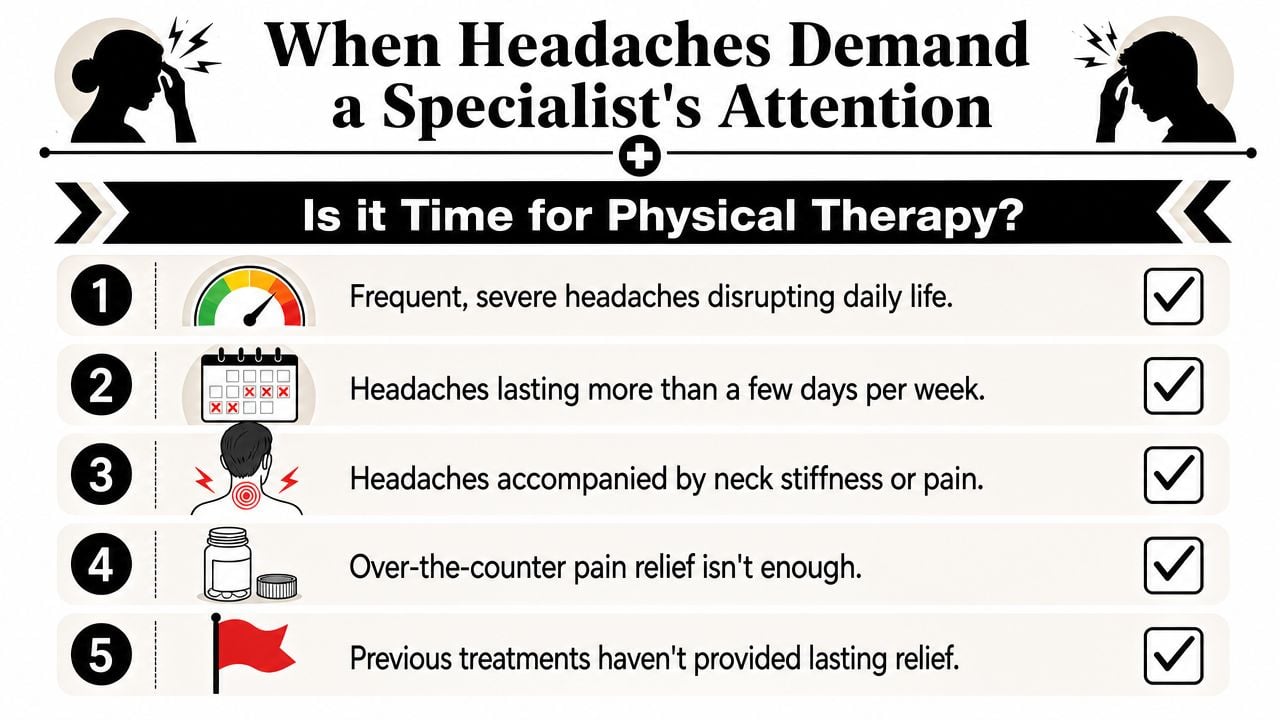
Signs PT may be a good fit
A recurring headache pattern usually tells us more than the pain intensity alone.
- Neck-related pattern: Headaches show up after laptop work, long meetings, driving, or days when your neck feels stiff and loaded.
- Jaw-related pattern: Clenching, chewing, dental work, or waking with jaw soreness lines up with temple pain, facial pain, or pressure around the head.
- Movement sensitivity: Looking down, turning your head, or holding one posture too long predictably brings symptoms on.
- Dizziness or visual strain: The headache comes with motion sensitivity, imbalance, eye strain, or a foggy feeling.
- Temporary relief only: You get short-term improvement from medication, stretching, or massage, but the same cycle keeps coming back.
At Joint Ventures, these patterns often point to a problem that needs more than generic neck exercises. Our clinicians commonly screen for cervical, TMJ, and vestibular drivers so treatment matches the presentation. For a local overview, see our guide to headaches and physical therapy treatment options in Boston.
When PT should not be the first stop
The distinction is important because headache care starts with screening, not assumptions.
Seek medical evaluation first if you have:
- A sudden headache: especially one that feels abrupt, severe, or clearly unusual for you
- Neurologic changes: such as new weakness, numbness, speech difficulty, or other new neurologic symptoms
- Fever or illness: particularly when the headache feels different from your normal pattern
- Recent trauma: including a fall, collision, or injury involving the head or neck
- A major pattern change: a headache that behaves in a completely new way
A responsible PT should catch these signs and refer out when needed. Good headache care includes knowing when not to treat.
What good candidates usually notice
Patients who do well in headache physical therapy often report a clear mechanical pattern. Their symptoms ramp up with posture, neck motion, jaw use, visual load, or busy environments. That does not make the headache simple. It tells us the problem has measurable drivers we can test.
For Boston professionals, that often means more than desk posture. Some need TMJ treatment because clenching is feeding the headache. Some need vestibular rehab because dizziness and motion sensitivity are part of the picture. Some improve with dry needling or manual therapy because the neck and jaw muscles stay guarded. Others do better in aquatics when land-based exercise keeps flaring symptoms. The key is matching the plan to the actual trigger pattern, not forcing every headache into the same routine.
What to Expect at Your Boston PT Assessment
The first visit should feel investigative, not generic. For headache PT, the most evidence-supported pathway starts with cervical assessment, then determines whether the presentation is cervicogenic, tension-type, or migraine-associated, and targets likely drivers such as upper cervical joint mobility restrictions or impaired deep neck flexor control in a multimodal plan, as described in this physical therapy headache review on PubMed.
The exam starts with the story behind the pain
A useful assessment doesn't begin with treatment. It begins with pattern recognition.
Your clinician will usually ask:
- when the headache starts during the day
- whether neck motion changes the symptoms
- whether jaw activity affects the pain
- whether dizziness, motion sensitivity, or visual strain are part of the picture
- what you've already tried and what only worked briefly
That history matters because two people can use the same phrase, “I get headaches at work,” and need completely different care plans.
What gets tested
Most headache assessments for Boston professionals include a close look at the neck, upper back, jaw, and movement control system. The goal is to see which findings reproduce or reduce your symptoms.
A thorough exam often includes:
- Cervical range of motion: Does turning or extending the neck provoke symptoms?
- Upper cervical mobility: Are the joints at the top of the neck moving well?
- Deep neck flexor control: Can you stabilize well, or do larger muscles overwork?
- Soft tissue irritability: Are the suboccipitals, upper trapezius, or levator scapulae contributing?
- TMJ screening: Is jaw opening, clenching, or side-to-side motion part of the problem?
- Vestibular screening: Is there a dizziness or balance component that changes treatment?
A good headache exam should answer one question clearly. What structures or movement patterns are feeding the symptoms right now?
That precision is important in Boston clinics because the patient mix is broad. A desk worker in Downtown Boston may need ergonomic and motor-control work. A runner in Kenmore may need load management plus cervical treatment. A patient with jaw-driven temple pain may need TMJ-specific care rather than more neck stretching.
What happens after the evaluation
You should leave the visit with a working diagnosis, a short-term treatment plan, and a home strategy that fits your schedule. Early sessions often focus on reducing symptom irritability while testing which interventions create meaningful change.
If you're getting ready for your first visit, this guide on how to prepare for your first physical therapy appointment can help you come in ready with the right details.
The key trade-off is simple. Passive care may feel good quickly, but it usually doesn't hold unless the plan also addresses the movement pattern, workload, or habit that keeps the headache cycle alive.
Specialized Headache Treatments Available in Boston
Boston patients usually don't need more vague advice to “improve posture.” They need a treatment pathway that matches the headache presentation in front of them. That's why specialized headache physical therapy in Boston works best when it combines hands-on care, targeted exercise, neuromuscular retraining, and the right specialty referral inside the PT plan.
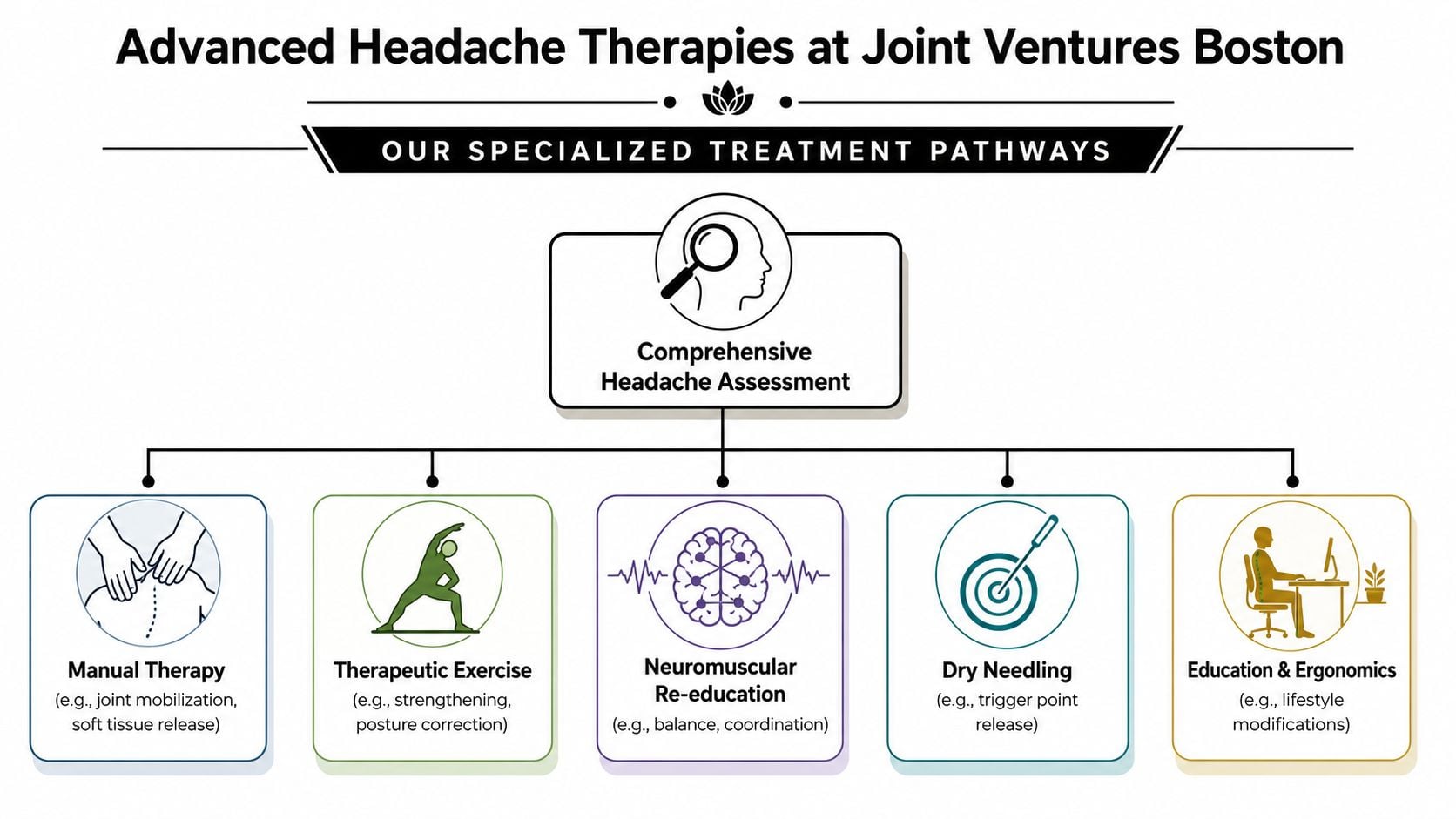
A systematic review found that physical therapy interventions targeting the cranio-cervical-mandibular region produce significant short- and medium-term improvements. Within that review, one study found that cervical and thoracic mobilization plus postural re-education significantly improved headache intensity at 8 weeks (p = 0.003) and headache frequency (p < 0.001), and another trial found that massage and trigger-point treatment reduced headache-episode frequency at 1 month (p = 0.026) in tension-type headache care, as reported in this systematic review on headache physical therapy.
Manual therapy and exercise work better together
Manual therapy matters because some headaches are driven by restricted joints, irritated soft tissue, or sensitivity in the upper cervical region. But manual therapy by itself often isn't enough.
Common in-clinic tools include:
- Joint mobilization: often used when the upper cervical or thoracic spine is stiff
- Soft tissue treatment: useful for suboccipitals, upper trapezius, and levator scapulae
- Targeted exercise: especially when the headache returns after the workday or commute
- Motor-control retraining: to help the neck tolerate screen time, running, lifting, or travel
For patients who want a broader understanding of how neck dysfunction overlaps with headache symptoms, this local resource on neck pain physical therapy in Boston is a helpful next read.
Dry needling, TMJ care, vestibular rehab, and aquatics
Here, treatment gets more specific.
Trigger point dry needling can be useful when headache symptoms track closely with active trigger points in the neck, jaw, or shoulder region. It isn't a stand-alone fix, but it can create a window for better movement and exercise tolerance.
TMJ-focused treatment is often overlooked. If your headaches ride along with clenching, grinding, chewing discomfort, or temple pain, the jaw may be a major contributor. In that case, treatment may include jaw mobility work, habit modification, and coordination between the neck and jaw.
Vestibular rehabilitation matters when headaches come with dizziness, motion sensitivity, or a “foggy” feeling. That presentation needs a different progression than a straightforward tension-type pattern.
Aquatic therapy can help people who flare easily on land, have persistent pain, or need a lower-load environment to start moving again. The water won't fix the headache by itself, but it can lower threat and let a patient build tolerance more comfortably.
Joint Ventures Physical Therapy offers one-on-one outpatient care in Greater Boston that includes these specialty areas, including TMJ, vestibular rehabilitation, aquatic therapy, and trigger point dry needling.
Before and after a treatment session, documentation matters too. For clinicians and practice operators who want a clearer understanding of coding around hands-on care, this overview of mastering manual therapy billing gives useful context on how manual therapy services are categorized.
A short clinical demonstration can help make these treatment categories more concrete.
Some headaches need less stretching and more precision. If the jaw, balance system, or upper cervical spine is involved, the plan should reflect that from day one.
Home Strategies to Support Your Headache Recovery
A good treatment session can calm symptoms. What you do between visits usually determines whether that relief lasts through the next workday, commute, and evening screen time.
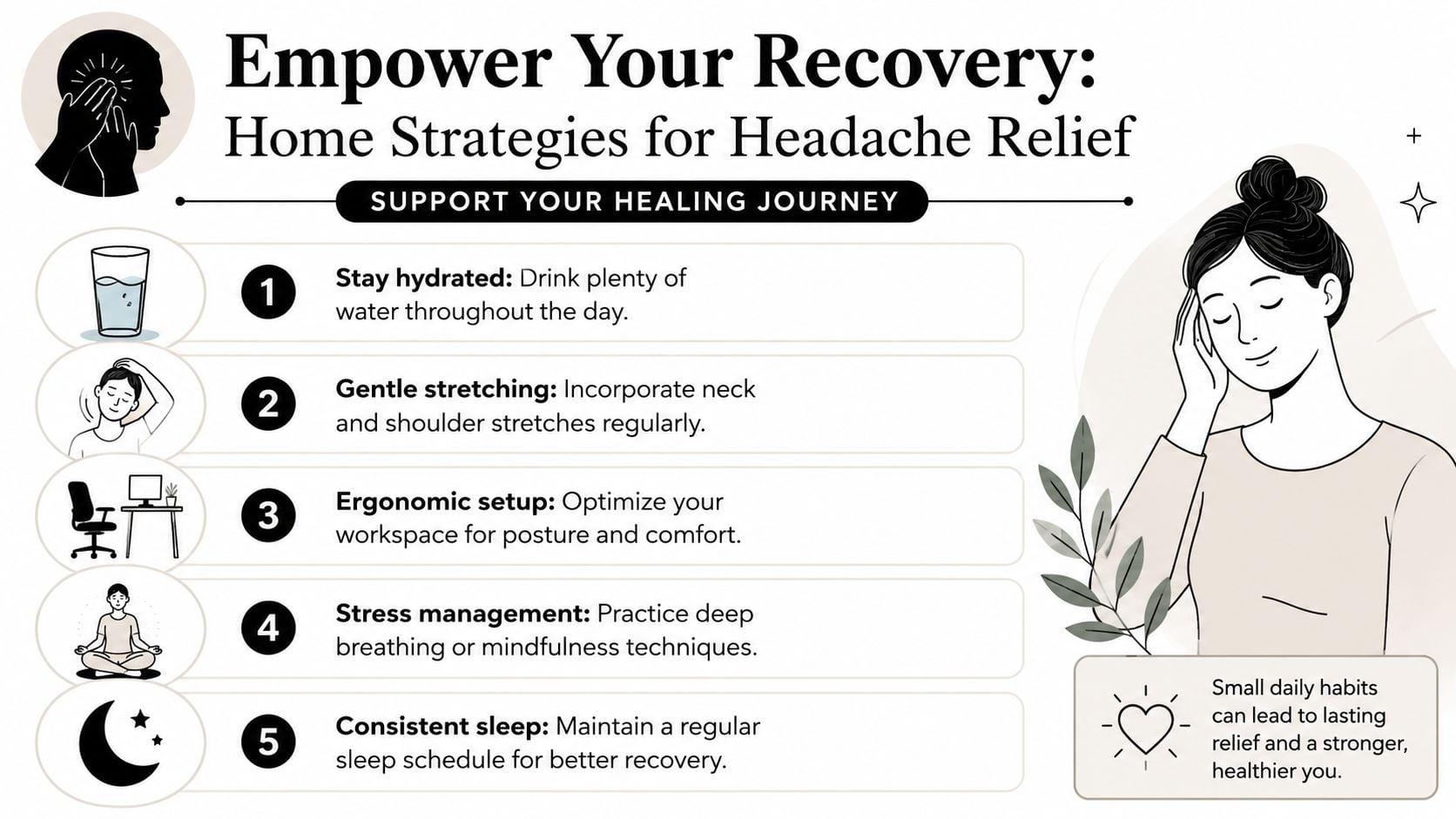
For Boston professionals, the home plan needs to be realistic. If it takes 30 minutes, requires floor space you do not have, or feels too awkward to do between meetings, it usually gets dropped. The better approach is a short, specific routine that supports the work we are doing in clinic and fits into a normal weekday.
Keep the plan small and targeted
At Joint Ventures, home recommendations are based on the pattern driving the headache. A jaw-related headache needs different home work than a neck-driven headache. A patient with dizziness, motion sensitivity, or heavy symptom flare-ups may also need pacing strategies, visual breaks, or positional changes, not just strengthening.
That is the trade-off. More exercises do not always mean better results. Better exercise selection does.
Home habits that commonly help
- Deep neck flexor work: Useful when the neck is overworking and the smaller stabilizers are not doing their share.
- Frequent position changes: Static sitting is a common trigger during long computer blocks.
- Workstation cleanup: Monitor height, laptop setup, arm support, and chair position can reduce repeated strain over the day.
- Jaw check-ins: If you clench during deadlines, driving, or gym sessions, relaxing the jaw can reduce one of the inputs feeding the headache.
- Commute adjustments: Phone position, backpack carry, and train or car posture can matter as much as desk setup.
- Posture education: For patients dealing with forward head position from heavy device use, this guide on how to correct tech neck gives useful background.
Home rule: Your program should fit your schedule well enough that you will actually use it on a Tuesday, not just on a motivated Sunday.
Protect the gains from treatment
Hands-on care can reduce pain and improve motion. Those changes fade faster if the rest of the week keeps loading the same irritated area in the same way.
A patient may feel better after treatment, then spend eight hours craning toward a laptop, clenching through deadlines, and scrolling on the phone during the commute home. That pattern often keeps headaches cycling. Patients usually do better when they pair treatment with a few repeatable habits during the day, especially short movement breaks, better screen position, and attention to jaw tension.
For readers who want broader educational material beyond this local Boston guide, Highbar Health has deeper condition and recovery content at highbarhealth.com.
Start Your Path to Headache Relief in Boston Today
It is 3:30 on a workday in Boston. You are still on deadline, your head is building pressure, and you are already calculating whether you can get through the commute, dinner, and tomorrow morning without another headache. At that point, waiting it out usually means another week arranged around symptoms.
A useful next step is an evaluation that looks past the generic advice to stretch your neck and sit up straighter. Headaches often have more than one driver. At Joint Ventures, we regularly sort out whether the main issue is coming from the neck, TMJ, the vestibular system, or a mixed pattern that needs more than standard exercise alone.
That matters because treatment should match the actual source of the problem. A patient with jaw clenching and temple pain needs a different plan than someone whose headaches build after screen time, motion sensitivity, or upper cervical stiffness. Dry needling, vestibular therapy, TMJ-focused care, and aquatic therapy can all have a place when the presentation calls for them.
Care also has to work in real life. Easy access to clinics near work or home makes it more realistic to keep appointments when your schedule is packed. Joint Ventures has locations in Back Bay, Kenmore Square, Fort Point/Seaport, Downtown Boston, and nearby neighborhoods.
If forward head posture is part of the pattern, this guide on how to correct tech neck can be a useful companion to in-person treatment.
If headaches are interfering with your work, training, sleep, or concentration, book an evaluation with Joint Ventures Physical Therapy. A one-on-one assessment can identify whether your symptoms are coming from the neck, jaw, balance system, or a combination, then build a plan that fits your Boston routine.