
You feel foot pain in the places that matter most. On the first few steps out of bed. Halfway through a run. Walking to work. Standing in the kitchen. Chasing your kids. Trying to stay active and finding that your world gets smaller every week.
A lot of people try to push through it. They swap shoes, stretch randomly, roll their arch on a ball, rest for a few days, then get frustrated when the pain comes right back. That cycle is exhausting.
Foot pain is common, but it isn't something you should accept as your new normal. The right foot pain physical therapy plan can identify why your foot hurts, calm the irritated tissue, rebuild strength, and help you return to the things you want to do.
That Nagging Foot Pain Is More Than Just an Inconvenience
A painful foot changes more than your stride. It changes your day.
We see it all the time. Someone stops taking their usual walk because the heel starts barking after ten minutes. A runner shortens every workout and starts compensating. A parent notices they're more irritable by the end of the day because standing has become work. Even mild foot pain can reshape your routine.
The most frustrating part is that many people still don't get directed to treatment that can help. A 2017 Journal of Orthopaedic & Sports Physical Therapy study found that only 7.1% of patients with plantar fasciitis were prescribed physical therapy, yet for those who did receive it, evidence-based manual therapy lowered the average cost of care to $340 (Journal of Orthopaedic & Sports Physical Therapy).
That gap matters. It means a lot of people are spending too long trying temporary fixes for a problem that usually responds best to a more precise plan.
Practical rule: Pain that keeps changing how you walk, train, or stand deserves a real evaluation, not another guess.
When we treat foot pain, we aren't chasing symptoms. We want to know what tissue is irritated, what movement pattern is feeding the problem, and what needs to change so your foot can handle load again.
Sometimes that means the answer is simpler than you expected. Sometimes it's more layered than a quick internet search makes it seem. Either way, you should understand what's going on and why your treatment plan looks the way it does.
That's where good physical therapy helps. It turns a vague problem into a clear plan.
Understanding Why Your Foot Hurts The Real Culprits
Foot pain usually looks local. The cause often isn't.
Your foot is your base of support. Every step asks it to absorb force, adapt to the ground, and help move you forward. If the load is too high, too sudden, or poorly distributed, something starts to complain.
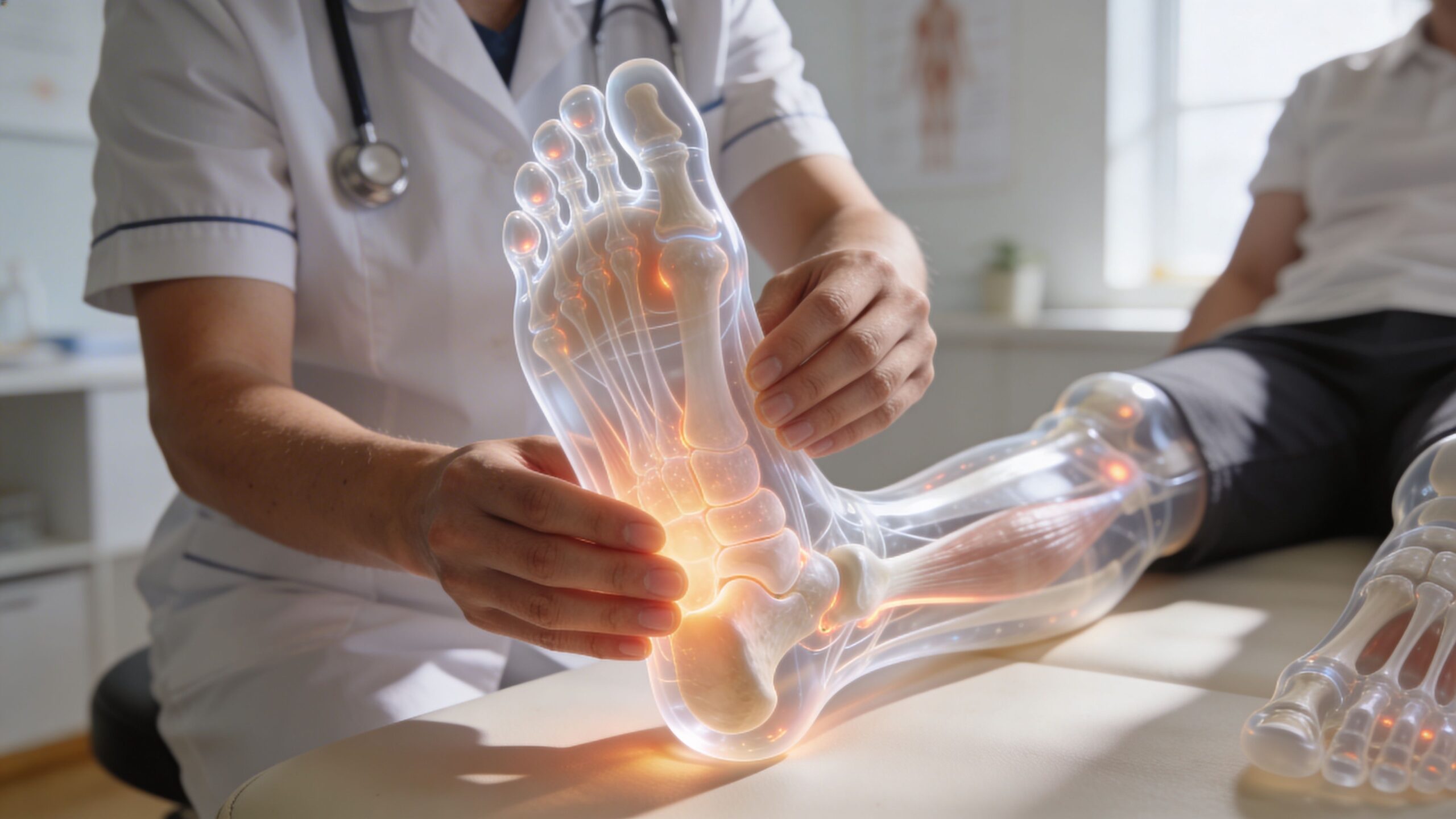
Local stress that adds up
Sometimes the culprit is right at the foot and ankle.
A common pattern is too much, too soon. You start walking more, training for a race, returning to court sports, or spending longer on your feet at work. The tissue doesn't fail because movement is bad. It fails because the load exceeded what it was prepared for.
Other times, footwear is part of the picture. Shoes can change pressure, toe space, heel stability, and how much work your foot has to do. That doesn't mean there's one perfect shoe for every person. It means the wrong shoe for your specific foot and activity can aggravate the problem.
A few local drivers we often look at include:
- Load spikes: A sudden jump in running, walking, hiking, or standing time.
- Stiffness: Limited ankle motion or big toe mobility that changes how you push off.
- Weak support: Poor control from the foot intrinsic muscles, calf, or hip.
- Irritable tissue: Plantar fascia, Achilles tendon, joint capsule, nerve tissue, or a healing post-surgical area.
The kinetic chain matters
Your foot works at the end of a chain. If the chain above it isn't doing its job, the foot often pays the price.
Compare it to a building foundation under a crooked frame. The foundation might be where you see the crack, but the issue can start higher up. A hip that doesn't control rotation well can cause the knee to collapse inward. That changes how your foot loads. A stiff ankle can force your arch or forefoot to absorb motion that should have happened elsewhere. Even low back and nerve-related issues can refer symptoms into the foot.
This is why generic advice often falls short. Two people can both point to the heel and say, "It hurts right here," while needing completely different treatment plans.
If your foot pain keeps returning, don't assume the foot itself is the whole story.
Not every painful foot needs the same plan
Mainstream PT content often skips an important point. Individual differences in foot structure and walking mechanics should drive exercise selection. A personalized biomechanical assessment that looks at overpronation, supination, and sport-specific demands is a cornerstone of 1-on-1 physical therapy (KC Rehab).
That matters for active people. A marathoner, a dancer, and someone recovering from a long workday on hard floors may all need different solutions, even if the symptom sounds similar.
Good care starts by answering a direct question. Is this just a sore foot, or is your body using the foot to compensate for something else?
Your First Visit The Comprehensive Physical Therapy Evaluation
A strong treatment plan starts with a good investigation.
Patients often come in expecting us to look only at the painful spot. We do examine the foot closely, but that's only one piece of the puzzle. The first visit is where we gather the clues that tell us why the pain started, what keeps it going, and what will move it forward.
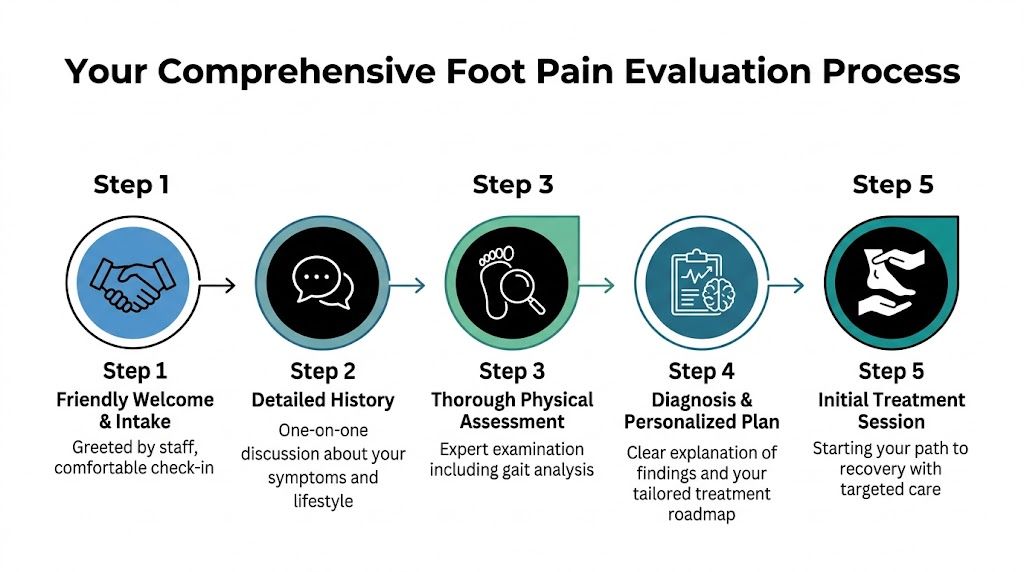
We start with your story
The first part of the visit is a conversation, not a rushed checklist.
We want to know when the pain started, where you feel it, what makes it worse, what eases it, what you've already tried, and what your real goals are. For one person, success means finishing a training cycle. For another, it means walking to the T without limping.
Your history often gives away patterns that matter:
- Morning pain: Often points us toward load-sensitive tissue like the plantar fascia.
- Pain after activity: Can suggest that the tissue tolerates movement initially but struggles with cumulative load.
- Numbness or burning: Raises different questions than stiffness or soreness.
- Post-surgical pain: Changes how we think about healing timelines, swelling, mobility, and strength progression.
If your symptoms overlap with pregnancy, postpartum changes, or pressure-management issues, a related specialty can matter too. Some patients benefit from understanding how care from a pelvic floor therapist fits into a bigger movement picture, especially when the core, pelvis, and lower extremity are all influencing function.
Then we look at how you move
Here, the detective work gets specific.
We watch you stand, walk, and sometimes run. We assess how your foot loads, whether your arch changes under weight, how your ankle moves over the foot, and what the knee and hip are doing above it. If you're an athlete, your sport matters. A runner's evaluation isn't the same as a lifter's or a field athlete's.
A few things we commonly assess are:
| What we assess | Why it matters |
|---|---|
| Gait mechanics | Shows where you're overloading and where you're avoiding push-off or impact |
| Joint mobility | Reveals stiffness in the ankle, midfoot, big toe, or surrounding joints |
| Strength and control | Tells us whether the calf, foot, glutes, or core are doing enough |
| Balance and single-leg stability | Exposes compensations that don't show up in two-legged standing |
| Tissue irritability | Helps us decide whether to calm things down first or load more aggressively |
For readers who want a deeper look at walking and running mechanics, this overview of what gait analysis involves is a helpful place to start.
Why this matters more than a generic handout
The internet is full of foot pain exercise lists. Some of them are reasonable. The problem is that they don't tell you whether you need mobility, strength, unloading, gait retraining, post-surgical progression, nerve treatment, or a different dosage.
One person needs calf loading. Another needs less of it for a while. One person needs more ankle motion. Another already has plenty of motion and needs better control.
The best exercise is the one that matches the finding, not the one that shows up first in a search result.
By the end of the visit, you should know what we found, what we think is driving your pain, and what the first phase of care needs to accomplish.
How We Treat Common Foot Conditions
Treatment works best when it matches the diagnosis, the irritability of the tissue, and the demands of your life. That's why good foot pain physical therapy rarely looks like one modality or one exercise sheet.
We use a mix of hands-on treatment, targeted loading, movement retraining, and symptom-management strategies. The combination changes based on what your foot needs.
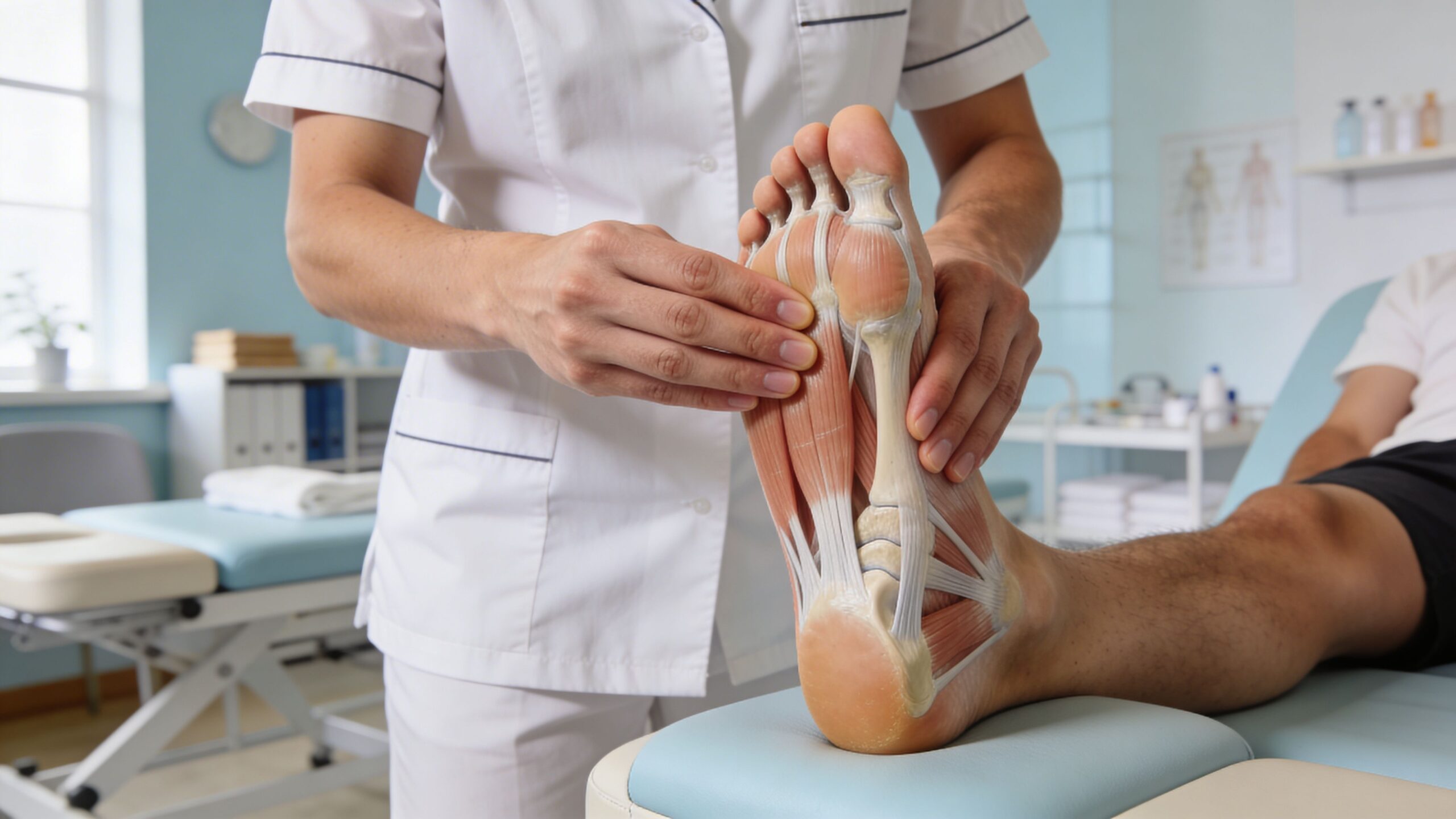
Plantar fasciitis and heel pain
This is one of the most common conditions we see, and it's also one of the most misunderstood.
People often assume heel pain means they should stretch a little, rest a little, and wait. Sometimes that helps briefly. It usually doesn't fix why the plantar fascia became overloaded in the first place.
For plantar fasciitis, a targeted physical therapy program can achieve up to 50% pain reduction within eight weeks by using eccentric strengthening, calf stretches, and manual therapy to improve tissue load tolerance and flexibility (Fyzical).
What that means in practice:
- Manual therapy: We restore motion where the foot and ankle are stiff and reduce sensitivity in the involved tissue.
- Calf and plantar loading: The fascia doesn't just need rest. It needs the right amount of load, progressed at the right time.
- Mobility work: Tightness through the calf complex and foot can keep tension high at the heel.
- Gait changes: If you're unloading the painful side or overstriding, the tissue keeps getting irritated.
The trade-off here is important. Too little load and the tissue never regains capacity. Too much too early and symptoms flare.
Achilles tendinopathy
Achilles pain often responds poorly to complete rest. Tendons like a clear, progressive loading plan.
Early on, we may need to calm reactivity and modify impact, hills, speed work, or explosive movements. But long term, the goal is strength and tendon tolerance. That often includes heel raise progressions, calf strengthening in different knee positions, ankle mobility work, and changes to training volume.
If the tendon is highly irritable, even a "simple" calf raise may need to be adjusted. If it's more settled, we can progress to heavier work, faster loading, and eventually return-to-sport drills.
A few tools we may use include:
- Hands-on joint and soft tissue work when stiffness is limiting mechanics
- Trigger point dry needling when muscle tone and pain are interfering with loading
- Aquatic therapy for people who need movement with less impact
- Running or jumping retraining when return to sport is the goal
At clinics such as Joint Ventures Physical Therapy, options like aquatic therapy, trigger point dry needling, and orthotic fitting can be part of a broader plan when they fit the diagnosis and stage of recovery.
Post-surgical foot rehab
Post-operative rehab is different from standard overuse rehab. The tissue has to heal, but the rest of the limb still needs to function.
After a bunion procedure, fracture fixation, tendon repair, or other foot surgery, the common traps are either doing too little for too long or trying to "push through" before the tissue is ready. Neither works well.
Post-surgical care usually focuses on a sequence:
- Protect healing tissue while controlling swelling and maintaining as much safe motion as possible.
- Restore mobility in the foot, ankle, and surrounding joints once allowed.
- Rebuild strength and weight tolerance so walking mechanics normalize.
- Return to higher demand tasks like stairs, running, court movement, or long standing shifts.
Healing and rebuilding aren't the same thing. A surgical site can be healed enough to move, but not ready yet for full athletic demand.
Nerve-related and neuropathic foot pain
Not all foot pain comes from fascia, tendon, or joint irritation.
Burning, tingling, numbness, zapping, or pain that seems to move can point toward a nerve-related driver. Sometimes the issue is local. Sometimes the foot is the endpoint of irritation that starts higher up.
Treatment looks different here. We may focus more on:
- Nerve mobility
- Pressure management
- Footwear and compression considerations
- Lumbar or proximal movement assessment
- Gradual desensitization and pacing
What doesn't work well is treating nerve symptoms like a simple muscle strain. Aggressive stretching or constant self-massage can irritate some presentations.
What usually works, and what usually doesn't
A quick comparison helps:
| More likely to help | Less likely to help |
|---|---|
| A diagnosis-specific loading plan | Doing random foot exercises forever |
| Hands-on treatment tied to movement goals | Passive care without follow-through |
| Activity modification, not total shutdown | Boom-and-bust cycles of rest and overdoing it |
| Progression based on symptoms and function | Pushing hard just because the pain is better that day |
The best treatment plan is specific. It matches your condition, your stage of healing, and the activities you're trying to get back to.
Sample Exercises and The Power of Progression
Exercises matter. Progression matters more.
Failure in rehab is not usually due to a lack of starting. They fail because they keep doing the same easy version long after their body has adapted, or they jump ahead too fast and stir everything up again.
Here are a few foundational movements we often use, with the reminder that the right choice depends on your evaluation findings.
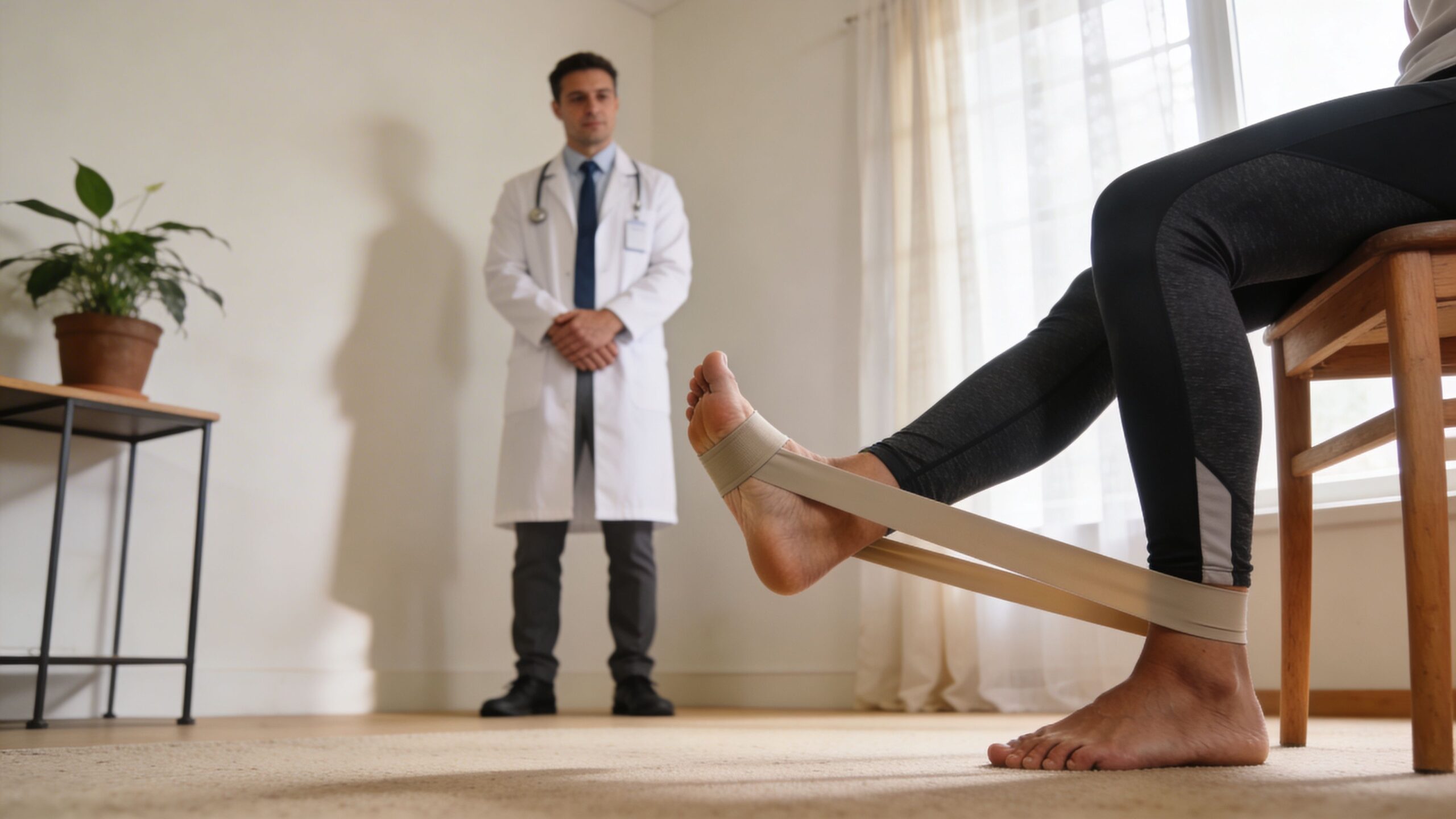
Foundational exercises
- Calf raises: Stand near a wall or counter. Rise onto your toes with control, then lower slowly. This builds calf strength and helps the foot handle push-off better.
- Single-leg balance: Stand on one leg and keep the arch active without clawing the toes. This improves foot control, ankle stability, and hip contribution.
- Towel curls or short-foot work: Gently draw the arch up or pull a towel with your toes. These are useful for awareness and foot muscle control when used appropriately.
- Band-resisted ankle work: Press the foot into a resistance band in different directions to improve ankle and foot strength.
If you want a starting point for home practice, this guide to physical therapy exercises for foot pain can help you understand common movement options.
Why progression is the whole game
A rehab program should change as your foot changes.
Early on, we may choose low-irritation movements to restore tolerance. Once symptoms settle, the plan usually needs more challenge. That can mean more range, slower lowering, single-leg variations, added resistance, unstable surfaces, quicker force production, or sport-specific drills.
Here are a few examples of progression decisions we make in clinic:
- From double-leg to single-leg: Useful when basic strength returns.
- From flat ground to dynamic balance: Helpful when daily walking feels good, but uneven surfaces still bother you.
- From slow strengthening to faster loading: Important for runners and court athletes.
- From isolated exercises to full-body drills: Necessary when the foot pain is connected to hip, trunk, or landing mechanics.
This video shows a practical example of exercise-based foot rehab in action.
What not to do
The biggest mistakes are usually dosage mistakes.
Some people do a little stretching whenever they remember and expect change. Others hammer painful exercises every day because they think soreness means progress. Neither is a great strategy.
Good rehab isn't just about picking the right exercise. It's about choosing the right version, the right volume, and the right moment to progress it.
Your foot has to build capacity, not just survive a few isolated drills.
Your Recovery Timeline Red Flags and Staying Pain-Free
Patients often ask the same question early on. "How long will this take?"
The honest answer is that recovery depends on the diagnosis, how irritable the tissue is, how long it's been going on, and how closely the plan matches the actual problem. Some people feel relief fairly quickly. Others need a longer rebuild because the issue isn't just pain. It's reduced capacity.
Pain relief comes before resilience
Here, people often get tripped up.
Pain commonly improves before the tissue is ready for full activity. That's good news, but it can create a false finish line. Once the pain drops, people return to full mileage, long walks, pickup games, or standing all day without maintaining the strength and mobility work that got them there.
Most online resources talk about PT's effectiveness but skip adherence. Clinical experience shows that patients often stop their exercises once acute pain settles, which is a major reason symptoms recur. A key role of PT is teaching realistic timelines and why completing the full plan matters (Sword Health Care Explorer).
A useful way to think about recovery:
| Phase | What the focus usually is |
|---|---|
| Irritability phase | Calm symptoms, reduce aggravating loads, restore tolerance to daily activity |
| Capacity phase | Build strength, mobility, and control so the tissue can handle more |
| Return phase | Reintroduce speed, distance, hills, jumping, or sport demands |
| Prevention phase | Keep enough strength and movement work in place to avoid the same cycle |
Red flags that need medical attention
Not all foot pain should be self-managed or slowly monitored.
Please get evaluated promptly if you notice:
- Loss of sensation or progressive numbness
- Sudden swelling without a clear reason
- Pain at night that doesn't behave like activity-related soreness
- Inability to bear weight
- Marked redness, heat, or signs that concern you for infection
- A major change after trauma
Those symptoms don't automatically mean something serious is happening, but they do mean the problem deserves timely medical attention.
Staying pain-free after rehab
The finish line isn't "no pain today." It's being able to do what you want without the problem returning every few weeks.
That usually means keeping a smaller maintenance routine. It also means paying attention to mechanics when you return to high-demand activity. Athletes, especially jump and cutting athletes, can benefit from learning proper footwork and landing techniques to prevent injuries because better movement strategy reduces repeated stress on the foot and ankle.
The plan shouldn't take over your life. It should be realistic enough that you'll keep doing it.
Take the First Step with Boston's Trusted PTs
Foot pain can feel deceptively small. It's "just" your foot, until it starts changing how you move, exercise, work, and show up in daily life.
The good news is that a careful evaluation, a clear explanation, and a plan eliminate the need for guessing. They need a careful evaluation, a clear explanation, and a treatment plan that matches their body and goals. That's what good foot pain physical therapy is supposed to be.
We look at the whole picture. Your symptoms. Your training or work demands. Your movement patterns. Your mobility, strength, balance, and load tolerance. Then we build a plan that makes sense for your actual life, not an average patient in a generic handout.
If you're in the Greater Boston area and you're ready to stop managing around the problem, the next step is simple. Book an evaluation, get clear answers, and start addressing the reason your foot hurts.
You can schedule directly here: online scheduling.
Frequently Asked Questions About Foot Pain Physical Therapy
Do I need a doctor's referral to start physical therapy in Massachusetts
Referral rules can vary based on your insurance plan and situation, so it's smart to check before your first visit. In many cases, our front desk team can help you understand what your plan requires and what paperwork, if any, you'll need.
If you're unsure, ask. That question is common, and it's much easier to sort out before the visit than to worry about it at home.
How is physical therapy different from seeing a podiatrist
They do different jobs, and in many cases they complement each other well.
A podiatrist diagnoses foot conditions, evaluates medical and structural issues, and may prescribe medication, injections, imaging, or surgical care when needed. Physical therapy focuses on movement, loading, strength, mobility, gait, and return to activity.
That distinction matters because foot pain is widespread, yet many people still don't get evaluated. A 2025 report says 81% of Americans experience foot pain, only 32% receive a formal diagnosis, and 76% of those who seek professional help have their problem eliminated (KURU Footwear foot pain report).
What should I wear to my first appointment
Wear comfortable clothes you can move in.
Shorts, leggings, joggers, and a T-shirt usually work well. Bring the shoes you walk, run, or train in most often, especially if your pain shows up during specific activities. If you use inserts or orthotics, bring those too.
Will insurance cover foot pain physical therapy
Coverage depends on your individual insurance plan, including your deductible, visit limits, referral requirements, and co-pay or co-insurance structure.
The easiest move is to verify your benefits before your appointment. A good clinic can often help you understand the basics so there are fewer surprises.
If foot pain has been limiting your walks, workouts, commute, or daily routine, Joint Ventures Physical Therapy offers 1-on-1 care across Greater Boston with individualized evaluation and treatment for foot and ankle conditions. Schedule a visit, get clear answers, and start moving with more confidence.