
If you're a few days or a few weeks out from hysterectomy, you might be asking the same practical questions we hear every day in Boston clinics. Why does walking still feel awkward? Why does pressure show up when you stand too long, ride the T, or carry groceries home? When is it safe to exercise again, and does “pelvic floor work” just mean doing Kegels?
Those questions are reasonable. Recovery after hysterectomy isn't only about healing the incision or getting through the first follow-up. It's about restoring the way your body manages pressure, support, movement, and confidence so you can get back to work, family life, fitness, and the rhythms of living in Boston.
Your Post-Hysterectomy Recovery Guide for Boston
A lot of active women in Boston try to “be good” after surgery by resting, walking a little, and hoping everything settles. Sometimes that works well. Sometimes it doesn't. You may feel fine at first, then notice bladder urgency on the walk from South Station, pulling around scars when you twist for a parking meter, or heaviness after a long day on your feet in the Financial District.
Recovery usually goes better when it's guided instead of improvised. Pelvic floor therapy after hysterectomy gives you a plan for what to do, what to avoid, and how to progress without guessing. That matters whether your goal is a comfortable commute, lifting your child, getting back to yoga, or building toward marathon training again.
What a practical recovery plan should include
A useful plan is simple and specific:
- Protect healing tissues early: Avoid pushing through pressure, straining, or heavy effort before your surgeon clears you.
- Restore normal mechanics: Breathing, posture, and pressure management come before hard strengthening.
- Address the symptoms you have: Some people need muscle retraining. Others need scar work, relaxation, or bowel and bladder strategies.
- Progress toward real life: Walking hills in Beacon Hill, navigating cobblestones, and returning to the gym all place different demands on the body.
Practical rule: If an activity increases pain, pressure, or a bulging sensation, that isn't a sign to “tough it out.” It's a sign to adjust the load.
Hormonal changes can also shape recovery, comfort, and tissue sensitivity after surgery. If that part of the picture feels confusing, this overview of personalized HRT guidance from Pause Medical is a helpful companion resource.
At Joint Ventures locations across Greater Boston, the goal is straightforward. Help you understand what your body is doing, calm what feels off, and rebuild support so daily life feels normal again.
Why Your Pelvic Floor Needs Support After Hysterectomy
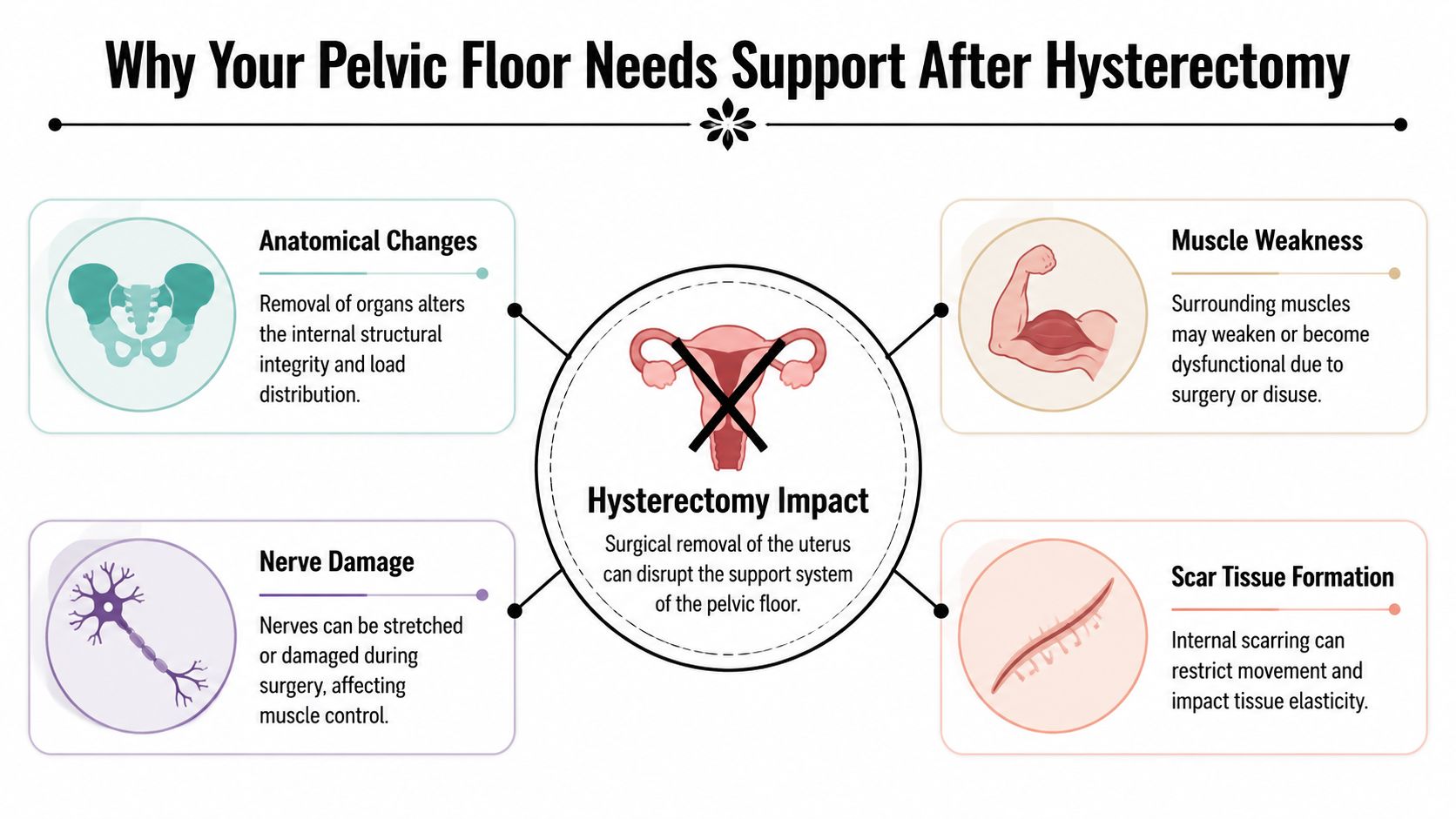
A hysterectomy changes the way the pelvis manages support and pressure. Consider the renovation of one room in a brownstone: Even if the structure is sound, once a major piece is removed, the surrounding walls, floors, and pathways all have to adapt. Your pelvic floor, abdominal wall, breathing system, and connective tissue do the same thing after surgery.
The pelvic floor isn't just a “squeeze muscle.” It helps support pelvic organs, contributes to bladder and bowel control, and works with the diaphragm and abdominal wall during movement. That shows up in ordinary Boston moments. Standing steady on a crowded MBTA train. Climbing apartment stairs. Lifting a Trader Joe's bag. Returning to a run along the Charles.
What changes after surgery
Some of the biggest reasons symptoms show up later include:
- Altered support mechanics: Tissue relationships change, so load gets distributed differently.
- Guarding and coordination loss: Muscles may tighten protectively or stop working together efficiently.
- Scar restriction: Internal or external scarring can limit movement and create pulling or pressure.
- Nerve irritation or sensitivity: Some people notice changes in sensation, urgency, or control.
That helps explain why “I had the surgery, so the problem should be fixed” isn't always the whole story.
Why this matters long term
A long-term population study of 8,220 women found the cumulative incidence of pelvic floor repair after hysterectomy was 5.1% by 30 years, and the risk was over four times higher when prolapse was part of the original reason for surgery, based on findings summarized in this population study on later pelvic floor repair risk after hysterectomy. That doesn't mean everyone will develop a major problem. It does mean pelvic support deserves attention beyond the first postoperative month.
Support issues don't always announce themselves early. Sometimes the first sign is subtle pressure, leaking, or a sense that your core doesn't respond the way it used to.
For active women, that proactive support matters. If you're returning to spin class, barre, strength work, tennis, or distance running, the question isn't just “Have you healed?” It's “Can your body manage force, impact, and pressure well enough to keep doing what you love?”
Starting Pelvic Floor Therapy Your Boston Recovery Timeline
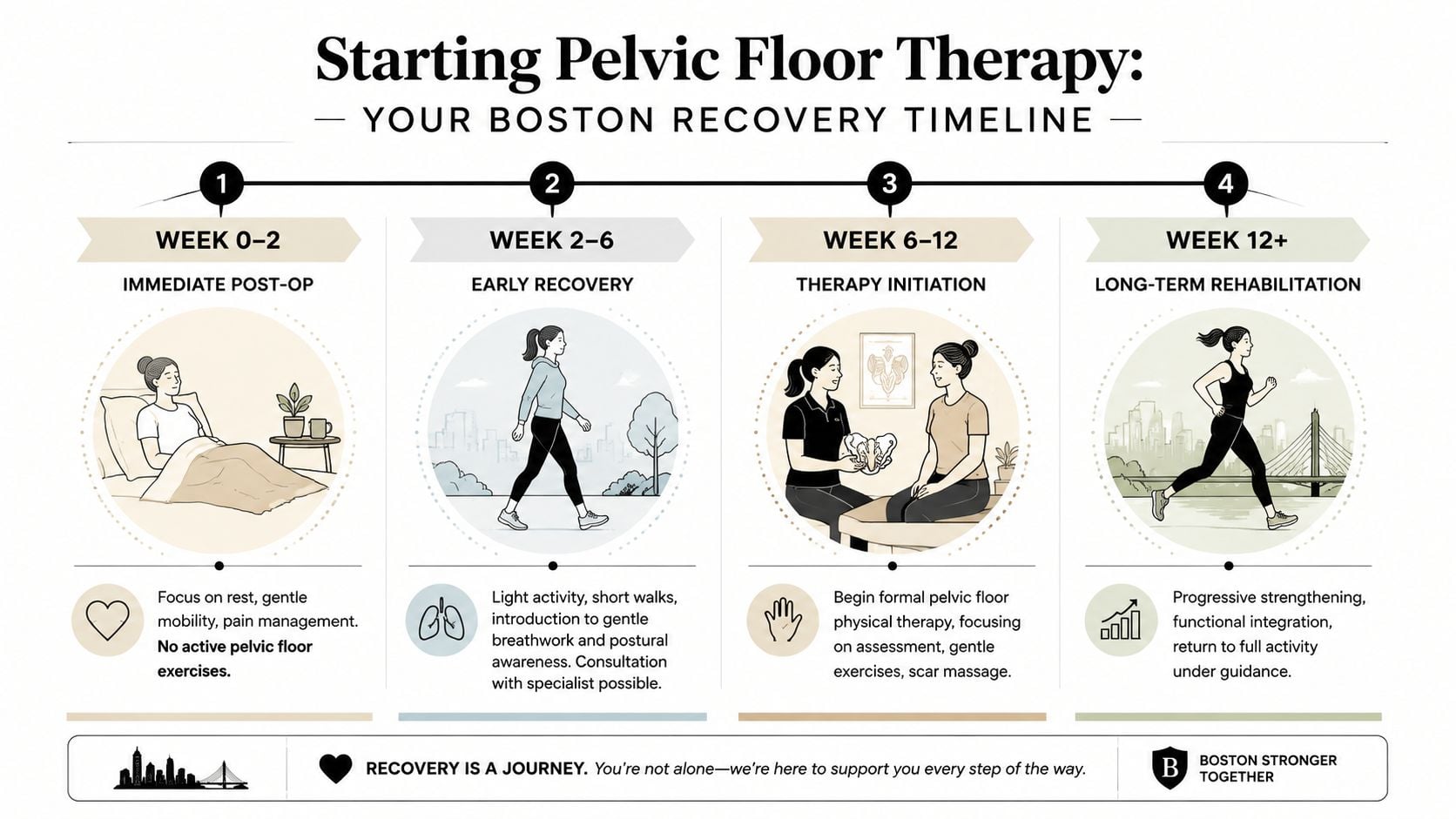
The biggest timing mistake after hysterectomy usually goes one of two ways. Some people do too much too soon. Others wait until symptoms become ingrained because they're afraid to move at all. A better approach is phased recovery.
Most pelvic health therapists recommend beginning structured physical therapy around 6 to 8 weeks after hysterectomy, with the earliest phase focused on low-load motor control, breathing, and relaxation rather than aggressive strengthening, as described in this post-hysterectomy pelvic floor PT timing guide.
The early healing phase
In the first stretch after surgery, the job is tissue protection. That usually means rest, short easy walks, pain control, and avoiding straining. You're not behind if you aren't “working out.” Healing tissue needs calm, not intensity.
Common priorities in this phase include:
- Short, frequent walking: Enough to reduce stiffness without creating pressure.
- Comfortable position changes: Rolling, sitting up, and standing without breath-holding.
- Bowel and bladder habits: Avoiding constipation and excessive straining matters.
The transition back to movement
As healing progresses, you can usually layer in gentle movement and coordination work. During this phase, many people benefit from guided breathwork, posture awareness, and reconnecting the abdominal wall and pelvic floor.
A useful mental shift here is to stop thinking in terms of “stronger” versus “weaker.” Early rehab is often about better timing and less guarding.
If your body braces every time you stand up, cough, or lift a laundry basket, your first rehab goal may be coordination, not force.
When formal PT tends to start
Around the 6 to 8 week window, after surgical clearance, formal pelvic floor therapy after hysterectomy often begins. The focus is usually narrow and individualized:
| Phase | Main focus | What usually doesn't help |
|---|---|---|
| Early post-op | Protection and calm | Pushing core work |
| Early reactivation | Breathing and coordination | Max-effort Kegels |
| Structured PT | Assessment-driven progress | Generic online routines |
| Return to activity | Functional loading | Jumping back in at full volume |
For a Boston patient, that progression might mean walking comfortably in Back Bay before trying hill repeats, or tolerating a desk day downtown before returning to long gym sessions.
Your First Pelvic Floor PT Visit at Joint Ventures
Most patients come in a little unsure of what the first visit will involve. That's normal. Maybe you've never done pelvic health PT before. Maybe you're worried the exam will be uncomfortable, or that you'll be told to do the same Kegels you've already tried.
A typical first visit starts with your story. If you walk into a Boston-area clinic like our Fort Point or Seaport setting, the first conversation usually isn't about exercises. It's about what you're noticing. Pressure by the end of the day. Leaking when you cough. Pain with intercourse. Trouble returning to core work. A feeling that your body just doesn't coordinate the way it used to.
What we assess
Your therapist looks at more than the pelvic floor itself. A good evaluation often includes:
- Breathing mechanics: Are you holding tension through the ribs, abdomen, or jaw?
- Posture and movement strategy: Do you brace with every sit-to-stand, stair climb, or lift?
- Abdominal wall and core control: Can you generate support without bearing down?
- Pelvic floor function: If appropriate and with your consent, this may include a gentle internal assessment to evaluate coordination, tone, strength, and tenderness.
Everything is explained before it happens. Consent is ongoing. Internal assessment is never automatic, and it isn't the only way to build a useful treatment plan.
Why the assessment matters
In a cohort of 242 women undergoing hysterectomy for benign indications, pelvic floor symptom burden improved on average after surgery, but symptom relief wasn't universal, according to this study of pelvic floor symptoms after hysterectomy. That's why assumptions don't work well. Some patients need strengthening. Some need relaxation. Some need scar mobility, bowel strategies, or pressure-management training.
If you'd like a broader look at how pelvic health PT is used for Boston women across life stages and symptoms, this overview of pelvic floor PT in Boston for women is a good next read.
The first visit should leave you with a clearer map. You should understand what your body is doing, what the priorities are, and what not to force.
For active patients, the plan usually gets tied quickly to real goals. Running without pressure. Getting through a hospital shift. Feeling steady carrying groceries up a triple-decker staircase. Returning to intimacy without fear.
Safe At-Home Exercises for Hysterectomy Recovery
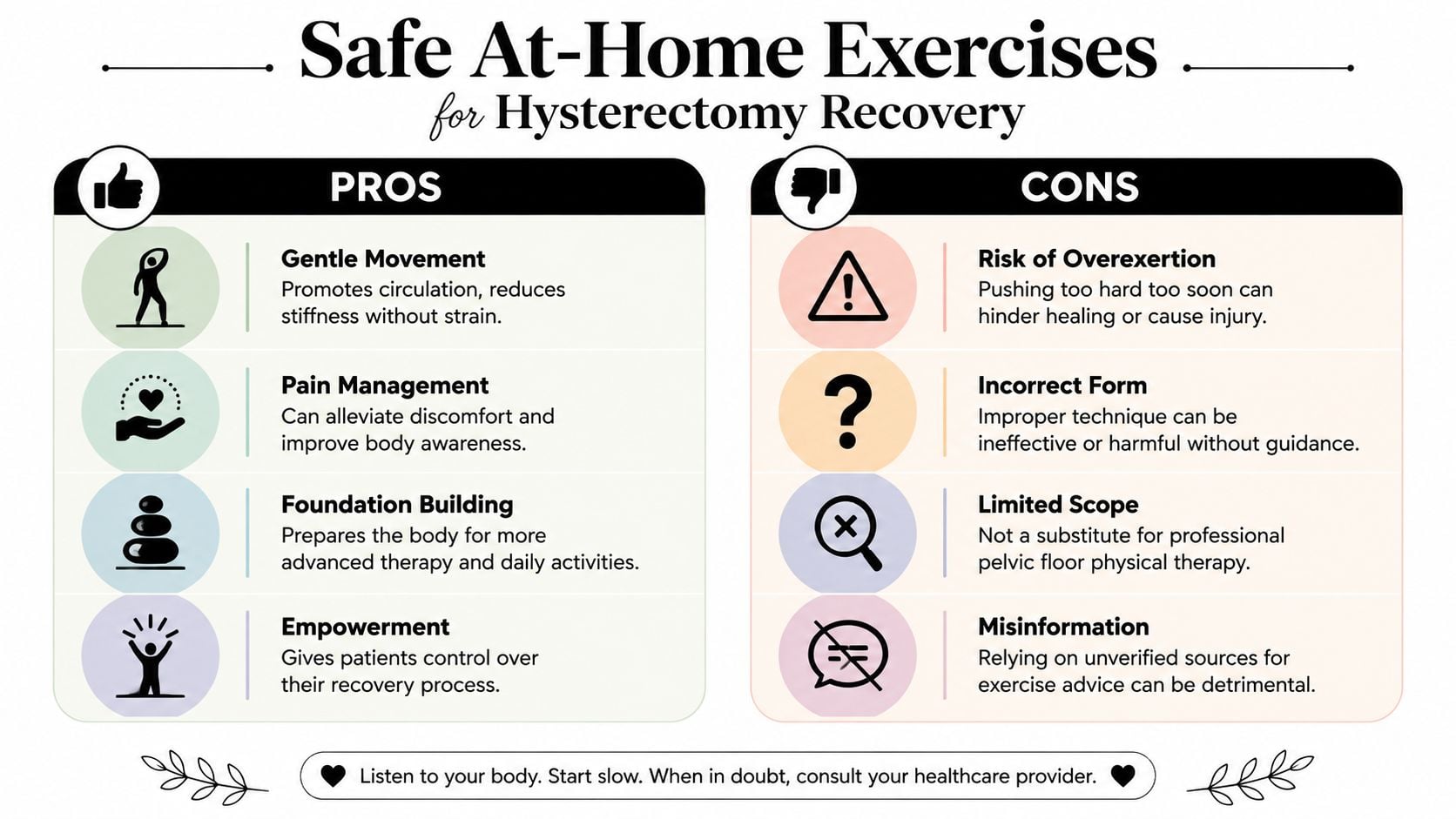
At-home work after hysterectomy should feel controlled, low effort, and repeatable. If an exercise creates pressure, pain, or a sense of bearing down, it's probably not the right drill for that phase of healing.
Many patients assume recovery means “do more Kegels.” That's often too simplistic. A major review notes the relationship between hysterectomy and later pelvic floor dysfunction is complex, and rehab may need to prioritize down-training, scar mobility, or pain control instead of automatic strengthening, as discussed in this review on hysterectomy and pelvic floor dysfunction mechanisms.
Three early exercises that are often useful
- Diaphragmatic breathing: Breathe in through the nose and let the ribcage and belly soften outward. Exhale slowly and let the body relax rather than brace. This can reduce guarding and improve pressure management.
- Pelvic floor drop and gentle recoil: On the inhale, think of softening the pelvic floor. On the exhale, allow a light natural lift, not a hard squeeze.
- Pelvic tilts or supported mobility: Small movements can restore comfort around the low back, abdomen, and pelvis without loading healing tissue too aggressively.
A quick movement demonstration can help if you're unsure how gentle this work should feel.
What not to force
These are common mistakes:
- High-rep Kegels without assessment: Tight muscles can act weak because they never fully relax.
- Core workouts that create bulging or doming: If you hold your breath, bear down, or feel vaginal pressure, scale back.
- Scar avoidance: Once your surgeon clears you and your therapist instructs you, scar mobility may become part of recovery.
If prolapse symptoms are part of your picture, especially if you're sorting through activity questions alongside disability support, this guide for NDIS participants with prolapse offers useful general considerations.
For more life-stage pelvic health context, including another example of how individualized recovery plans work, see this Joint Ventures post on pelvic floor therapy postpartum. For deeper anatomy and recovery education beyond this local Boston guide, visit Highbar Health at highbarhealth.com.
Find a Pelvic Health Specialist in Boston
A pelvic health specialist isn't just a general physical therapist who occasionally gives bladder tips. This clinician has specific training in pelvic floor assessment, internal and external treatment approaches, pressure management, postoperative progression, and the overlap between pelvic symptoms, pain, movement, and daily function.
That matters after hysterectomy because the right plan depends on what you present with. A specialist should be able to tell the difference between weakness, overactivity, scar restriction, coordination loss, bowel-related strain, and return-to-sport loading problems.
What to look for in Boston
When you're choosing care, look for:
- Private one-on-one visits: You need time to talk through sensitive symptoms and ask practical questions.
- Post-surgical experience: Not every orthopedic clinic is set up for this kind of rehab.
- A return-to-activity mindset: If you want to get back to running, lifting, commuting, or long workdays, the plan should reflect that.
- Convenient locations: Consistency is much easier when your clinic fits your real schedule.

For Boston patients, access matters. Joint Ventures has locations that make ongoing visits easier for people living or working in Back Bay, Kenmore Square, Downtown Boston, Fort Point and Seaport, plus nearby neighborhoods and surrounding communities. If you're comparing options, you can review the clinic's pelvic health therapy services in Greater Boston.
If your symptoms show up on the Red Line, during a long office day, or when you try to restart training along the Esplanade, don't wait for them to become your new normal. Seeing a pelvic health specialist early usually gives you better clarity and a more efficient path back.
Hysterectomy Recovery FAQ
Do I need pelvic floor PT if surgery already fixed the original problem
Not always, but it's often worth an evaluation if symptoms linger or if you want help returning to full activity. Some people feel much better after surgery and only need a short check-in. Others still have pressure, urgency, leaking, pain, or trouble tolerating exercise and benefit from a plan.
Can pelvic floor therapy help with sexual function after hysterectomy
A 2024 systematic review found moderate-quality evidence that pelvic floor muscle training after hysterectomy can improve sexual function, while evidence for urinary symptoms, pelvic floor strength, quality of life, and prolapse outcomes is still developing, according to this systematic review of pelvic floor muscle training after hysterectomy. In practice, that means therapy can be part of the plan, but the treatment should match the reason sex is uncomfortable or less satisfying. Pain, dryness, guarding, scar sensitivity, and fear of reinjury may each need a different approach.
What if Kegels make me feel worse
Stop and get assessed. If the pelvic floor is already overactive or painful, more contraction work can increase symptoms. In those cases, treatment may begin with relaxation, breathing, manual therapy, and better pressure control.
If an exercise increases pelvic pressure or pain, it isn't “good soreness.” It's feedback.
How long does recovery take
That depends on healing, symptom pattern, surgical history, and your activity goals. Someone aiming for comfortable daily movement may progress differently from someone trying to return to marathon training, tennis, or heavy lifting. Good rehab follows your symptoms and function, not a generic internet timeline.
What if menopause symptoms are part of the picture too
That can affect tissue comfort, urgency, sleep, energy, and sexual function. If you're trying to sort out that side of recovery, this resource on managing menopause after hysterectomy can help frame the discussion for your medical team.
When should I book
Book if you have persistent pain, pressure, leaking, bowel changes, scar tightness, difficulty returning to exercise, or just want a clear plan before increasing activity. Many active women in Boston benefit from getting assessed before they ramp up running, strength training, or demanding workdays again.
If you're looking for thoughtful, local help with pelvic floor therapy after hysterectomy, Joint Ventures Physical Therapy offers one-on-one care across Greater Boston. Book an evaluation at the location that fits your routine and get a recovery plan built for real life in Boston.