
You feel it halfway through a Charles River loop. Maybe it starts as a tug outside the knee near MIT, a calf that won't loosen by the Esplanade, or a sharp foot ache when you push the pace toward Beacon Hill. At first, you tell yourself it's nothing. Boston runners are good at that. We train through wind, packed schedules, and the mental drag of missing miles when a race is on the calendar.
Then the problem lingers. You cut a workout short. You skip hills. You start negotiating with your body before every run.
That's usually the point where runners look for running injury physical therapy Boston and hope they can find something more useful than “rest and stretch.” Fair. A running injury doesn't just interrupt exercise. It changes commute habits, mood, sleep, and the confidence you bring into every training week. If you're training for Boston, chasing a new half marathon PR, or trying to get back to post-work runs along the river, being sidelined doesn't feel optional.
Boston runners also tend to think long term. You don't just want pain to settle down. You want a plan that helps ensure lasting athletic performance, holds up on hills, and makes sense for your next race block. If you're building toward spring racing, our guide to Boston Marathon physical therapy training is a useful local starting point.
For Boston Runners a Sidelining Injury Is Not an Option
A runner in Boston usually isn't deciding between running and not running. They're deciding how much pain they can tolerate before it affects the rest of life. The knee pain that shows up on downhills in Brookline starts changing how you take stairs at work. The Achilles irritation from Heartbreak Hill starts making morning walks stiff. The hip pain that flares after long runs in Back Bay follows you into your desk chair.
That's why generic rehab misses the mark. Runners need more than symptom control. They need someone to look at training load, route choices, strength deficits, mobility limits, cadence, recovery habits, and the exact point in the stride where things start to break down.
Boston runners rarely need more motivation. They need a recovery plan that matches their goals and the realities of how they train.
The local advantage matters here. Boston has a serious running culture, from marathon qualifiers to college athletes to professionals fitting in miles before work. Rehab has to respect that mindset. It also has to fit the city itself. Uneven sidewalks, cold-weather stiffness, hill routes, and repetitive pavement miles all shape how injuries present and how runners return.
A good plan doesn't start by telling you to stop caring about performance. It starts by helping you protect it.
Why Specialized Running PT is a Game Changer
You finish a run along the Charles, feel decent for the first few miles, then the pain starts at the same point again. You rest for a few days, test it, and get the same result. That pattern usually means the problem is not just irritated tissue. It is a loading problem, a movement problem, or a return-to-run plan that never matched your training.
That is why runner-specific physical therapy matters. General orthopedic rehab can reduce pain. Specialized running rehab is built to answer the harder question. Why does this pain keep showing up when pace, hills, or mileage increase?
A specialist looks at the full chain that drives repetitive stress in runners. In Boston, that includes hill exposure, cold-weather stiffness, treadmill-heavy winters, hard pavement, and the pressure many runners put on themselves to get back quickly. At Joint Ventures, that also means matching the plan to the runner in front of us. Some need gait analysis and calf loading. Some need dry needling to calm down an overactive tissue pattern so they can tolerate strength work. Some do better starting with aquatic therapy when impact tolerance is low. Postpartum runners may need pelvic floor PT as part of the same recovery plan, because leaking, pelvic heaviness, or core pressure changes can alter stride and keep symptoms going.
What a specialist sees that a generic plan may miss
Runner-focused PT starts with pattern recognition, not just a pain rating. The useful questions are specific:
- What part of the run triggers symptoms, first mile, long downhills, faster efforts, or the day after
- What changed in the training block, volume, vert, shoes, workouts, sleep, strength work, or postpartum return
- How force moves through the body, especially during single-leg loading, landing, push-off, and fatigue
- What your goal is, finishing pain-free, rebuilding mileage, or handling Boston Marathon training again
Those details change treatment. Lateral knee pain tied to downhill mechanics needs more than isolated strengthening. Achilles pain with poor calf capacity needs progressive loading, not a handout of stretches. Recurrent pelvic or hip symptoms after pregnancy often require orthopedic and pelvic floor treatment working together, not separate guesses.
What tends to help runners return well
| Approach | Usually helps when | Usually falls short when |
|---|---|---|
| Rest alone | A short spike in training caused mild irritation | Symptoms return as soon as normal mileage resumes |
| Generic home exercises | The issue is early and straightforward | Form, force absorption, or training load are part of the problem |
| Specialized running PT | You need diagnosis, movement analysis, symptom control, and a plan to rebuild volume | Progress stalls if the runner cannot follow a staged program |
The trade-off is straightforward. Specialized PT asks more of the runner and the clinician. It takes a closer exam, tighter progressions, and honest adjustments to training. In return, the plan is far more specific to how runners break down and how they get back.
For runners who want a local example of that process, physical therapy for runners in Boston explains how treatment can be adapted to the routes, demands, and training habits common across the city.
Your First Appointment A Deep Dive Into Your Running DNA
The first visit should feel less like a quick check and more like a full investigation. The point isn't to collect a diagnosis label and send you home with clamshells. The point is to understand why your body is getting overloaded in the first place.
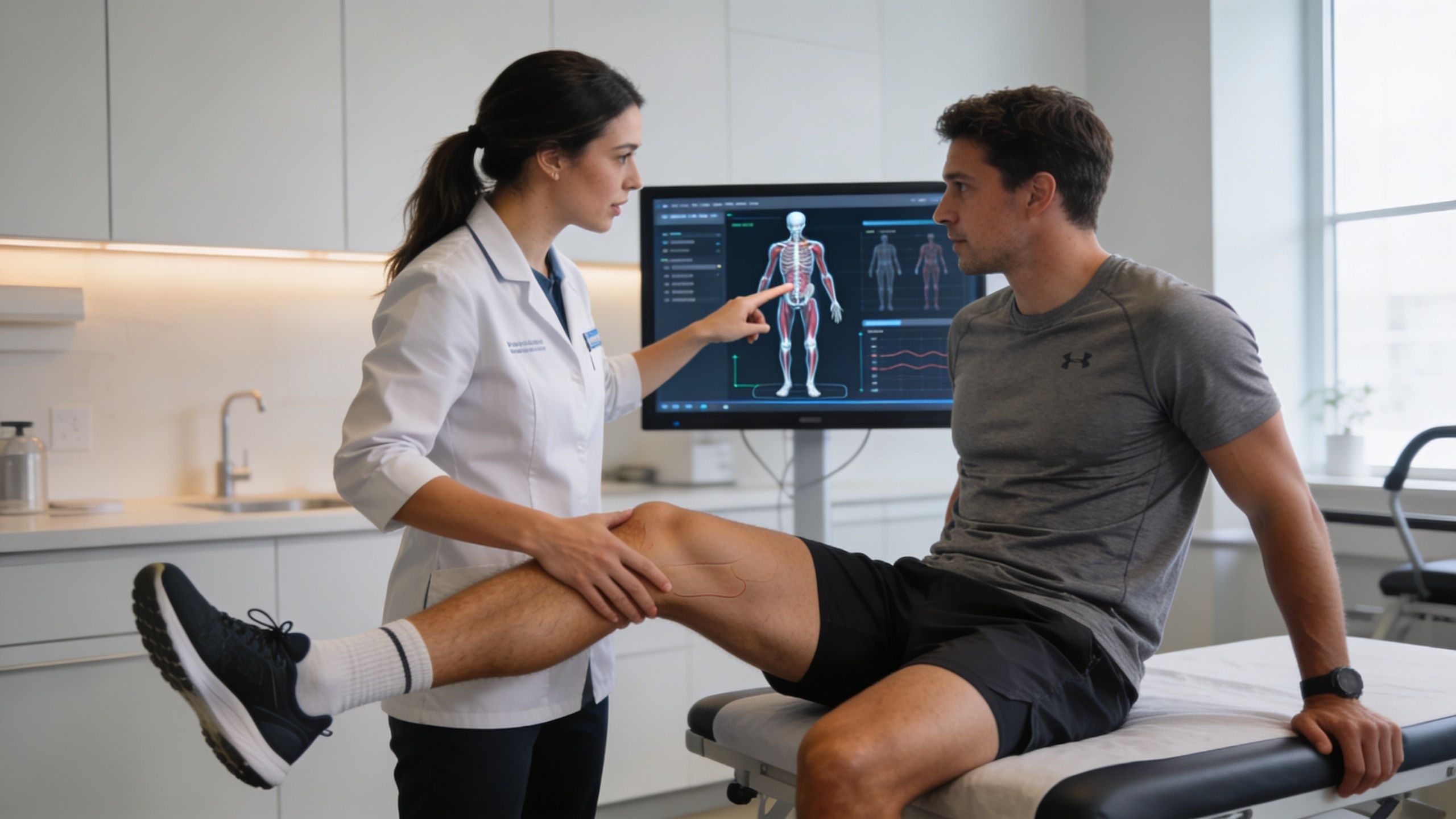
What happens in the evaluation
A strong first session usually starts with your training story. Not just the injury story. Your weekly mileage, workout pattern, race goals, recovery habits, footwear rotation, lifting background, and the surfaces you use around Boston all matter.
Then comes the physical exam. That includes joint mobility, tissue irritability, strength, balance, control, and single-leg loading. You may be asked to squat, hop, lunge, step down, and perform running-specific tasks that reveal where force is leaking.
The most useful part for many runners is gait analysis. Thorough evaluations in Boston's top running clinics use video analysis to identify faulty movement patterns like excessive hip adduction or an ankle dorsiflexion deficit of more than 10 degrees, which is linked to a 2-3x higher injury risk, as described by the Spaulding Running Center clinic page.
Why that level of detail matters
Those findings change treatment. If video shows your knee dropping inward when you fatigue, your program needs more than symptom relief. If your ankle lacks enough motion for clean loading, your calf, Achilles, or forefoot may keep compensating.
Clinical reality: The painful area is often the last place I focus. The more important question is what repeated movement pattern is feeding that tissue.
A good evaluation also sets expectations early. Some runners can keep training with modifications. Others need a short reset before reloading. Both paths can work, but they require different decisions.
Here's what runners should bring to that first visit:
- Your shoes if you have a pair you've been using most often
- Training data from the last few weeks, even if it's just notes in your phone
- A clear goal, whether that's finish a race, get through a pain-free long run, or run consistently again
If you want a better sense of what movement changes may come out of that analysis, how to improve running form is a useful local read.
Evidence-Based Treatments To Get You Back on the Road
A runner comes in after trying to push through pain for three weeks. Easy runs still hurt. Hills in Brookline make it worse. Rest helped for a few days, then the symptoms came right back on the first real workout. That pattern usually points to a treatment problem, not just an injury problem.
Treatment has to match the tissue, the loading error, and the runner's goals. Achilles pain from tendon overload needs a different plan than lateral knee pain driven by hip control, and both require something different than a postpartum runner dealing with impact symptoms plus pelvic floor dysfunction. Boston runners do best with care that connects those dots early.
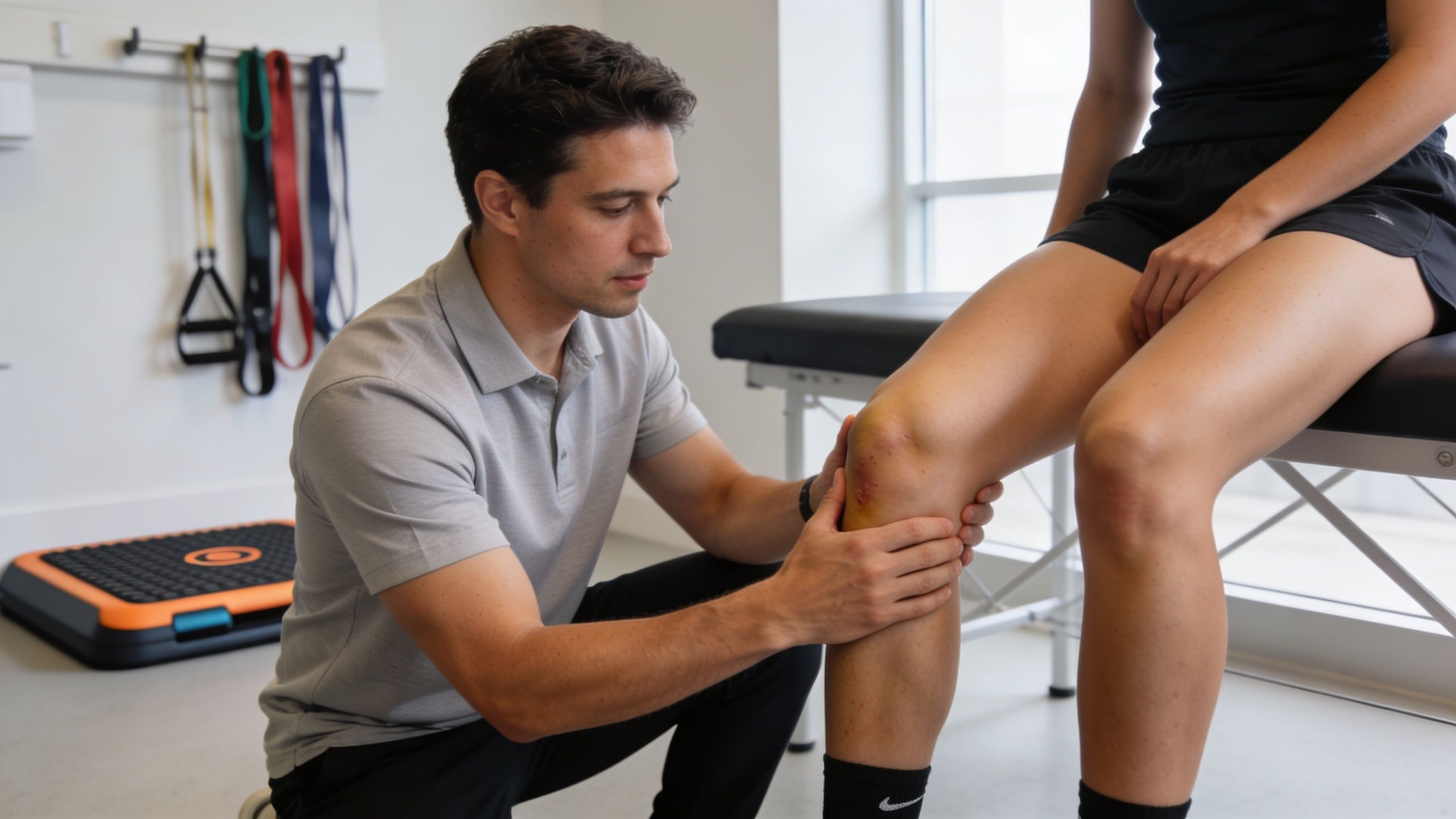
The treatment mix that tends to help runners most
Trigger point dry needling can calm down protective muscle tone in the calf, hamstring, hip, or lower leg so a runner can tolerate loading again. I use it as an adjunct, not a standalone fix. If needling reduces pain for a day but the runner still cannot handle single-leg loading or a form correction, the result will not last.
Manual therapy helps when stiffness is blocking normal mechanics. Limited ankle motion, a restricted midfoot, or a hip that will not extend well can all change how force moves up the chain. Restoring motion gives the runner access to a better pattern. Strength and retraining are what make that change stick.
Aquatic therapy fills an important gap for runners who are not ready for full impact but should not be shut down completely. Pool running and lower-load movement let you keep fitness, rehearse mechanics, and test tolerance without the repeated pounding of pavement. That matters for Boston athletes training through winter setbacks, marathon build interruptions, or bone stress recovery.
Joint Ventures Physical Therapy offers this kind of integrated care across Greater Boston, including dry needling, aquatic therapy, pelvic floor PT, and runner-focused treatment plans.
Where advanced gait data fits
Standard video is enough for many cases. Some runners need more detail, especially if symptoms keep returning despite a reasonable strength program and modified training.
Advanced gait analysis can quantify cadence, asymmetry, loading patterns, and stride characteristics that are hard to judge by eye alone. The clinicians at The Run Rx movement lab describe how cadence and stride changes can reduce stress on irritated tissues and improve running efficiency in the right athlete. That does not mean every runner should chase an arbitrary number. It means objective data can help choose the right cue, the right drill, and the right progression.
In practice, a strong rehab plan usually combines a few pieces at the same time:
- Strength work to build calf, hip, hamstring, and trunk capacity
- Mobility work for joints that limit clean loading mechanics
- Form coaching if overstriding, crossover gait, or poor trunk control is keeping symptoms alive
- Load management so mileage, pace, and hills match what the tissue can currently handle
For runners doing extra work between visits, structured personalized leg routines can support the plan, as long as they match the injury, training phase, and current tolerance.
The video below gives a practical look at movement-focused rehab in action.
The best treatment changes how you load, then holds up when you return to real running.
Single-modality care is where many runners get stuck. Dry needling without strength fades. Soft tissue work without load progression buys temporary relief. Form cues without tissue capacity often fail the moment you hit pace, fatigue, or the Newton hills. The runners who get back well usually follow the right sequence: calm the irritated area, restore motion where needed, rebuild capacity, then return to running with a plan that fits the demands of Boston roads and Boston goals.
Specialized Care for Postpartum and Performance Runners
You get through your first stroller-free run along the Charles, feel decent for two miles, then the warning signs show up. A little leaking on the downhills. Hip pain that was not there during strength work. A low back ache that builds as pace picks up. For postpartum runners, those symptoms are common, but they should not be brushed off as something to just live with.
Boston runners often try to return while balancing work, childcare, broken sleep, and training goals that still matter to them. That changes the rehab plan. A postpartum runner needs orthopedic care that also addresses pelvic floor function, pressure control, and how the trunk and hips coordinate under impact. At Joint Ventures clinics, that combination matters because running does not challenge these systems one at a time.
Why postpartum runners need a different lens
Pelvic floor symptoms can show up as leaking, heaviness, hip pain, low back pain, or a sense that the core is not connecting during harder efforts. Running exposes those gaps fast, especially on hills, speed sessions, and longer efforts where fatigue changes mechanics.
A standard plan that only targets glutes, mobility, and general core work can help, but it can also leave part of the problem untouched. Pelvic floor PT adds a missing layer. It looks at breath strategy, impact tolerance, abdominal wall function, scar mobility when relevant, and timing of the pelvic floor during real movement. The goal is not to make runners fragile or overly cautious. The goal is to restore enough control and capacity that running feels predictable again.
For some athletes, that also means using treatments beyond gym-based rehab alone. Dry needling can help calm overactive tissue that is keeping the pelvis or hips from moving well. Aquatic therapy can be a smart bridge for runners who are not ready for full ground impact but need to rebuild confidence and conditioning.
Performance runners need more than symptom relief
Performance-focused runners can look very different on the surface, but the clinical problem is similar. They are running, yet something keeps breaking down. It might be calf tightness every marathon build, a hamstring that complains as soon as track work starts, or form loss late in races that turns into pain on the Newton climbs.
Those runners usually need more than a pain check and a few exercises. They need a plan tied to their training demands, recovery habits, lifting history, race goals, and the specific stress of Boston running routes. A runner preparing for Heartbreak Hill is not asking the same thing of the body as someone rebuilding easy mileage on the Esplanade.
Some also want help sorting out recovery support outside the clinic. If that is part of your planning, these essential runner supplement recommendations can help you ask better questions about what fits your training, symptoms, and workload.
The common thread is individualization. Postpartum runners need care that includes the pelvic floor. Performance runners need care that matches the demands of racing and training at a high level. The best programs account for both, without treating either group like a generic orthopedic case.
Mapping Your Return-to-Run Program in Boston
Returning to running works better when it's progressive and boring enough to be reliable. Most setbacks happen when runners skip phases because they feel almost ready. Almost ready is where reinjury lives.
Boston has the clinical ecosystem to support this process well. The city is home to nationally recognized running injury centers, including the Spaulding National Running Center and the National Running Center at Mass General Brigham, as outlined on Spaulding Rehabilitation's National Running Center page. That local concentration of expertise has raised the standard for gait retraining and structured return-to-run care across the area.
A practical roadmap
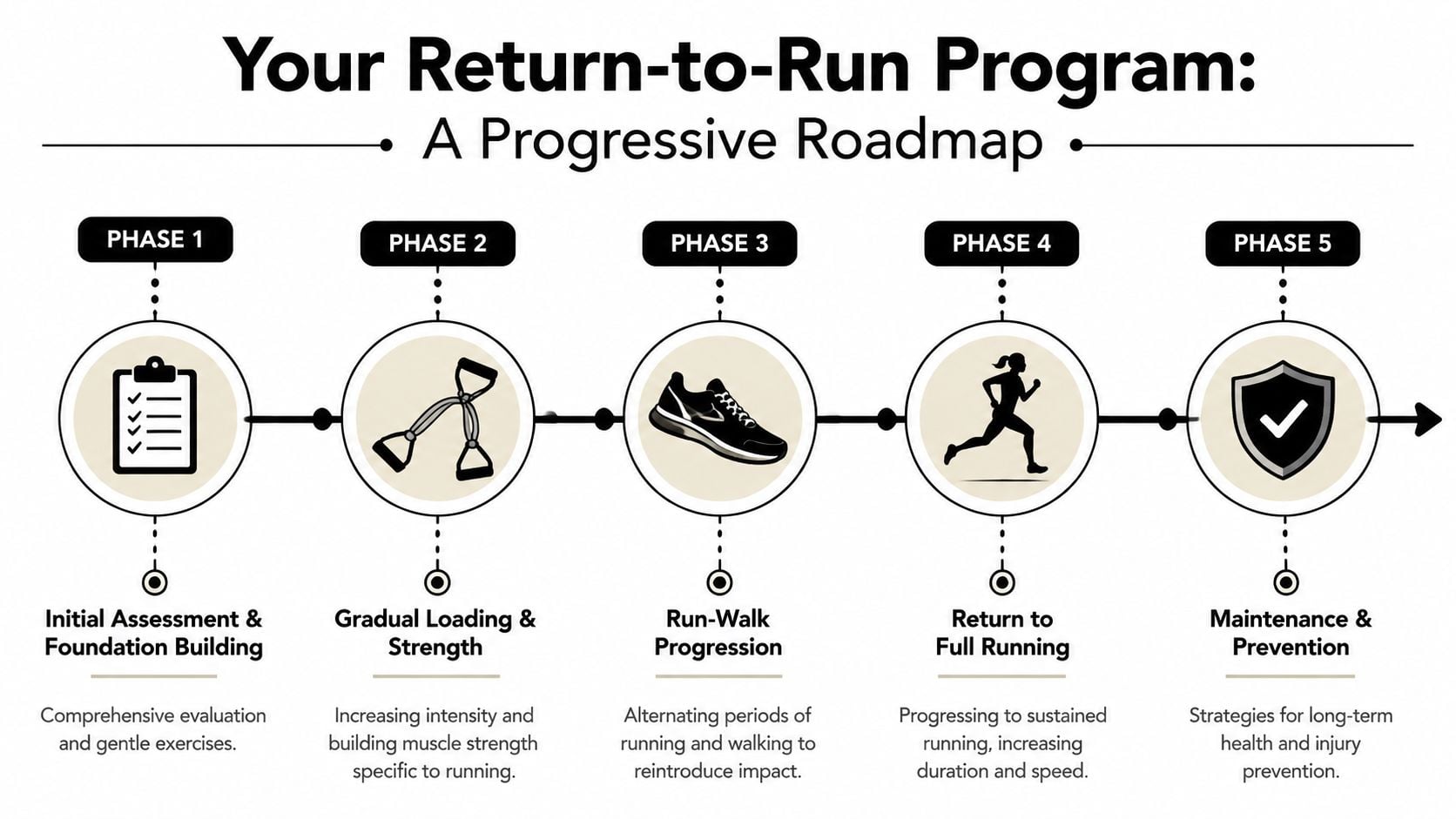
Most return plans follow a progression like this:
Settle symptoms and restore baseline movement
Early work focuses on reducing irritation, restoring mobility, and getting basic daily tasks comfortable again.Build capacity before impact
Runners earn the next phase by improving strength, balance, calf loading, single-leg control, and tissue tolerance before mileage resumes.Reintroduce running gradually
Walk-run intervals usually beat emotional “test runs.” They give the body a cleaner dose of impact and give the therapist useful feedback.Expand volume, then intensity
Easy mileage comes before workouts. Flat routes usually come before hills. Long runs come back only when the body is handling repeated stress well.Protect the result
Once pain is down, the work shifts toward durability. Strength maintenance, form awareness, and smarter progression help keep the same issue from circling back.
What runners often get wrong
The biggest mistake is using pain during the run as the only guide. Some tissues complain the next morning, not during the session. Another mistake is testing fitness instead of rebuilding tolerance. The first weeks back aren't for proving you still have speed.
Treat the first month back like construction, not competition.
The route matters too. A smooth progression on flat stretches near the Charles may be the right first step before returning to Newton hills, track workouts, or aggressive downhill mileage.
Start Your Recovery at Joint Ventures Today
You finish a run along the Charles, feel that familiar jab in the knee or Achilles, and start doing the math. Can you get to a clinic before work. Will treatment fit between meetings, daycare pickup, and the next long run on the calendar. In Boston, access matters because missed visits slow progress.
Joint Ventures Physical Therapy has clinics in Back Bay, Kenmore Square, Fort Point and Seaport, Downtown Boston, Brookline, and Allston, plus nearby communities. That makes it easier to keep care consistent, whether you want appointments near home, near the office, or close to the routes you already use.

Consistency is often the difference between a short setback and a training cycle that drags on for months. Good rehab needs follow-through, and follow-through is easier when scheduling, insurance verification, and authorizations do not become another obstacle. A clinic team that handles those details well gives runners a better chance to stay on plan.
This matters for more than the usual overuse cases. Some Boston runners need dry needling for stubborn calf or hip tension. Some do better with aquatic therapy when impact tolerance is low. Postpartum runners may need pelvic floor PT before mileage builds safely again. Those services belong in the same conversation, especially in a city where athletes want both symptom relief and a clear return-to-run path.
If you are dealing with runner's knee, plantar heel pain, Achilles symptoms, a possible bone stress injury, postpartum return-to-run concerns, or the same issue every marathon block, start with an evaluation. Bring your recent training history and your current shoes. The goal is a plan that fits your body, your schedule, and the demands of running in Boston.