A lot of people who search for concussion physical therapy Boston are already a week or two into something that doesn’t feel right.
They’ve gone back to work in the Seaport, back to class near Fenway, or back to walking everywhere because that’s Boston life. But screens now bring on headaches. Turning quickly at an intersection feels strange. The Green Line platform feels unsteady. They were told to rest, and they did, yet the fogginess, dizziness, neck tightness, or visual overload is still there.
That’s usually the moment when concussion stops feeling like a short-term inconvenience and starts affecting daily function.
That Lingering Fogginess After a Head Injury
A slip near the Common. A collision in a rec league game along the Charles. A fall on icy steps in Back Bay. Many concussions don’t look dramatic in the moment, which is one reason people often downplay them at first.
Then the next day feels off. You try to answer emails and lose your place halfway through a sentence. Noise in a coffee shop feels sharper than it should. Your jaw feels tight. You’re more tired than expected, but sleep doesn’t quite reset things.

When rest stops being enough
A lot of mild head injuries do improve quickly. But that isn’t the whole story. While many people feel better in 7-10 days, NIH studies show that 10-20% of individuals with concussions experience persistent symptoms that can last for months, which is why specialized care matters for prolonged recovery, as noted by Boston PT Wellness on concussion management.
That matters for Boston students, professionals, runners, and active adults who can’t put life on hold indefinitely. It also matters for people who were never on a field at all. Concussions happen in car accidents, falls, bike crashes, and everyday mishaps.
The symptoms are often broader than people expect
What makes this frustrating is that people often expect one symptom, usually a headache, and instead get a cluster of problems:
- Thinking feels slower, especially during work or studying
- Dizziness shows up in busy environments, like stations, sidewalks, or grocery stores
- Neck tension builds quickly, then drives headaches
- Light, noise, or screens feel aggravating
- Mood changes creep in, including irritability, anxiety, or a flat feeling
Concussion recovery is rarely just about “waiting it out.” It’s about figuring out which systems are still irritated and treating those directly.
That mental health side deserves attention too. If you’ve noticed emotional changes along with physical symptoms, Providers for Healthy Living's concussion article is a useful read because it connects the physical injury with the stress, mood changes, and cognitive strain people often feel during recovery.
Why Active Recovery Outperforms Passive Rest
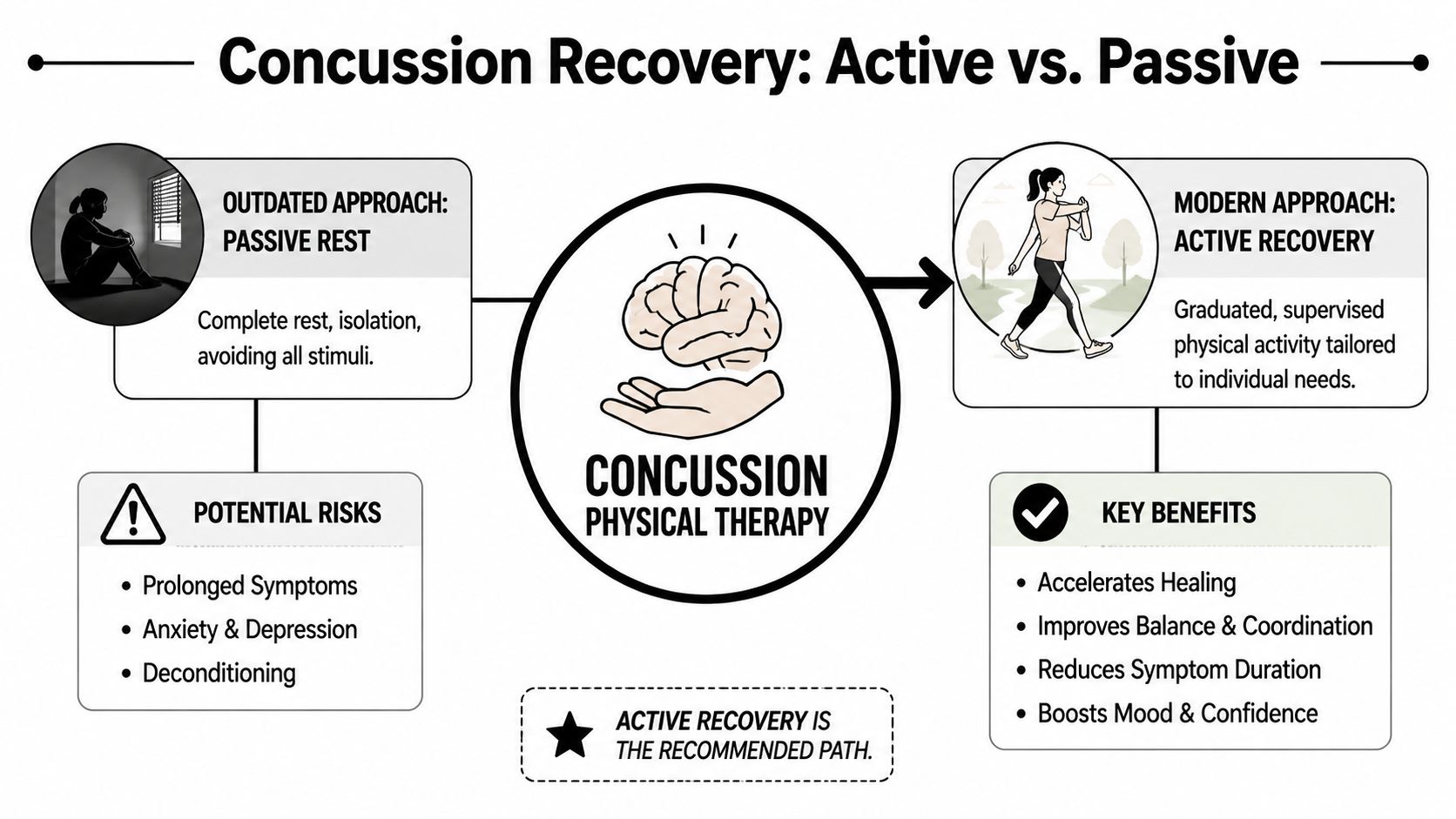
The old advice was simple. Stay in a dark room. Avoid activity. Wait.
That approach can make sense briefly after injury, especially when symptoms are intense. But it often becomes a problem when rest turns into inactivity, isolation, and fear of movement. In clinic, the question isn’t whether someone should rest at all. The question is when rest stops helping and targeted rehab needs to begin.
What passive rest misses
A concussion can disrupt several systems at once. If you only tell someone to avoid activity, you don’t address the system causing the symptoms.
For example:
- Vestibular dysfunction can leave you dizzy, motion-sensitive, or off-balance
- Ocular-motor issues can make reading, screen use, and visual tracking exhausting
- Cervical involvement from the neck can drive headaches, nausea, and a heavy-headed feeling
Those aren’t solved by generic rest. They improve when a clinician identifies the driver and applies the right exercise progression, movement exposure, and hands-on treatment when needed.
What active recovery actually means
Active recovery doesn’t mean pushing through symptoms or jumping back into full workouts. It means carefully dosed rehab based on what your system can tolerate today.
A good concussion PT plan often includes:
- Sub-symptom aerobic exercise to rebuild exertion tolerance without flaring symptoms
- Vestibular exercises for head movement, gaze stability, and motion sensitivity
- Ocular work to improve tracking, focusing, and screen tolerance
- Cervical treatment when neck stiffness or muscle guarding is part of the picture
Practical rule: If an activity causes a brief, manageable symptom increase and you recover from it well, that can be useful information. If it wipes you out for the rest of the day, the dose was probably too high.
For many Boston patients, vestibular symptoms are a major part of the story. If dizziness, visual motion, or imbalance is what’s keeping you from commuting, working, or exercising, this local guide to vestibular therapy in Boston gives a more focused look at that side of recovery.
For deeper anatomy and broader concussion education, that content belongs on Highbar Health. Visit Highbar Health for more extensive clinical resources while keeping your local care decisions focused on access and fit in Boston.
Symptoms That Signal You Need a Boston Concussion Specialist
People often wait too long because the symptoms don’t feel dramatic enough to justify care. They just feel annoying, inconsistent, or hard to explain.
You may notice you’re fine walking on a quiet side street, then feel unsteady waiting for the Green Line at Kenmore. You may get through a few emails at your Downtown office and then hit a wall with headache and concentration. You may think your jaw clicking or neck tightness is unrelated, even though it started after the same injury.
When everyday Boston life feels harder
These are the patterns that usually deserve a specialist evaluation:
- Busy visual environments bother you. Crowds, traffic, escalators, and stores feel overstimulating.
- Screen time now triggers symptoms. Work, studying, and scrolling are much less tolerable.
- Your balance feels less automatic. You’re cautious on stairs, curbs, or uneven sidewalks.
- Headaches seem tied to posture or neck tension. Long desk days make everything worse.
- Jaw tension showed up after the injury. Chewing, clenching, or clicking may be feeding headaches.
Matching Your Symptoms to the Right Joint Ventures Specialist
| Symptom | What It Might Feel Like | Relevant JVPT Service |
|---|---|---|
| Dizziness with head turns | Looking for traffic or turning in a hallway makes you feel unsteady | Vestibular and balance therapy |
| Motion sensitivity | T stations, escalators, crowds, or grocery aisles feel overwhelming | Vestibular and balance therapy |
| Headaches with neck tightness | Desk work, reading, or driving builds pressure at the base of the skull | Orthopedic PT and manual therapy |
| Jaw pain or clicking | Clenching, chewing, or talking aggravates symptoms after the injury | TMJ treatment |
| Eye strain and difficulty focusing | Screens, reading, and studying quickly fatigue you | Concussion rehab with ocular and vestibular focus |
| Exercise intolerance | A light walk or bike ride brings on symptoms too quickly | Graduated aerobic conditioning |
| Muscle tension contributing to headaches | The neck and upper shoulders stay guarded and sore | Trigger point dry needling and manual therapy |
| Hand or upper extremity issues after a fall | You injured your wrist, hand, or arm at the same time | Hand and upper extremity rehab |
If your symptoms are changing how you work, commute, study, train, or move through the city, they’re significant enough to assess.
Your Concussion Recovery Plan at Joint Ventures
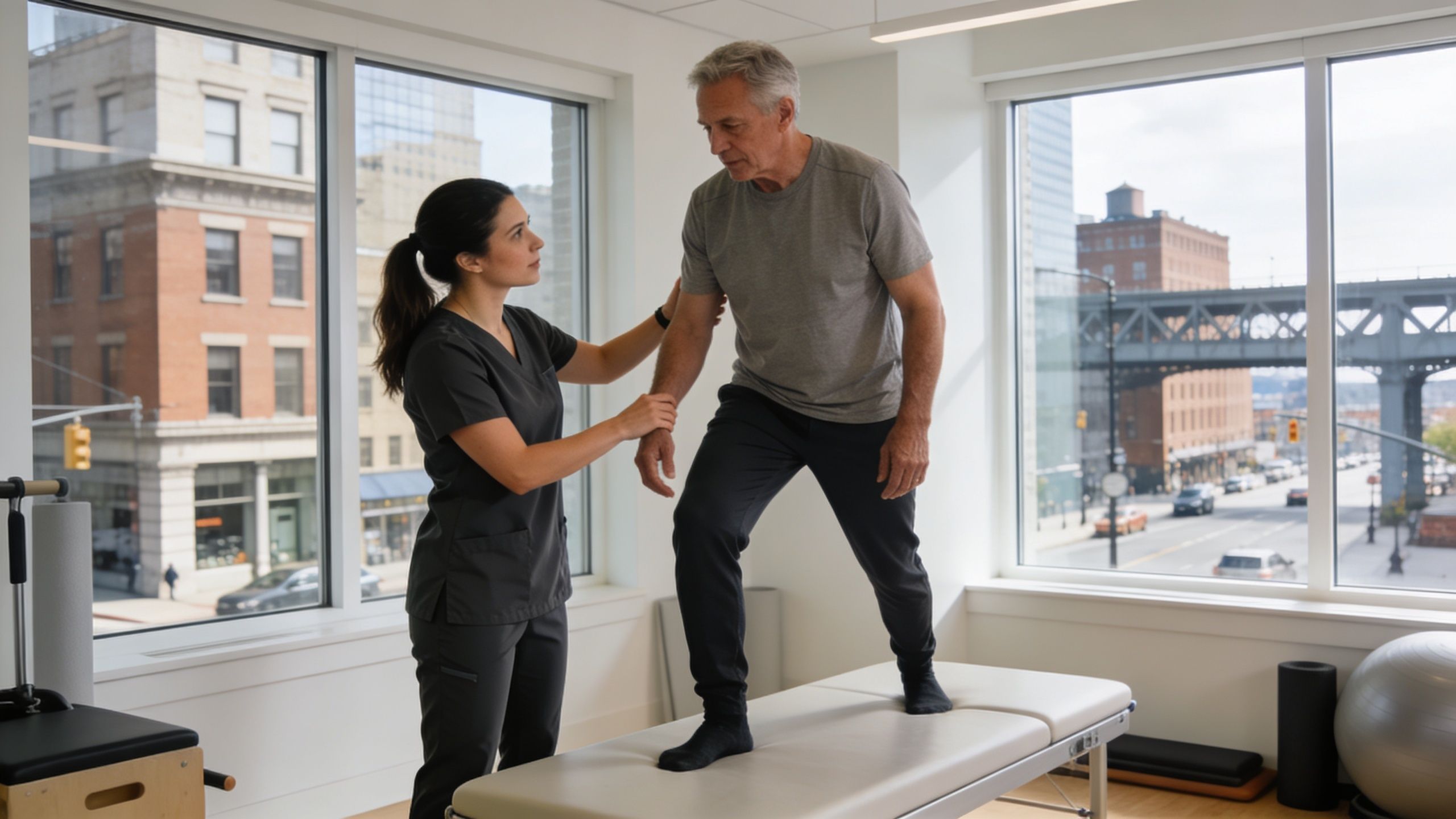
The first visit should feel less like a generic PT intake and more like a targeted investigation. A strong concussion evaluation looks at symptom history, neck function, eye movement, balance, gait, exertion tolerance, and the patterns that trigger symptoms in real life.
That matters because the treatment plan for a college soccer player near Allston isn’t identical to the plan for a financial professional in Fort Point who gets headaches after two hours at a laptop.
What happens in the evaluation
Early on, the therapist is trying to answer a few practical questions:
- Is the main problem vestibular, ocular, cervical, or a combination?
- What level of physical activity is safe right now?
- Which daily tasks are aggravating symptoms the most?
- Is there overlap with TMJ, posture, prior dizziness, or another movement issue?
When exercise intolerance is part of the presentation, clinicians may use tools such as the Buffalo Concussion Treadmill Test to establish a safe threshold for aerobic work and then build from there.
What treatment usually includes
A modern plan is active, but it’s not random. It tends to combine several pieces based on what the exam shows.
Some people need manual therapy to settle down neck-driven headaches. Some need gaze stabilization and balance work because turning the head is what provokes symptoms. Others need a more structured progression back to cardio, lifting, class, or sport.
One local option for prevention and return-to-play planning is concussion baseline screening at Joint Ventures, which includes pre-injury reference points that can help guide decisions if a concussion happens later.
The right program doesn’t ask you to prove toughness. It asks your body to adapt at a pace it can actually sustain.
A key reason this matters is recovery time. A 2023 systematic review found that athletes who began aerobic exercise therapy guided by a PT recovered in a median of 13 days, compared to 17 days for those who only rested, a 4-day reduction, according to the systematic review on physical therapy after concussion.
That doesn’t mean every person follows the same timeline. It does mean that structured rehab can outperform a passive wait-and-see approach.
How progress is built visit by visit
Later visits should feel specific. Your therapist updates dosage, tracks response, and changes the plan based on what your system is doing, not what a template says it should do.
A simple overview of that kind of guided progression is below.
In practice, that may mean shorter screen bouts before longer ones, walking before running, seated eye-head drills before crowded-environment exposure, or treating neck mobility before asking your balance system to do more. Good rehab is often less about doing more exercises and more about choosing the right next step.
Tailored Concussion Care for Every Boston Lifestyle
Concussion rehab gets framed as a sports issue far too often. In Boston, plenty of patients with concussion symptoms are graduate students, office workers, parents, recreational runners, cyclists, and active adults who were never in a game.
That distinction matters because the plan should match the life you’re trying to get back to.
For student-athletes and students
A student in Allston or Brookline may be managing two recoveries at once. One is physical. The other is academic.
Return-to-sport gets attention, but return-to-learn often creates just as much stress. Reading, lectures, note-taking, and screen-based homework can drive symptoms long before a full practice does. For that person, care needs to include symptom pacing, visual tolerance work, and realistic progressions for class demands, not just clearance for exercise.
For desk-based professionals
Downtown and Seaport professionals often describe a different pattern. They say the day starts manageable, then the headache builds, neck muscles tighten, and concentration falls off as screen time accumulates.
Concussion rehab often overlaps with services people don’t expect to need:
- Workplace ergonomics when posture and screen setup keep feeding symptoms
- TMJ treatment if clenching and jaw tension are amplifying headaches
- Trigger point dry needling when muscle guarding in the neck and upper shoulders won’t let go
- Vestibular work if visual motion and head turns in busy environments stay provocative
For active adults and non-athletes
This is one of the biggest gaps in local concussion care. Emerging data highlights a 25% rise in non-sport concussions among women aged 25-44, and a 2023 study found 40% of concussion patients experience persistent vestibular symptoms, often linked to neck pain or hormonal changes, as referenced by BMC Brighton’s sports concussion clinic page.
That matters for people who don’t identify as athletes at all. It includes postpartum individuals, commuters recovering after falls or car accidents, and active adults whose main issue is balance confidence, visual motion sensitivity, or persistent dizziness during normal daily activity.
A concussion plan should fit the person’s actual day. That might mean getting back to lectures, presentations, playground pickups, or running along the Esplanade. Not just passing a generic test.
Where the overlap matters most
Some concussion cases sit in more than one lane at once. A patient may have dizziness plus TMJ pain. Another may have neck-driven headaches plus balance issues. Another may need pelvic floor care separately while navigating postpartum changes that affect recovery tolerance and symptom load.
That’s why the best local care model isn’t just sports-focused. It needs to think across systems and across lifestyles. In Boston, that’s what makes concussion physical therapy Boston patients can use in real life different from a generic protocol handed to everyone.
Managing Recovery and Preventing Future Injuries
What you do between visits matters. Not because home care replaces treatment, but because recovery is shaped by daily decisions about activity, sleep, screens, and pacing.
The goal isn’t to avoid all symptoms forever. The goal is to work within a symptom-limited range that lets your system recover without constant flare-ups.
Practical habits that usually help
- Use shorter work blocks: If screens trigger symptoms, break tasks into smaller chunks and stop before concentration completely falls apart.
- Respect sleep basics: Keep timing consistent, dim lights earlier, and avoid turning late-night scrolling into “rest.”
- Keep light movement in the plan: Short walks or low-level cardio may be useful if they stay within the limits your therapist set.
- Treat neck tension early: Gentle mobility and posture changes can matter if headaches build from the neck upward.
If you want a broader consumer-friendly perspective on timelines, this overview of how long brain injuries heal is a reasonable starting point, especially for understanding why recovery can vary so much from person to person.
Prevention matters too
Prevention in this setting doesn’t mean you can guarantee you’ll never get hurt. It means being better prepared and reducing avoidable risk.
For athletes, students, and active adults, that can include baseline screening, smart return-to-play decisions, and attention to movement quality before the season gets busy. If you want practical ideas for staying healthier in training and recreation, this guide on how to prevent sports injuries is a useful local resource.
Take Control of Your Concussion Recovery in Boston
If your symptoms are lingering, more rest alone usually isn’t the answer.
Concussion recovery works better when the actual drivers are identified and treated. That may mean vestibular therapy for dizziness, cervical treatment for headaches, TMJ care for jaw-related aggravation, or a graded exercise plan that helps you return to school, work, and training without guessing.
Boston patients need care that fits real life. Commutes, classes, long desk days, crowded sidewalks, and active routines all shape recovery. A personalized PT evaluation can make that process much clearer.
If you’re still waiting for symptoms to disappear on their own, don’t keep losing time. Book a local evaluation and start a plan built for how you live and move in Boston.
Frequently Asked Questions About Concussion Therapy
Do I need a doctor’s referral to start physical therapy in Massachusetts
In many cases, you can start PT through direct access, which makes it easier to get evaluated quickly when symptoms are affecting daily life. Insurance rules can vary, so it’s still smart to confirm the details before your first appointment.
If you’re dealing with concussion symptoms, speed matters less than fit. You want a clinic that can assess vestibular, cervical, visual, and exertional issues instead of treating this like a basic orthopedic visit.
Is concussion PT only for athletes
No. Athletes are only one part of the population that needs this care.
A lot of Boston patients seeking concussion rehab are professionals, students, parents, commuters, and active adults recovering after falls, bike crashes, or car accidents. If you have dizziness, headaches, screen intolerance, balance changes, or neck-driven symptoms after a head injury, PT may be appropriate whether or not sport was involved.
How does pediatric concussion PT differ from adult care
Kids and teens need a plan that accounts for school demands, visual load, and age-appropriate exercise progressions. It also needs to look beyond test scores alone.
Over-reliance on neurocognitive tests like ImPACT can miss 20% of vestibular deficits in kids, and the American Academy of Pediatrics notes that early PT with eye-head coordination exercises can lead to a 2-week faster recovery compared to rest alone, according to Massachusetts concussion treatment center resources.
That’s one reason school re-entry planning should include symptoms like dizziness, motion sensitivity, and visual overload, not just classroom concentration.
What is concussion baseline screening and who should get it
Baseline screening records pre-injury function so providers have a point of comparison if a concussion occurs later. It can be especially useful for student-athletes, club sport athletes, and active adults in higher-risk activities.
It’s also helpful for families who want a clearer process if an injury happens during the season. A good baseline doesn’t prevent concussion, but it can make post-injury decision-making more targeted and less reactive.
If you’re dealing with lingering concussion symptoms in Back Bay, Kenmore Square, Fort Point, Downtown Boston, Brookline, Allston, or nearby neighborhoods, Joint Ventures Physical Therapy offers 1-on-1 care with clinicians who treat vestibular issues, TMJ dysfunction, neck-related headaches, sports rehab needs, and return-to-school or return-to-work challenges. Book an evaluation and get a plan built around your symptoms, schedule, and Boston routine.