
Boston has a way of making pain feel louder. You notice it climbing the stairs at Kenmore, getting out of your desk chair in the Seaport, or trying to squeeze in a training run along the Charles and realizing your body isn't cooperating. A lot of people searching for aquatic therapy boston are in that exact spot. They're not looking for a spa day or a random water class. They want to move again without paying for every step afterward.
That's where pool-based rehab can make a real difference. For the right patient, water creates a setting where movement becomes possible sooner, with less strain and better control than many people can tolerate on land. In Boston, where active professionals, runners, postpartum patients, and older adults often want one plan that fits real life, that matters.
Find Relief with Aquatic Therapy in Boston
You finish a workday in the Seaport, stand up from your chair, and your back tightens. Or you try to restart marathon training along the Charles and your knee reminds you, fast, that you are not ready for full mileage. Or you are a few months postpartum, eager to exercise again, but impact, core strain, or pelvic pressure still feel wrong.
Those are the patients I think about when I recommend aquatic therapy. The goal is not generic pool exercise. The goal is to create a calmer place to practice movement that still matches real life in Boston.
For some people, that means restoring walking tolerance so the commute feels manageable again. For runners, it can mean rebuilding gait mechanics, leg strength, and confidence before the body is ready for repeated pavement impact. For desk professionals, it can mean loosening guarded movement patterns and retraining hips, trunk, and posture without the usual flare after a long day of sitting. For postpartum patients, it can mean returning to exercise with more respect for abdominal recovery, pressure management, and pelvic floor symptoms, including issues that often get brushed aside in standard fitness settings.
That last point matters. Pelvic floor dysfunction, heaviness, leaking, and core weakness can make land exercise feel risky even when someone looks "cleared" on paper. In the right clinical setting, aquatic therapy gives us a lower-load way to work on breathing, trunk control, balance, and gradual strengthening while we keep an eye on symptom response.
What Boston patients are usually asking
The question is usually not whether water can help. It is whether water can help with your specific day.
- For runners: Can I keep training the pieces that matter while impact is still too provocative?
- For desk workers: Can I move enough to reduce stiffness and pain without paying for it that night?
- For postpartum patients: Can I rebuild strength and control without aggravating pelvic floor or abdominal symptoms?
- For active older adults: Can I work on balance, walking, and leg strength in a setting that feels supported?
Aquatic therapy works best when each session connects to a clear functional target. At Joint Ventures, that often means using the pool for a defined part of a 1-on-1 plan, then pairing it with land-based treatment, home exercise, and progression goals that fit the patient's routine, whether that routine is a run commute, a long desk schedule, or caring for a new baby.
What makes the local experience different
In Greater Boston, patients usually want more than pool access. They want clinical reasoning. They want to know why they are in the water, what they should be practicing there, and how that work will carry over to stairs, sidewalks, the T, the gym, or a return to sport.
That is the difference between getting wet and getting treatment. A good aquatic session should have a purpose, a progression, and a plan for what comes next on land.
How Water Helps You Heal Faster
A lot of Boston patients arrive at the pool after hitting the same wall on land. A runner can bike but cannot tolerate a short jog. A desk worker can get through the workday, then stiffens up on the walk home. A postpartum patient wants to rebuild strength but feels heaviness, pressure, or poor abdominal control with regular exercise. Water changes the starting point so rehab can keep moving instead of stalling.
Buoyancy reduces pressure
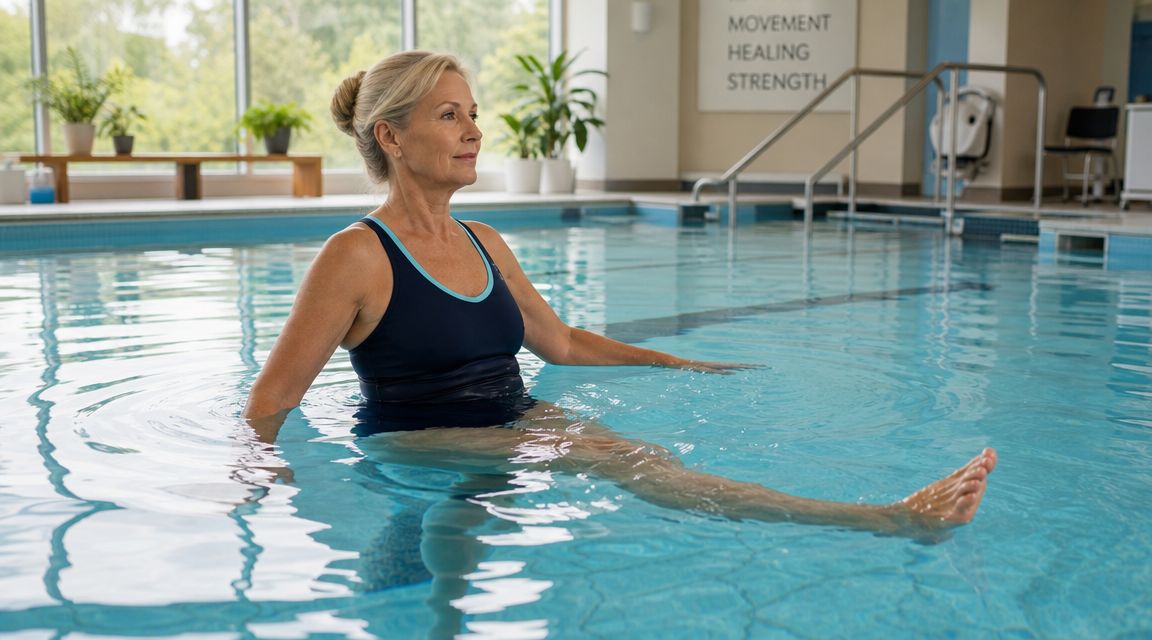
Buoyancy unloads the body. In the pool, your joints, spine, and healing tissues do not have to manage the same body weight and ground reaction forces they face on land. That often lets us start gait work, mini squats, step patterns, and gentle strengthening sooner, with better form and less symptom flare.
That matters clinically. If a movement is possible in water with good mechanics, we can practice it now instead of waiting weeks for land tolerance to catch up.
For Boston patients, that can mean keeping momentum during recovery. Runners can maintain parts of their stride pattern without full impact. Postpartum patients can work on hip and trunk strength with less downward pressure. Patients with back, hip, or knee pain can rehearse everyday tasks that still feel too provocative on a clinic floor.
Hydrostatic pressure improves support and body awareness
Hydrostatic pressure is the even pressure of water around the body. Many patients notice that they feel more supported and less guarded within a few minutes of getting in. That response can make movement feel safer, especially if swelling, pain, or instability has made you hesitant.
It also gives constant sensory feedback. That helps with balance, alignment, and control because the body gets clearer information about where it is in space. For someone who feels unsteady on stairs, tense during walking, or disconnected from core and pelvic floor control after pregnancy, that feedback is often useful.
We use that window carefully. Less pain in the pool does not mean the problem is gone. It means there is a better opportunity to practice the right pattern.
Viscosity adds resistance without extra impact
Viscosity is water resistance. The harder and faster you push, the more resistance you meet. Slow the motion down, and the exercise becomes easier. That gives us a clean way to adjust difficulty without handing you weights or increasing joint stress.
Here is how that plays out in treatment:
| Movement goal | How water helps |
|---|---|
| Walking retraining | Slows the gait cycle so step length, weight shift, and posture are easier to correct |
| Early strengthening | Builds effort through water resistance without adding impact or heavy external load |
| Balance work | Challenges trunk and leg control in a safer setting |
| Range of motion | Warm water often helps stiff joints and guarded muscles move with less irritation |
This is one reason aquatic therapy fits well into a 1-on-1 plan at Joint Ventures. We are not using the pool as generic exercise time. We are choosing water because it lets a specific Boston patient practice a specific skill, then carry that progress back to sidewalks, stairs, gym sessions, workdays, or a return to running.
The Evidence-Backed Benefits of Aquatic Therapy
Aquatic therapy isn't just popular because it feels good. It has a real clinical role when the treatment goal matches the patient.
A strong example comes from a 2023 systematic review in PubMed Central. Researchers evaluated 3,007 articles, narrowed them to 33 full-text studies, and included 11 trials focused on older adults with degenerative chronic disorders. The review found that both land-based and aquatic physical therapy improved outcomes, but aquatic therapy was more effective for balance, gait, quality of life, and fear of falling. The authors also rated the evidence as low quality because of methodological limitations, which is an important reminder that aquatic therapy is promising, not magic, according to the PubMed Central systematic review on aquatic versus land-based therapy.
What patients usually notice first
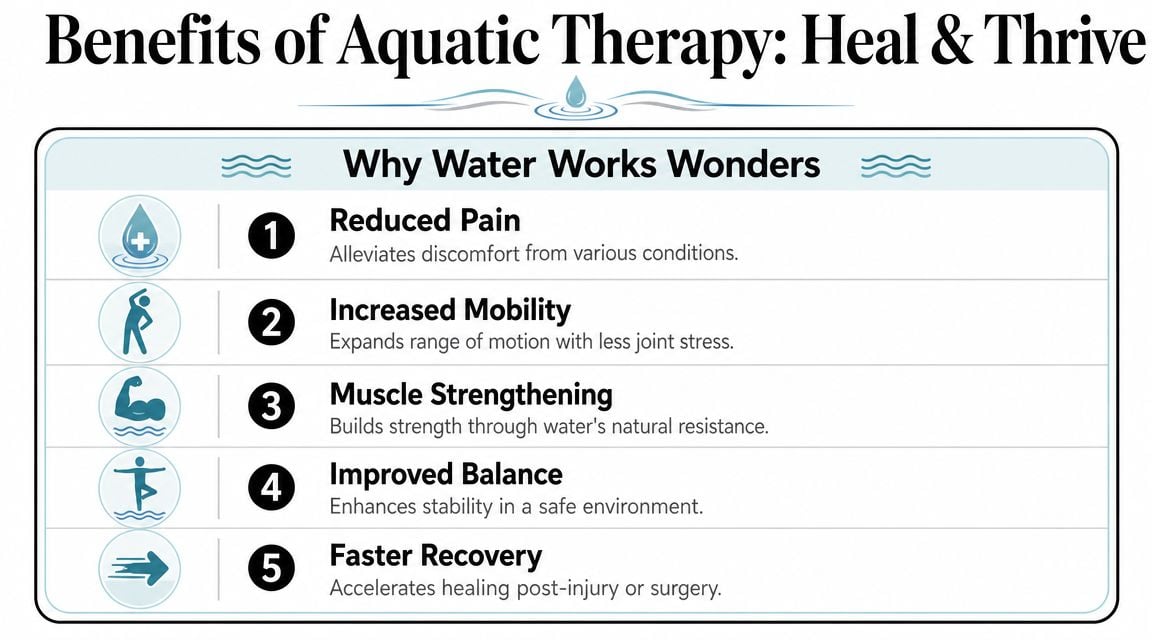
The first benefit is often less pain during movement. That doesn't mean the underlying issue disappears. It means the pool can create enough symptom relief to let someone practice movement patterns they've been avoiding.
The next common gain is better motion quality. A patient who limps on land may walk with a more natural pattern in the water. Someone who stiffens during a squat may finally move through the hips and knees with less fear.
The main functional wins
Aquatic therapy tends to support several rehab goals at once:
- Pain reduction: Lower joint loading can make exercise feel possible again.
- Mobility work: Warm water often improves tolerance for stretching and range-of-motion practice.
- Strength building: Water resistance lets patients work without jumping straight to weights or impact.
- Balance training: The pool creates a safer environment to challenge stability and gait.
- Confidence: When movement stops feeling threatening, patients usually participate more fully.
The best result of pool therapy isn't “feeling better in water.” It's carrying better movement and confidence back onto land.
What it doesn't do well on its own
Expectations are important. Aquatic therapy usually isn't the whole plan. If your end goal is running hills, lifting at the gym, or carrying a toddler up a triple-decker staircase, land-based progression still matters. The pool can open the door, but most patients still need a broader rehab plan that translates those gains into everyday movement.
That's why good aquatic therapy is specific. It should answer a functional problem, not just fill time.
Is Aquatic Therapy Right for Your Condition
Some patients are obvious candidates for pool-based rehab. Others need a mix of pool and land work. The key isn't whether water sounds appealing. The key is whether your body needs a lower-load setting to move well enough to make progress.
Conditions that often respond well
Boston-area aquatic therapy programs often use heated pools in the 88 to 93°F range, and that controlled environment can reduce muscle guarding while helping therapists target strength, endurance, gait, and motor planning for problems like impaired balance, weakness, and decreased range of motion, as described by Boston Ability Center's aquatic physical therapy overview.
Patients who often fit that model include:
- Arthritis and joint pain: Water can make walking, squatting, and basic strengthening more tolerable when compression hurts.
- Post-surgical recovery: Hip, knee, ankle, or spine patients may use the pool when land exercise still feels too demanding. If you're recovering after a procedure, this guide to post-surgical rehab in Boston can help you understand how therapy usually progresses.
- Chronic low back pain: The pool can reduce guarding and let patients practice trunk control and movement without as much fear.
- Balance and gait deficits: The environment gives support while still challenging stability.
- General deconditioning: Patients rebuilding stamina after a setback may tolerate sustained activity better in water.
- Postpartum return to exercise: For some patients, the pool is a smart bridge back to walking, core work, and graded strength without starting with impact.
- Pelvic floor-related pain sensitivity: Not every pelvic floor issue belongs in the pool, but selected patients may benefit from a lower-load setting as part of a broader plan.
Signs it may be a good fit for you
Aquatic therapy is worth considering if any of these sound familiar:
- You can do the motion, but land impact or body weight makes it flare.
- You're stiff, guarded, or swollen enough that normal exercise feels rough.
- You need balance work but don't feel safe pushing it on land yet.
- You're returning after surgery or a pain flare and need a gentler re-entry point.
When aquatic therapy may not be appropriate
Pool therapy isn't right for everyone. A therapist will screen for issues that can make aquatic treatment unsafe or impractical.
Common reasons to pause or avoid it include:
- Open wounds or skin issues: Water exposure can interfere with healing or create hygiene concerns.
- Fever or active illness: Rehab should wait until you're medically stable.
- Certain medical or mobility limitations: These need individual review before starting.
- Severe fear of water: You don't need to swim, but you do need enough comfort to participate safely.
A “maybe” isn't a bad answer. It just means the decision should come from an evaluation, not a guess.
What to Expect at Your First JVPT Aquatic Session
You arrive for your first pool visit with a fair question. What will happen once you get there, and how is this different from being told to do a few laps in warm water?
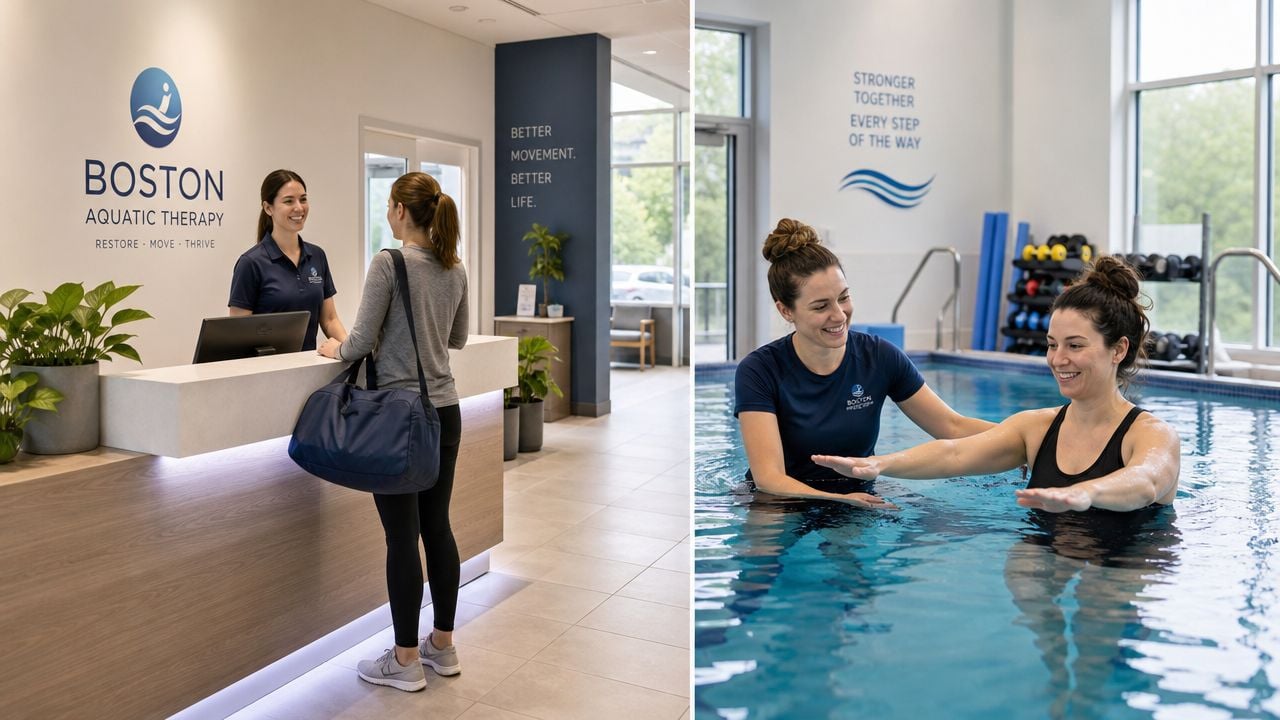
At Joint Ventures, the first aquatic session is still physical therapy. It starts with an evaluation, clear goals, and one-on-one clinical decision-making based on how you move, what irritates your symptoms, and what your Boston routine asks of your body.
Before you get in the water
The visit begins with a conversation and a land-based screen. Your therapist will ask about your pain pattern, medical history, current activity level, and the tasks that matter most to you. For a runner, that may be getting back to the Charles River without a flare. For a desk professional, it may be sitting through a workday without back or neck symptoms building. For a postpartum patient, it may be returning to exercise while respecting pressure management, core recovery, and pelvic floor symptoms.
We also sort out the practical details early. You will know what to wear, how changing works, whether you need pool-specific paperwork, and how the pool session fits with your broader treatment plan. If you want a general overview before day one, our guide on how to prepare for your first physical therapy appointment is a useful starting point.
In the pool
Once you are in the water, the treatment is specific to your presentation. Early exercises may include supported walking, range-of-motion work, balance drills, breathing control, or gentle strengthening. The point is not to do random movement in a lower-gravity setting. The point is to use the water well.
That looks different from patient to patient. A runner may work on gait mechanics, single-leg control, and graded loading without full land impact. A postpartum patient may begin with breathing coordination, trunk control, and symptom-limited movement if pelvic floor or abdominal symptoms make land exercise too provocative. A desk worker with back pain may start with comfortable spinal motion, hip mobility, and lower-load strength to reduce guarding and build tolerance again.
You can get a feel for the environment here:
What to bring and what it feels like
Bring swim clothing you can move comfortably in, a towel, and anything the clinic asks you to have ready. You do not need to be a strong swimmer for therapeutic pool work. Many sessions are done in a controlled area with close therapist supervision.
The first session usually feels supportive, lighter, and more manageable than the same motions on land. Some patients notice less guarding right away. Others need a visit or two before the water feels natural. Both responses are normal.
A good first JVPT aquatic session gives you three things. A clearer diagnosis, a treatment plan that connects pool work to real life, and a better sense of what your body can do right now without paying for it later.
Why Choose Joint Ventures for Aquatic Therapy
A common Boston rehab story goes like this. Someone finds a pool, feels better in the water, then stalls because no one has explained how that work will carry over to stairs, commuting, lifting a child, or getting back to running. Many Boston patients get frustrated at that stage.
At Joint Ventures, aquatic therapy is treated as one part of a 1-on-1 physical therapy plan, not a stand-alone service. Your pool session is selected for a reason, measured against clear goals, and progressed into the land-based treatment you need for daily life in Boston. You can see how we structure that care on our aquatic physical therapy service page.
More than generic pool rehab
Generic pool access can help you move with less pain. It does not automatically answer the harder clinical questions. Which movements should be reduced, which should be retrained, and when is it time to load more on land?
That difference matters for patients whose problems are more specific than general soreness or deconditioning. Pelvic floor dysfunction, postpartum recovery, persistent pain sensitivity, vestibular issues, and TMJ-related tension patterns often need closer clinical decision-making. A pool can calm symptoms and improve tolerance, but progress depends on how that water-based work connects to breathing, trunk control, strength, pacing, balance, and return to activity outside the pool.
What an integrated plan actually looks like
For a postpartum patient, that may mean the same therapist uses the pool to reduce pressure and improve movement tolerance, then guides land-based core and pelvic floor rehab as symptoms settle. For a runner, it may mean using the water early for gait drills and lower-load strength, then building back to pavement with a graded impact plan that fits training goals and the realities of Boston sidewalks, hills, and winter conditions. For a desk professional with back pain, pool treatment may be the starting point, while the larger plan also addresses hip mobility, trunk strength, work setup, and the sitting patterns that keep symptoms cycling.
That continuity is the point.
You are not starting over in a different setting each time. The therapist is connecting each phase of care so the gains you make in the pool carry into work, parenting, exercise, and commuting.
A better fit for complex cases
Patients with layered problems rarely benefit from a one-protocol approach. They need a therapist who can choose when aquatic therapy will help, when standard exercise on land is the better tool, and how to blend both without flaring symptoms.
Joint Ventures Physical Therapy is one local option for Boston-area patients who want that kind of focused, individualized care. For deeper educational content about injury recovery, movement mechanics, and physical therapy topics that go beyond local service pages, visit Highbar Health.
Your Questions About Aquatic Therapy Answered
A lot of Boston patients ask the same thing before their first pool visit. Will I need to swim. What do I bring. Will this help my specific issue, or is it mainly for arthritis. Those are fair questions, especially if you are dealing with pain, postpartum symptoms, or a setback that has made regular exercise feel out of reach.
Do I need to know how to swim
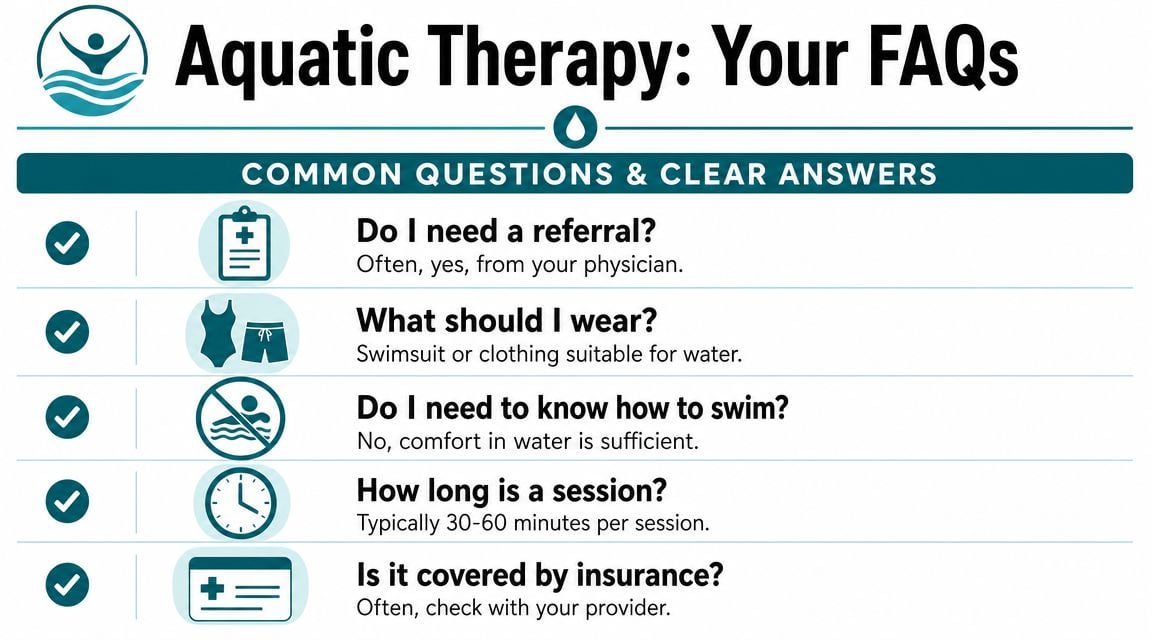
No. Aquatic therapy is supervised treatment in a controlled pool setting, with your therapist next to you and exercises chosen for your condition. You are not being asked to swim laps or keep up with a class.
What should I wear
Wear a swimsuit or other pool-safe clothing your clinic approves. Bring a towel, a change of clothes, and any items the office recommends ahead of time. If you have incision concerns, postpartum healing questions, or pelvic floor symptoms, ask before the visit so your therapist can tell you whether the pool is the right setting that day.
Will my session be in warm water
Usually, yes. Therapeutic pools are often heated because warmer water can make movement more comfortable and help patients tolerate exercise that would feel too sharp or stiff on land. The exact pool setup still matters. A runner working on cadence and gait may need a different session focus than a postpartum patient working on pressure management, balance, and core control.
Is aquatic therapy covered by insurance
Coverage depends on your plan and your physical therapy benefits. Some insurers also have referral or authorization requirements. At Joint Ventures, we want patients to know the logistics early, because billing questions should not be the reason care gets delayed.
Is it only for arthritis or older adults
Aquatic therapy is useful for far more than that. In Boston, we commonly see it fit runners trying to stay active while unloading an irritated joint, desk professionals whose back or neck pain flares with standing and walking, and postpartum patients who need movement with less pressure through the abdomen and pelvic floor.
That last group often gets overlooked. Pool therapy can be a very good entry point for people with pelvic pain, core weakness, heaviness, or movement fear after pregnancy, especially when the therapist can connect that work to the next phase of rehab on land.
If land-based rehab feels like too much right now, that does not mean progress has to stop. It often means we should change the starting point.
If you're searching for aquatic therapy boston, keep the next step simple. Start with an evaluation. Make sure the pool fits your symptoms, goals, and schedule, then build a plan that gets you back to commuting, training, work, parenting, and daily movement with more confidence.
If you're ready to start, schedule an evaluation with Joint Ventures Physical Therapy. With convenient Greater Boston locations including Back Bay, Kenmore Square, Fort Point/Seaport, Downtown Boston, and surrounding neighborhoods, it's easier to find a clinic that fits your commute and your routine.