If you've ever dealt with an injury, a nagging ache, or are recovering from surgery, you've probably heard the term "ortho physical therapy." It’s a specialized field, but the goal is simple: to help you move without pain and get back to doing what you love.
It’s all about healing your body's movement system—the muscles, bones, joints, and all the tissues that connect them. We use a combination of hands-on care and specific exercises to get you back to living your life.
What Exactly Is Ortho Physical Therapy?
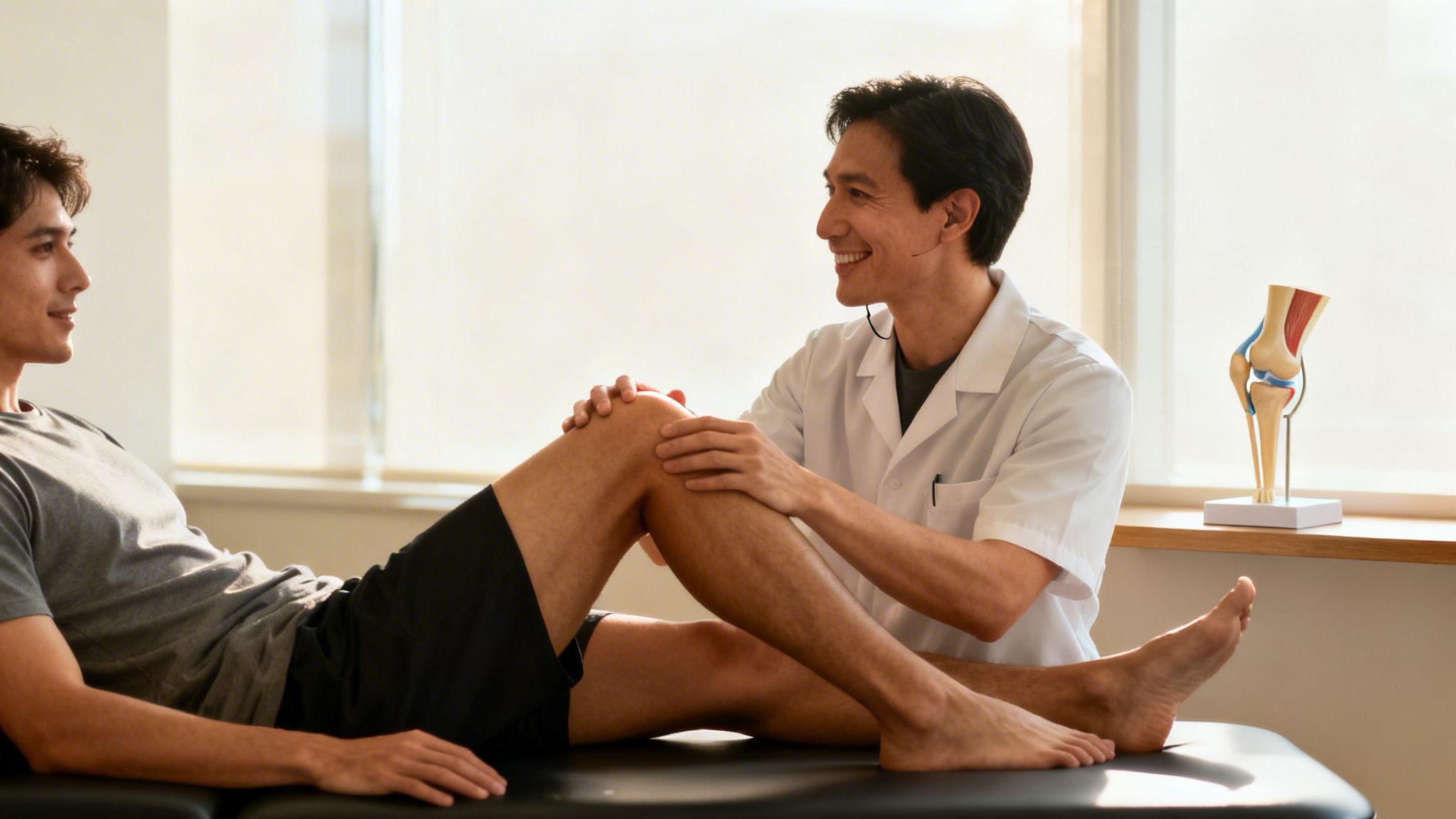
Let’s skip the clinical jargon. Think of an orthopedic physical therapist as a skilled mechanic for your body. When something feels off—a "catch" in your shoulder, a "clunk" in your knee, or a constant ache in your back—we don't just put a temporary patch on it. Our job is to figure out why it’s happening in the first place.
We are movement experts who focus entirely on your musculoskeletal system. This means we work with people dealing with everything from a recent sports injury to chronic pain that’s been around for years. We believe that finding the root cause is the only path to a lasting solution.
More Than Just a Post-Surgery Plan
While we’re known for helping people recover after surgery, that's just one part of what we do. Ortho physical therapy is for anyone who wants to move and feel better.
That includes people like:
- The weekend runner who twisted an ankle on the Esplanade.
- The office worker with neck pain from hours at a desk.
- The new parent whose back aches from lifting a growing baby.
- The gardener who just wants to kneel without wincing.
The truth is, these issues are incredibly common. Orthopedic PT is the single largest part of our field, set to make up a 31.5% share of the physical therapy market by 2026. A lot of that is driven by the rise in conditions like arthritis, which is expected to affect 1% of the global population by 2050. You can explore more about these trends and their impact on physical therapy demand.
We don't just treat an injury; we treat the person connected to it. Your goals—whether it's running the Boston Marathon or just being able to play with your grandkids pain-free—are our goals.
Our entire approach is built on a partnership. We listen to your story, conduct a detailed assessment to pinpoint the real source of your problem, and work with you to build a plan to get you back on track. From day one, we're on your team.
The Conditions We Treat Every Day
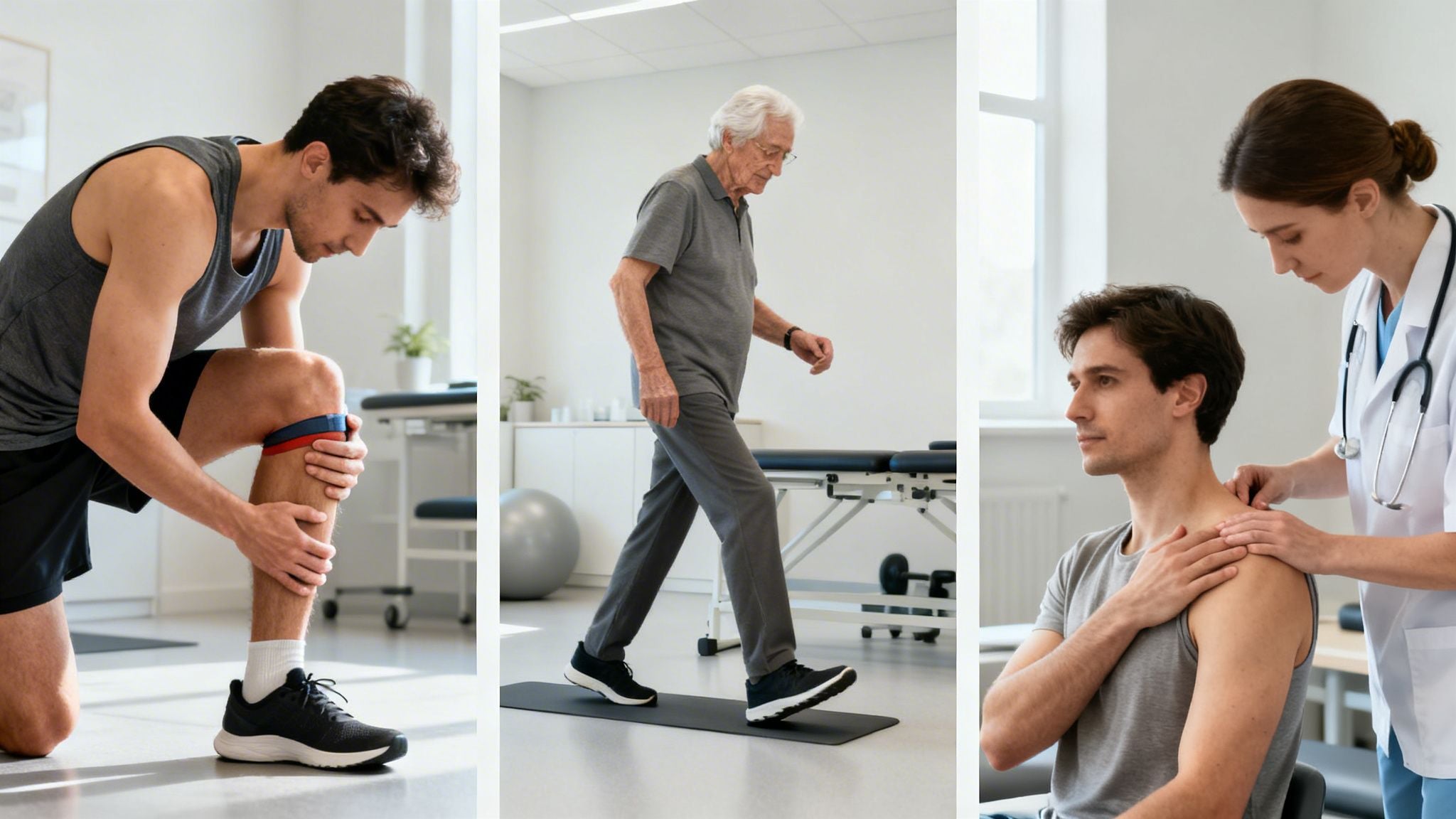
When something hurts, really only one question matters: "Can you help me?"
The world of ortho physical therapy is broad, and we see people from every walk of life with all kinds of issues. So let’s get right to it. Yes, we can almost certainly help with what you're going through.
Instead of a dry clinical list, let's talk about the real people and the real problems we see in our clinics every single day. We group them into categories, but we know you’re not a diagnosis—you’re a person trying to get back to your life.
Here are some of the common issues we help our patients overcome with personalized care plans.
A Look at Conditions We Treat Every Day
| Condition Category | Common Examples | Our Goal for You |
|---|---|---|
| Post-Surgical Rehab | Total knee/hip replacements, ACL reconstruction, rotator cuff repairs | Safely rebuild strength, restore motion, and get you back to your life with confidence. |
| Sports Injuries | Runner's knee, ankle sprains, shin splints, tennis elbow, muscle strains | Get you back to your sport or activity, but also figure out why it happened to prevent it from coming back. |
| Chronic Pain | Low back pain, arthritis, neck pain, sciatica, tendinitis | Break the pain cycle, improve your movement, and give you the tools to manage your condition long-term. |
| Specialized Areas | TMJ/jaw pain, vertigo/dizziness, pelvic floor issues, hand/wrist pain | Address sensitive and complex issues with expert care to dramatically improve your quality of life. |
This is just a snapshot. Your physical therapist will build a plan specifically for your body and your goals.
Recovering with Confidence After Surgery
Surgery is a huge step. What you do afterward is just as critical as the procedure itself. We specialize in post-operative care, creating structured, one-on-one plans that help you heal properly and get your strength back without setbacks.
We regularly guide patients through recovery from:
- Total Joint Replacements: For a new hip or knee, our focus is getting you moving confidently and reducing your reliance on walkers or canes.
- Rotator Cuff Repairs: The shoulder is a complicated joint. We provide the expert care needed to restore your range of motion and function. If you're facing this, you can learn what to expect from physical therapy after rotator cuff surgery in our guide.
- ACL Reconstruction: Getting you back on your feet—and eventually back to your sport—is our top priority.
This type of rehab is a massive driver in our field. More people are staying active later in life, and the demand for specialized care is climbing. In fact, the global physical therapy market was valued at over USD 30,553.2 million in 2026 and is projected to hit nearly USD 58,577.8 million by 2033. Post-op care is a huge piece of that puzzle.
Getting You Back in the Game
You don’t have to be a professional athlete to get a sports injury. We help weekend warriors, high school athletes, and dedicated runners move past the injuries holding them back.
We don't just treat the pain. We dig deeper, analyzing your movement to figure out why the injury happened in the first place and how to keep it from coming back.
We see a lot of runner's knee, ankle sprains, shin splints, and muscle strains. Our focus is always on getting you back to your activity, stronger and more resilient than before.
Beyond the Usual Aches and Pains
Our expertise goes far beyond common joint and muscle issues. Many people are surprised to learn that specialized ortho physical therapy can treat a wide range of other conditions that can seriously impact your quality of life.
Our approach looks at the entire body, emphasizing the importance of foot health, including healing bunions and plantar fasciitis, to make sure you're functioning optimally from the ground up.
We also have therapists who specialize in treating TMJ and jaw pain, vertigo and balance disorders, and pelvic floor conditions. These are sensitive issues that require a trusted, expert approach, and we're proud to provide that for our community.
What to Expect During Your First Visit

Walking into a physical therapy clinic for the first time can be intimidating, especially when you’re in pain. We get it. Let's pull back the curtain on that first appointment so you can walk in feeling confident, not anxious.
The first thing we do is the most important: we listen. This isn't a rushed, five-minute intake. Your therapist will sit down with you and give you their full, uninterrupted attention to hear your story.
We want to know everything—how your pain started, what makes it flare up, what brings relief, and most importantly, what you want to get back to doing. That conversation is the foundation for everything that follows.
The Diagnostic Process
After we talk, we’ll move into the assessment. Think of this less like a test and more like a fact-finding mission we go on together. Your therapist will guide you through some simple movements to see how your body is moving and what might be causing the issue.
This hands-on evaluation will likely involve:
- Movement Analysis: Simply watching you walk, bend, or reach helps us spot movement patterns that could be contributing to your pain.
- Range of Motion Testing: We'll gently check the flexibility and mobility in your joints.
- Strength Assessment: We’ll test specific muscles to find any areas of weakness or imbalance that need to be addressed.
This entire process is a judgment-free zone. Your feedback is the most important tool we have. If something hurts or feels off, you just tell us—that’s not a failure, it's a critical clue that helps us zero in on the root cause of the problem.
Our clinic is built around one-on-one care. Your first visit, and every one after, is a partnership where your experience guides our approach. We're here to find a solution that actually works for you.
By the end of this first session, you won't leave with a generic handout. You'll have the beginnings of a true recovery plan, explained in plain language. We'll make sure we answer every question you have and discuss the first few steps we can take to start getting you some relief.
To feel even more prepared, check out our guide on how to prepare for your first physical therapy appointment.
Starting Your Treatment on Day One
That first appointment almost always includes your first treatment. We believe in taking action right away to help you start feeling better.
This could mean some gentle, hands-on manual therapy to ease pain or learning a few simple, targeted exercises you can start doing at home.
The goal is to have you walk out of our clinic with three things: clarity on what’s going on, hope for your recovery, and a clear understanding of the next steps. This first visit truly sets the stage for everything to come.
Your Personalized Therapeutic Toolkit

After we’ve listened to your story and figured out the root cause of the problem, the real work begins. We don’t believe in one-size-fits-all physical therapy. Instead, we have a whole toolkit of proven methods that we use to build a plan that gets you back to your goals.
Think of it like a master carpenter. You wouldn't use a hammer for every single task, right? We feel the same way. We carefully choose and combine different techniques so that every single part of your treatment has a clear, specific purpose.
The Power of Hands-On Care
One of the most important tools in our kit is manual therapy. This is where our deep, hands-on knowledge of the human body really makes a difference.
It’s a whole collection of skilled techniques our therapists use to give your body a targeted tune-up. This isn’t just a generic massage; it’s the precise application of pressure and movement designed to:
- Decrease pain by calming down irritated nerves and tissues.
- Improve joint mobility by gently getting stiff or “stuck” joints moving again.
- Reduce muscle tension and improve the flexibility of tight muscles and the tissues around them.
Manual therapy gives us direct, real-time feedback on how your body is responding. It lets us adjust our approach on the fly, making it a collaborative process that builds the foundation for lasting relief.
Building Strength and Stability
While hands-on care is fantastic for getting you out of pain, therapeutic exercise is what truly empowers you for the long run. This is how we build strength, improve stability, and reteach your body how to move correctly so the problem doesn't come back.
Your exercise program won't be a random list of things we found on the internet. Every movement is chosen for a reason—to activate a weak muscle, stretch a tight one, or fix a faulty movement pattern that’s holding you back.
We always start simple and progress as you get stronger and more confident. We’ll make sure you’re performing every exercise correctly and safely, whether it’s with bodyweight, resistance bands, or free weights. For example, we might teach you how to properly use an exercise band for ankle strengthening to build support and prevent future sprains.
Specialized Tools for Targeted Results
Sometimes, a problem is stubborn and needs a more specialized approach. For certain conditions, these advanced techniques can be a complete game-changer.
- Aquatic Therapy: For anyone dealing with severe joint pain, arthritis, or recovering from a major surgery, exercising in the water can be a massive relief. The natural buoyancy of the water takes the pressure off your body, letting you move and build strength in ways that would be too painful on land.
- Trigger Point Dry Needling: This is not acupuncture. It's a modern technique where we use a very thin needle to target tight, knotted bands of muscle—what we call trigger points—that are causing pain. This can effectively “reboot” the muscle, releasing deep tension and restoring its normal function.
This focus on getting you moving again is why musculoskeletal rehab is such a huge part of the physical therapy world. The industry was valued at USD 107.05 billion globally in 2026 and is expected to grow significantly by 2035, driven by an active aging population and new rehab technologies. You can learn more about the growth of physical therapy services to see just how vital this work has become.
How to Choose the Right Physical Therapist
Choosing a physical therapist isn’t just about finding a clinic near your house. It's about finding the right person and the right environment to guide your recovery. This decision is one of the biggest factors in how quickly—and how well—you get back to feeling like yourself.
When you start looking for an ortho physical therapy clinic, here’s what you should actually be looking for.
The Right Expertise for Your Condition
Physical therapy isn’t one-size-fits-all. The therapist who’s a wizard with post-surgical knees might not be the go-to expert for someone dealing with dizziness from vertigo or nagging TMJ pain.
Look for a team that has deep, proven experience with your specific issue. This means they understand the little details that make a huge difference in your treatment plan. A clinic with specialists in different areas is usually a great sign—it shows they’re committed to a high standard of care for more than just the "common" injuries.
One-on-One Care Is Non-Negotiable
This is the most important part. You deserve a therapist who is 100% focused on you for your entire appointment. Be wary of any clinic where you see therapists juggling two or three patients at once.
Real one-on-one care is where the magic happens. It means:
- Your PT actually listens: They can pick up on the subtle feedback you’re giving them—verbally and nonverbally—and adjust on the fly.
- You move correctly and safely: They’re watching every single rep to make sure your form is perfect, which maximizes your results and prevents new injuries.
- You get better, faster: That undivided attention means your treatment is always being fine-tuned. No wasted time, just efficient, focused progress.
A personalized care plan isn't a pre-printed sheet of exercises. It's a living document, a roadmap that your therapist builds with you based on your goals, your body, and your progress each session. It should feel like it was made for you, because it was.
A Supportive Team Makes All the Difference
Your experience starts the moment you call or walk in the door, not just when your appointment begins. A great clinic has an administrative team that makes your life easier, not more complicated.
They should be pros at navigating the maze of insurance benefits, referrals, and scheduling. Dealing with an injury is already stressful. You want a front desk team that handles the paperwork with a smile and makes booking your next appointment simple. It lets you focus all your energy on what matters: your recovery.
Your Questions About Ortho PT, Answered
When you’re thinking about starting physical therapy, the most pressing questions usually aren't about anatomy. They’re about the practical things.
How long will this take? Do I need to see a doctor first? Will my insurance cover it?
We get these questions every day. So, let's walk through the same straightforward answers we give our patients here in the clinic.
How Many Sessions Will I Actually Need?
This is the big one, and the only honest answer is: it's completely individual. Anyone who gives you a fixed number of visits without a full evaluation is simply guessing.
Think of it like this: recovering from a minor ankle sprain is a bit like patching a tire. It might only take a handful of visits to get you safely back on the road. But recovering from something complex, like an ACL reconstruction, is more like a full engine rebuild. It’s a multi-stage process that requires more time and detail to get everything running perfectly again.
Your specific timeline will depend on a few key things:
- The nature and severity of your condition: A chronic issue that’s been building for years often takes longer to unwind than an acute injury.
- Your personal goals: Are you aiming to get back to running marathons, or do you just want to be able to walk your dog without pain?
- Your commitment between sessions: The work you put in at home is a huge driver of your success.
We'll set clear, achievable goals from day one and constantly check in on your progress. Our job isn’t to keep you in therapy forever—it’s to get you better as efficiently and effectively as possible.
Do I Need a Doctor's Referral?
This is a great question, and the answer is empowering for patients. In Massachusetts, you have what’s called Direct Access.
This means you can see a physical therapist for an evaluation and treatment without needing a referral from a doctor first.
Direct Access puts you in the driver’s seat. If you're in pain or dealing with an injury, you don’t have to wait weeks for a doctor’s appointment to get started. You can come straight to us, and we can begin the process right away.
Your safety is always our top priority. If our assessment reveals that your condition is outside the scope of ortho physical therapy or needs a physician's attention, we’ll be the first to tell you and will help connect you with the right medical provider.
Does My Insurance Cover This?
Navigating insurance can feel like a second job, but our team is here to handle it for you. The short answer is yes, most insurance plans, including Medicare, offer excellent coverage for physical therapy.
Our administrative team members are absolute pros at this. Before your first visit, they will:
- Call your insurance company directly to verify your specific benefits.
- Explain your coverage to you in plain English—no confusing jargon.
- Handle all the necessary prior authorizations and paperwork.
This process ensures there are no surprises. It allows you to put all your energy into your recovery, not into a mountain of paperwork. We firmly believe that dealing with insurance should never be a barrier to getting the care you need.
At Joint Ventures Physical Therapy, we see ourselves as your partner in health, and that partnership starts with clear, honest communication. If you have more questions or you’re ready to see how we can help, we’re here for you.