
That nagging headache you keep reaching for pain relievers to fix? We see this all the time. There's a really good chance it's not a "head" problem at all. For so many of our patients, the real issue starts in the neck—and that’s exactly where physical therapy can provide lasting relief by treating the source, not just chasing the symptom.
Why Your Headache Might Be A Neck Problem
When your head is throbbing, it's natural to focus on where you feel the pain. But think of it this way: if a light in your house is flickering, the problem isn't always the bulb. Sometimes, the issue is a faulty wire hidden in the wall.
Your body works the same way. The pain you feel in your head is often referred pain—a signal sent from a problem area somewhere else. And when it comes to headaches, the most common culprit by far is your neck.
This is especially true for two of the most frequent types of headaches we see every day: cervicogenic headaches and tension-type headaches. Both are directly linked to the health of your cervical spine (your neck) and the muscles surrounding it.
We put together this quick guide to help you figure out what's going on and see how physical therapy can help.
Identifying Your Headache Type: Is It PT Treatable?
This table breaks down the common headache types we see. Pay attention to how often the neck and posture are involved—it's no coincidence.
| Headache Type | Common Symptoms | Typical Triggers | Responds Well to PT |
|---|---|---|---|
| Cervicogenic | Pain on one side of the head or face, often starting in the neck. Neck stiffness and reduced motion. | Neck movements, sustained postures (like working at a desk). | Yes, highly effective. |
| Tension-Type | A dull, aching sensation, often described as a "tight band" around the head. Tenderness in the scalp, neck, and shoulder muscles. | Stress, poor posture, fatigue, jaw clenching. | Yes, very effective. |
| Migraine | Throbbing or pulsing pain, often on one side. Sensitivity to light and sound, nausea, sometimes with aura. | Hormonal changes, certain foods, stress, sleep changes. | Sometimes. PT can help with neck/jaw triggers but can't treat the primary migraine itself. |
| Cluster | Severe, piercing pain behind or around one eye. Occurs in "clusters" or cycles. | Triggers are less understood; may involve the body's biological clock. | No. This requires medical management. |
While we can't fix every type of headache, if your symptoms align with cervicogenic or tension-type pain, physical therapy is absolutely your best first step.
The Daily Habits That Create Headaches
Modern life puts an incredible amount of strain on our necks. Hours spent hunched over a laptop, endless scrolling on a phone, or even sleeping with the wrong pillow can create the perfect storm for head pain.
These habits lead directly to:
- Stiff Joints: The small, delicate joints in your upper neck lose their normal mobility and get irritated.
- Tight Muscles: Muscles in your upper back and neck—like the upper trapezius and suboccipitals—become overworked, tired, and full of painful knots.
- Poor Posture: A forward-head position places a huge amount of strain on your neck structures, creating a constant state of tension that eventually refers pain straight to your head.
The scale of this problem is massive. Chronic headaches impact about 1 billion people worldwide, and women experience them up to five times more often than men. This isn't just an inconvenience; it's a major public health issue, which is why we're so committed to helping people understand the musculoskeletal link.
Connecting Neck Strain to Head Pain
It’s easy to write off a stiff neck as just a minor annoyance, but that stiffness can trigger a powerful chain reaction.
When the nerves and muscles at the very top of your neck get irritated, they send pain signals along shared neural pathways that travel directly into your head. This is exactly why you might feel a sharp pain behind your eye or in your temple that actually starts from a dysfunctional joint in your neck.
The good news is that if your headache is coming from your neck, it's highly treatable. By addressing the root cause—the stiffness, weakness, and postural habits—we can significantly reduce or even eliminate the problem without you having to rely on medication.
Our approach in the clinic is to act like pain detectives. We listen to your story, perform a thorough assessment to figure out exactly which structures are causing the problem, and then build a specific plan to fix them.
Sometimes, symptoms like dizziness or vertigo can also be tied to what's happening in your neck. We explore this connection and provide helpful exercises in our guide to neck exercises for vertigo.
How We Uncover The Root Cause Of Your Headaches
When you come into our clinic with a headache, our first job is to become pain detectives. We don’t just ask, "where does it hurt?" We start a real conversation to figure out why it hurts. Your story is the single most important clue, giving us the context we need to connect the dots between your daily life and your pain.
This process isn't a mystery; it's a careful, hands-on evaluation. We need to see how your body moves and where it’s holding tension to truly understand what's going on.
Your Comprehensive Evaluation
Our assessment is a head-to-toe look at the mechanics that contribute to head pain. We systematically check several key areas to build a complete picture of your unique situation.
This includes:
- Cervical Spine Assessment: We’ll gently guide you through specific neck movements to see exactly how much range of motion you have. We’re looking for stiffness, restrictions, or any movement that triggers your familiar headache symptoms.
- Muscle Strength and Endurance: We test the strength of the critical muscles in your neck and upper back. Weakness in the deep neck flexors or postural muscles around the shoulder blades is an incredibly common finding.
- Trigger Point Palpation: We use our hands to carefully feel for trigger points—those tight, irritable knots hiding in your muscles. These knots in the neck, shoulders, and even the jaw can be powerful headache generators.
Many headaches have sources that are easy to miss. Understanding these connections, like the hidden link between jaw pain and headaches, is essential for getting the diagnosis right and building a plan that actually works.
The Critical Role Of Posture
We also perform a detailed postural analysis. The way you sit, stand, and even text can create subtle, repetitive stress that builds up over time. That "tech neck" from constantly looking down at a screen is a perfect example of how a small, daily habit can create a huge problem.
This simple flow chart shows exactly how those seemingly minor habits can directly lead to head pain.
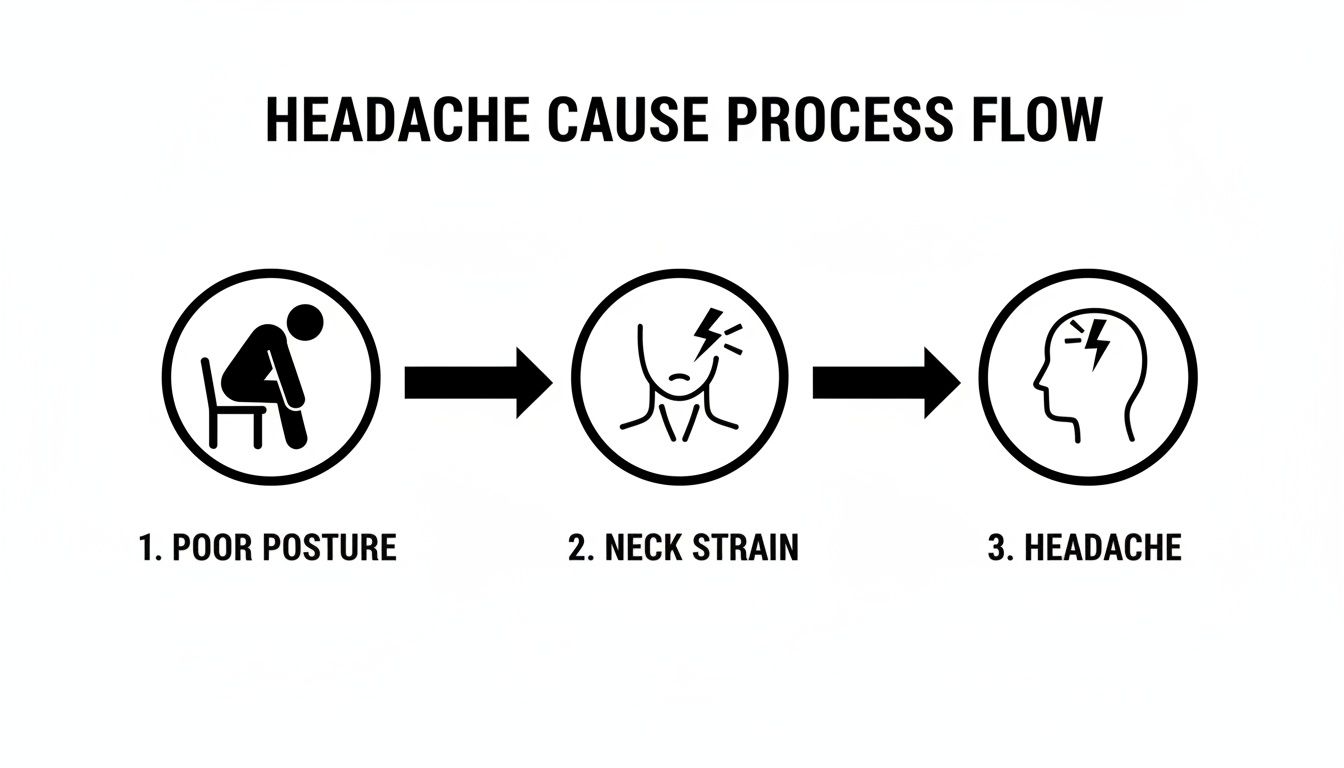
As you can see, the chain reaction from poor posture to neck strain and, finally, to a headache is a clear and direct path.
We don't believe in one-size-fits-all solutions. Every piece of information we gather—from how your neck joints move to the tension in your shoulders—goes into building a treatment plan that is 100% personalized to you.
Our goal is simple: find the true source of your headaches and fix it for good. By uncovering the underlying mechanical issues, we can provide targeted treatments that offer lasting relief, not just a temporary band-aid. This thorough approach ensures we’re not just chasing symptoms, but correcting the cause.
Proven Physical Therapy Techniques For Headache Relief
Once we’ve figured out why your headaches are happening, we get to the good stuff: the hands-on treatments and targeted exercises that bring lasting relief.
Our approach isn't about quick, passive fixes. We see it as a partnership. We use our skills to calm the irritated tissues and restore movement, and then we teach your body how to maintain that progress. Think of it as a two-step process: first, we release the tension, then we build the strength to keep it from coming back.
We blend several proven methods, each one designed to tackle a specific piece of the headache puzzle.
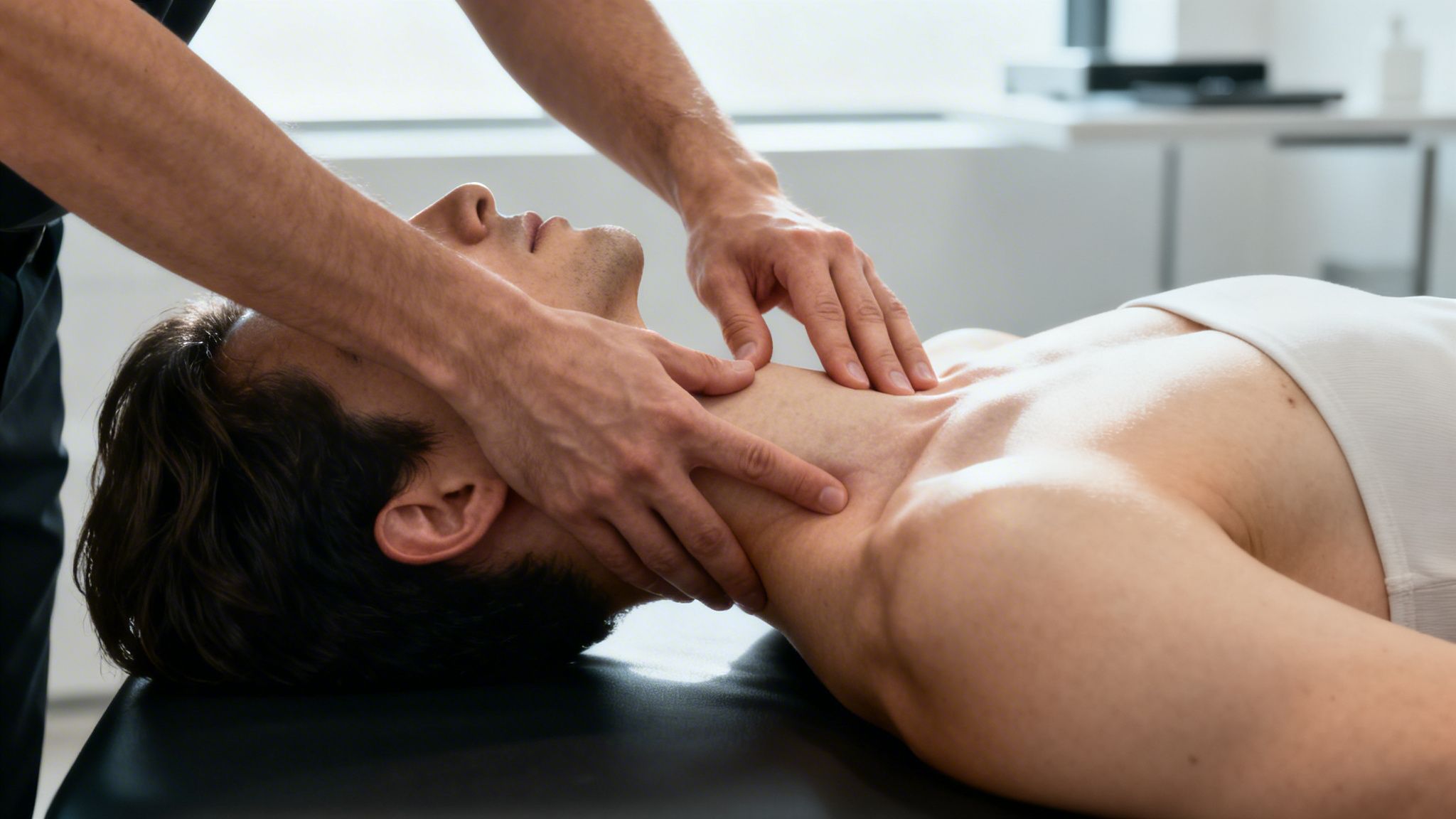
Hands-On Manual Therapy
This is where our expertise as movement specialists really shines. Manual therapy involves specific, skilled techniques to improve mobility in stiff joints and tight muscles, which in turn reduces pain.
Two of our most effective tools are:
- Joint Mobilizations: If your headache is coming from stiff neck joints, we use gentle, specific movements to restore their natural glide. This isn't about aggressive cracking; it's a precise technique that encourages proper motion, takes pressure off irritated nerves, and calms down pain signals.
- Soft Tissue Massage: We find and treat the overworked, knotted-up muscles in your neck, shoulders, and upper back. This is far more than a relaxation massage—it’s a focused therapy aimed at releasing muscle knots, improving blood flow, and easing the tension that sends pain right to your head.
This approach isn't just theory; it’s backed by solid research. Studies consistently show that physical therapy can dramatically cut down headache frequency. In one key study, 87.5% of participants saw a 50% reduction in headache frequency after just eight weeks of manual therapy. You can learn more about how manual therapy outperforms standard care by reviewing the full study.
Targeted Interventions For Lasting Change
Beyond mobilizing joints and muscles, we have other specialized tools to address stubborn pain generators and create lasting change.
The goal is to reboot the system. When a muscle gets stuck in a painful pattern, we need a way to interrupt that signal and teach it how to function correctly again.
Trigger Point Dry Needling is a fantastic tool for this. By using a very thin filament needle to target and release deep, irritable trigger points in your muscles, we can often hit a “reset” button. This causes the muscle to finally let go of its chronic tension, breaking the cycle of referred pain to your head.
For headaches linked to jaw tension, we also integrate TMJ (Temporomandibular Joint) Treatment. The muscles controlling your jaw have a direct connection to those in your neck and head. By addressing jaw mechanics and releasing tension around the joint, we can often knock out a major, and frequently overlooked, headache trigger. If you deal with jaw clicking, clenching, or pain, you might find our guide on TMJ pain relief exercises helpful.
Finally, we empower you with Therapeutic Exercise. This is your long-term solution. We prescribe specific exercises designed to strengthen the deep, stabilizing muscles of your neck and improve your postural endurance. Building a stronger, more resilient support system for your head is the absolute key to preventing headaches from returning.
Simple Home Exercises To Keep Headaches Away
What happens in the clinic is just the start. The real, lasting relief from headaches is built by the small things you do between our sessions. Your home exercise program is what makes your progress stick and builds resilience against future pain.
This isn’t about spending hours on the floor. It’s about performing a few key movements with good form, even for a few minutes at your desk each day. Here are a couple of foundational exercises we often start with.
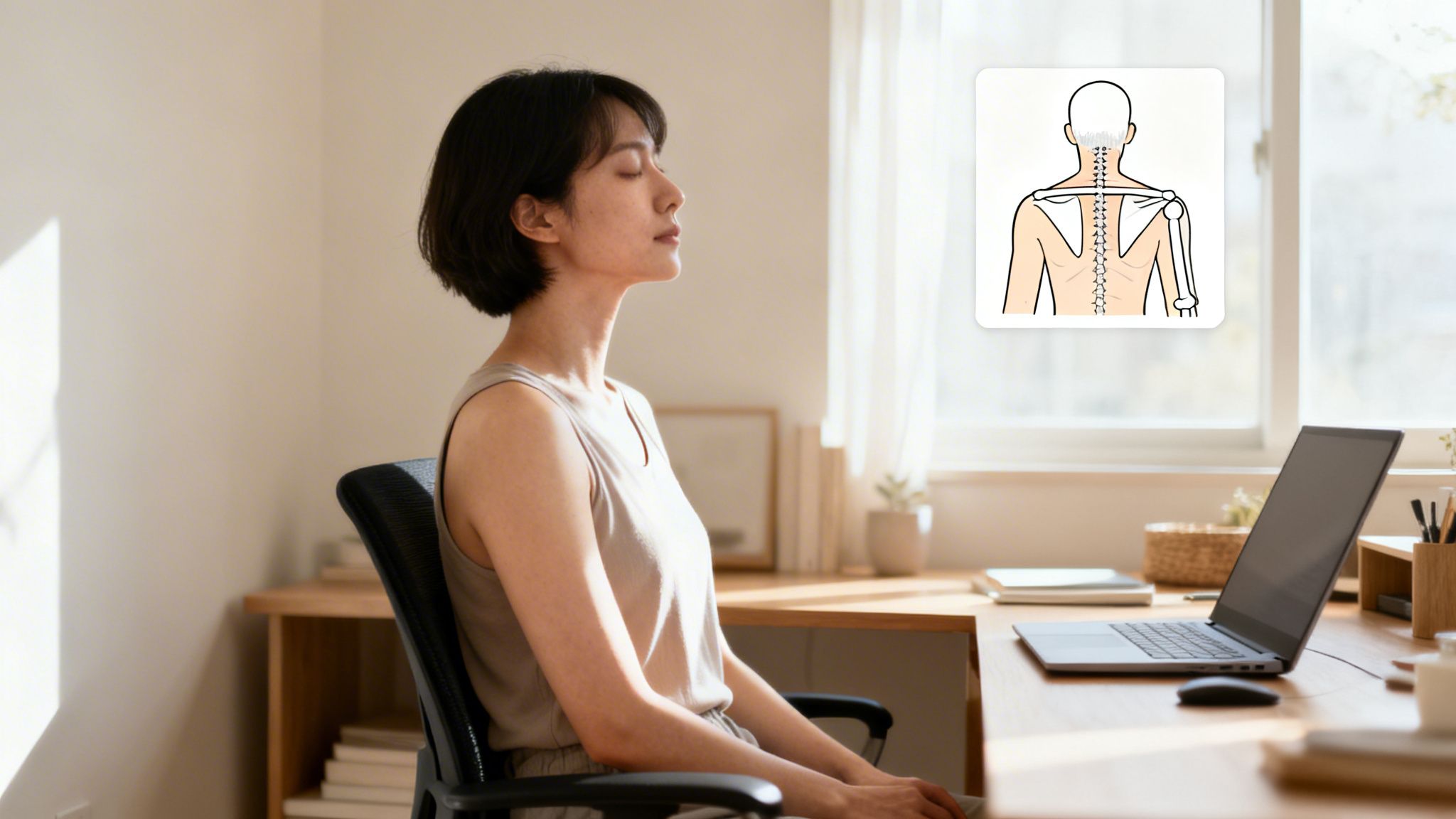
Core Exercises for Neck Stability
These movements are designed to wake up the small, deep muscles that support your head—the very ones that get overworked by "tech neck."
- Chin Tucks: This is the ultimate reset for a forward head posture. Sit or stand tall and look straight ahead. Without tilting your head, gently glide your chin straight back like you're trying to make a double chin. You should feel a gentle stretch at the base of your skull. Hold for 3-5 seconds and repeat 10 times.
- Scapular Retractions (Shoulder Blade Squeezes): This exercise directly combats the rounded, forward shoulder posture that puts so much strain on the neck. With your arms at your sides, gently squeeze your shoulder blades together and down—think about tucking them into your back pockets. Hold for 5 seconds and repeat 10-15 times.
The Power of Self-Stretching
Along with building strength, you need to release tension before it has a chance to turn into a full-blown headache. Simple, consistent stretches for your neck and upper shoulders can make a massive difference.
Understanding why you’re doing these exercises is just as critical as how you do them. Each movement is designed to retrain your postural muscles, taking the load off the sensitive joints and nerves at the top of your neck that are so often the true source of a headache.
Don't underestimate the impact of consistency. One study found that a dedicated self-stretching program for the neck, head, and jaw was incredibly effective at lowering headache intensity. You can discover more about these findings on stretching and pain scores to see the data for yourself.
Always remember: the goal here is quality over quantity. A handful of reps done with perfect form will always beat sloppy, high-volume sets. During our one-on-one sessions, we’ll dial in each movement so you feel completely confident, tailoring everything to what your body needs. This simple home plan is how you take back control.
Your Recovery Journey: What To Expect From PT
Let's be upfront about what your recovery process will look like. When you're dealing with persistent headaches, you want honest answers, and we believe in setting clear expectations from day one.
While many patients feel some relief after the very first session—especially from hands-on manual therapy—lasting change isn't a quick fix. It’s a process. We’re working together to retrain your body to move better and hold itself with less tension, and that takes consistency.
Your Plan Of Care
A typical plan of care for headaches starts with more frequent visits, usually 1-2 times per week. The immediate goal is to break the pain cycle. We focus on calming down your symptoms, releasing tight muscles, and restoring proper joint movement in your neck to give you some breathing room.
As you start to feel better and get stronger, we’ll begin to space out your appointments. This is a great sign. It means you’re building independence and have the tools to manage your body on your own.
Key Milestones To Look For
Recovery isn't always a straight line, but we look for specific, positive changes that tell us we're on the right track.
- First, a decrease in frequency. You'll notice you’re going more days between headaches. This is often the earliest and most important sign that the treatment is working.
- Next, a reduction in intensity. When a headache does pop up, it feels less severe. It's more manageable and doesn't derail your entire day.
- Finally, improved resilience. You’ll start to notice that things that used to trigger your headaches—like a long day at the computer or a stressful meeting—no longer have the same effect.
Physical therapy is an active process. We provide the expert guidance and the hands-on care, but your participation is the single most important ingredient. The commitment you bring to your home exercise program is what makes the progress stick and keeps the headaches from coming back.
This partnership approach is at the core of how we treat. For a deeper look into our philosophy, you can check out our guide to orthopedic physical therapy. We’re committed to your long-term success, not just a temporary fix.
When To See A Doctor: Red Flags For Headaches
Think of us as part of your healthcare team. Our first priority is always making sure you get the right care from the right person, right when you need it.
While our physical therapy evaluation is excellent for figuring out the source of most headaches, it’s also an incredibly important screening tool. We know exactly what to look for, and we will always be upfront with you if your symptoms point toward something that needs a closer look from a physician or neurologist.
Your safety comes first. A critical part of our job is recognizing when a different specialist needs to be involved.
Symptoms That Need Immediate Medical Attention
If you ever experience a headache with any of the following symptoms, it's essential to seek immediate medical care. This isn't meant to cause alarm, but to empower you with the knowledge to act quickly when it matters most.
These red flags include:
- A sudden, severe headache that feels like the "worst headache of your life" (often called a "thunderclap" headache).
- Head pain that comes with a fever, stiff neck, confusion, or seizures.
- A headache that develops after a head injury or accident.
- New or worsening headaches, especially if you are over 50.
- Headaches associated with vision changes, weakness, numbness, or difficulty speaking.
Our commitment to you is simple: we will always guide you toward the most appropriate care. If we see any signs during our evaluation that point to a more serious underlying condition, we won’t hesitate to refer you to one of our trusted colleagues in the medical community.
Common Questions About Headaches And PT
When you’re dealing with persistent headaches, you have questions. We get it. Here are the ones we hear most often in the clinic, along with some straight answers from our team.
How Many Sessions Will I Need?
This is always the first question, and the honest answer is: it depends on you. There's no one-size-fits-all plan.
That said, many of our patients with cervicogenic or tension-type headaches feel a significant drop in how often and how intensely their headaches hit within just 4-6 visits.
A complete plan of care, however, often lands in the 8-12 session range. Our goal isn’t just to get you out of pain—it’s to give you the strength, awareness, and tools to keep headaches from coming back.
Does Dry Needling Hurt?
Most people are surprised by how little they feel. You might feel a quick, tiny prick when the filament goes in, sometimes followed by a brief muscle twitch or a dull ache.
That twitch is actually a great sign. It means we found the trigger point and it’s starting to release its grip.
Any soreness you feel afterward is usually mild, like you had a good workout, and it typically fades within a day or two. Our clinicians are experts at making the experience as comfortable and effective as possible.
Can PT Help With Migraines?
Absolutely. Migraines are incredibly complex, but for many people, there are physical triggers hiding in plain sight.
Things like underlying neck tension, tight trigger points in the upper back, or even subtle postural habits can be major contributors that set off a migraine attack. By using physical therapy to address these root mechanical issues, we can often help lower the frequency and intensity of your migraines. For additional strategies, you might find this guide to migraine and headache relief helpful as well.
If you're ready to get to the root of your headaches and find a lasting solution, our team at Joint Ventures Physical Therapy is here to help. Schedule your 1-on-1 evaluation today.