
Your day in Kenmore probably doesn't leave much room for injury. You might be walking from the Green Line to work with jaw tension that won't let up. You might be a BU student whose neck and upper back have started barking after long hours at a laptop. You might be logging miles along the Charles, trying to stay on track for a race while a nagging hip or calf issue keeps changing your stride.
In this part of Boston, people are busy, active, and usually trying to push through discomfort until it starts affecting sleep, training, work, or class. That's where physical therapy Kenmore Square Boston should feel simple, local, and specific to the life you live here.
Your Local Guide to Physical Therapy in Kenmore Square
A Kenmore Square clinic has to work for the way people live here. That means treating the runner who squeezes in miles along the Charles before work, the BU student whose headaches started after weeks of studying on a laptop, and the professional who cannot spend half a day getting to an appointment.

At our Kenmore Square clinic, the same local patterns show up every week. Students often write off jaw pain, neck stiffness, dizziness, or headaches as stress until symptoms start affecting class and sleep. Runners tend to wait through the first signs of a calf, hip, or knee problem, then come in once training pace changes. Office workers and hospital staff nearby usually need a plan that is specific, efficient, and realistic enough to follow between long workdays and commutes.
The clinic is located at 648 Beacon Street, 2nd Floor, Boston, MA 02215, close to the Kenmore Green Line stop. That matters in this part of Boston. People choose care here because it is easy to reach from Back Bay, Fenway, BU, Storrow Drive, and the Longwood area, but they stay because the treatment matches the problem.
That is also where specialized care makes a real difference.
A general exercise handout is rarely enough for someone dealing with vertigo on the T, jaw pain during exams, pelvic floor symptoms after running, or a shoulder injury that flares during lifting. Kenmore patients often need access to clinicians who treat vestibular conditions, TMJ dysfunction, sports injuries, and other issues that do not fit neatly into a basic rehab template. For active adults balancing rehab with strength work, some also pair treatment with options like small group personal training once symptoms are under control.
Who this location fits well
- Runners and active adults who want treatment that explains why pain started and how to get back to training
- Students near BU and Fenway dealing with neck pain, headaches, jaw tension, dizziness, or overuse injuries
- Professionals who need appointments that fit around a Boston workday
- People with more specific rehab needs such as vestibular therapy, TMJ treatment, pelvic floor care, or sports rehab
Good physical therapy in Kenmore Square should save time, reduce guesswork, and give patients access to the right expertise close to where they already live, study, train, and work. In a neighborhood this busy, the right clinic is not just nearby. It is equipped to handle the very problems local patients bring through the door.
The Joint Ventures Difference One-on-One Care
A lot of people assume physical therapy is basically the same everywhere. It isn't.
The biggest difference patients notice at our Kenmore location is 1-on-1 care with a licensed physical therapist for every visit. No handing you off midway. No bouncing between people. No trying to squeeze meaningful treatment into a high-volume setup where the therapist is splitting attention across multiple patients.
That model matters because the work changes minute to minute. A shoulder that looks irritated in the first ten minutes may respond better once you test thoracic motion, lifting mechanics, or neck contribution. A runner's knee issue may turn out to be a loading problem at the hip or foot. That kind of adjustment happens best when the same clinician is with you the whole time.
What 1-on-1 care changes in practice
In a focused session, the therapist can watch how you move, test what reproduces symptoms, explain what's relevant, and modify treatment in real time. That's different from a visit where most of the hour is spent rotating through equipment with limited guidance.
Integrated care models like the one-on-one approach at Joint Ventures improve recovery rates by up to 20-30% in orthopedic cases compared to settings where care is fragmented, according to the Highbar Health outpatient physical therapist posting.
That number lines up with what patients usually feel on the ground. More continuity means fewer mixed messages. It also means your exercises, hands-on treatment, and progression reflect what your body is doing that day, not what was written down a week ago.
What doesn't work as well
Some clinics do move people through quickly, and that can be enough for straightforward cases. But it tends to break down when the problem is nuanced or the goal is performance-based.
Common examples include:
- TMJ symptoms where neck, posture, breathing pattern, and jaw mechanics all need attention
- Vestibular complaints where symptom response has to guide progression carefully
- Return-to-sport rehab where quality of movement matters as much as pain level
- Persistent pain cases where a rushed visit often misses the pattern driving flare-ups
Practical rule: If you leave PT visits feeling unclear about what you're working on and why, the treatment model probably isn't serving you.
If you already train in a gym or are rebuilding general strength outside the clinic, structured resources like this overview of small group personal training can help you think through when group fitness supports rehab and when it doesn't. For many active adults, PT and smart strength work complement each other well. They just shouldn't be confused.
The point of 1-on-1 care isn't luxury. It's efficiency. You spend less time guessing and more time working on the things that change pain, movement, and confidence.
Specialized PT Services Near Fenway Park
A common Kenmore day looks like this. A BU student wants dizziness under control before a full week of classes. A runner coming off the Charles needs help with a stubborn calf or hip issue before mileage climbs again. A young professional from Back Bay is dealing with jaw pain, headaches, and neck tension after long hours at a laptop. A post-op patient wants to move safely at home without losing momentum between visits.
That mix is why specialized physical therapy matters here. Near Fenway Park, the needs are wider than standard orthopedic rehab alone.
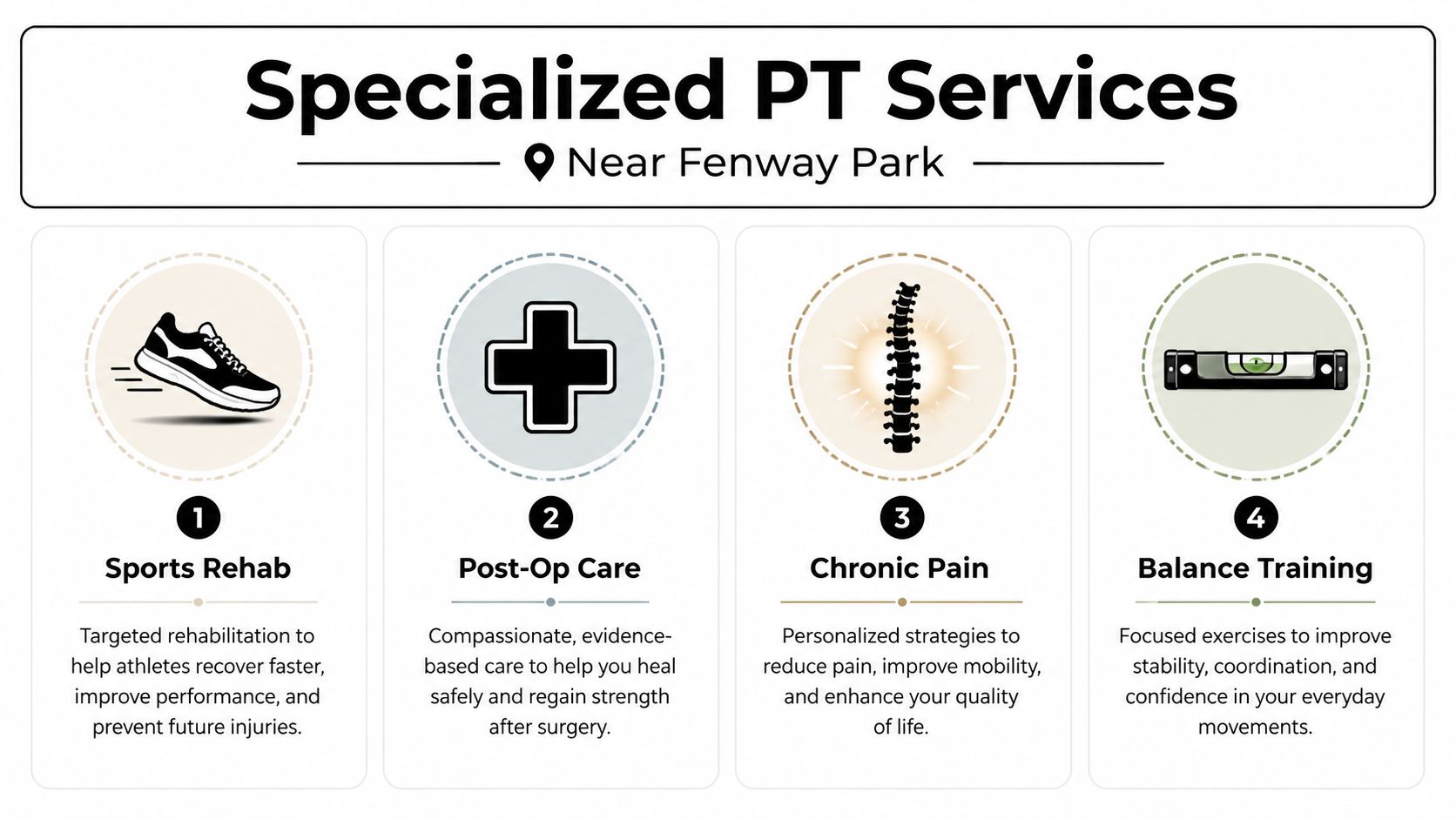
Services that match how Boston patients actually live
The Kenmore clinic sees active adults, students, desk workers, recreational athletes, and people recovering from surgery. The most useful specialty services tend to reflect that reality.
| Specialty Services at Joint Ventures Kenmore Square | Ideal For |
|---|---|
| Running Performance evaluations | Runners working through recurring aches, form issues, or return-to-run progression |
| Titleist performance evaluations | Golfers addressing mobility, control, and swing-related limits |
| Trigger point dry needling | Patients with myofascial pain and persistent muscular irritation |
| Vestibular rehabilitation | People dealing with vertigo, dizziness, or balance problems |
| TMJ treatment | Students and professionals with jaw pain, clenching, tension headaches, or related neck symptoms |
| Pelvic floor physical therapy | Postpartum patients and active adults with pelvic floor concerns |
| Aquatic therapy | Patients who need lower-impact loading during recovery |
| Hand and upper extremity therapy | People limited by wrist, hand, elbow, or upper limb symptoms |
| Concussion baseline screening | Athletes and active individuals who want informed performance and recovery support |
| Workplace ergonomics | Desk-based professionals whose work setup contributes to pain |
Where specialty care makes a practical difference
Running rehab works better when the evaluation matches the sport. Achilles pain may be about calf capacity, ankle motion, training error, or pace demands. A painful knee might improve only after looking at hip control, loading tolerance, and how quickly mileage changed. For Boston runners, that matters. Sidewalks, hills, winter training shifts, and race goals all change the plan.
TMJ treatment is another area where a general approach often misses the problem. Jaw symptoms are frequently tied to neck stiffness, breathing pattern, stress, sleep disruption, and long study or work hours. In Kenmore, that pattern shows up often in students and professionals. Good TMJ care looks at the jaw, but it also looks at the systems feeding the jaw.
Vestibular therapy is just as specific. Patients with dizziness often struggle most in the places they cannot avoid. Busy sidewalks, the Green Line, crowded buildings, quick head turns in class, or fast position changes during a workday. Those cases usually need close symptom tracking and precise progression, not a generic handout.
Post-operative rehab also benefits from the right specialty match. Aquatic therapy can help when full weight-bearing on land is still too irritating. Hand and upper extremity therapy matters when wrist, elbow, or hand symptoms affect typing, lifting, lab work, or sport. Pelvic floor PT is often the missing piece for postpartum recovery or return to exercise.
Dry needling can be useful in the right case, especially when muscle guarding and trigger points are keeping symptoms active. It is a tool, not the whole plan. The stronger results usually come when it is paired with exercise, load management, and a clear reason for using it.
For people recovering after surgery, the home setup matters almost as much as the clinic plan. If you're preparing your space for a safer recovery period, this practical guide to home recovery is a useful supplement to the instructions you get from your medical team.
Patients often ask how to prepare before starting care, especially if the problem involves more than one body region or symptoms like dizziness or jaw pain. This guide to preparing for your first physical therapy appointment helps set expectations and makes the first visit more productive.
Your First Visit What to Expect
First visits go better when you know what the pace will be. Patients often show up wondering some version of the same thing: Will I have to retell my story to multiple people, will this be rushed, and will I leave with an actual plan?
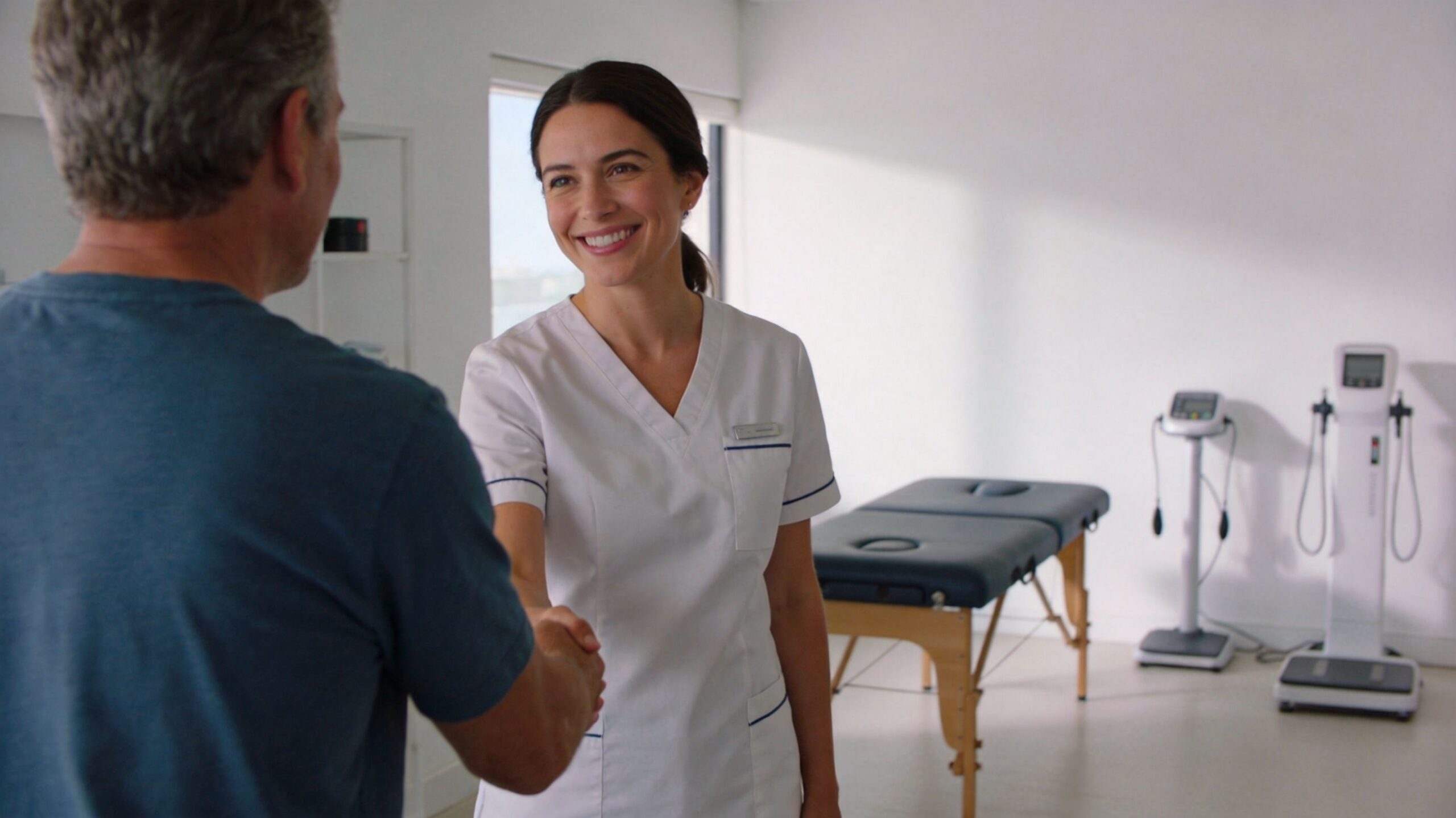
At the Kenmore clinic, your visit starts with a conversation and movement assessment, not a generic exercise circuit.
When you arrive
You'll check in, get oriented, and meet the physical therapist who will guide the visit. The early part of the session usually focuses on your main complaint, what makes it worse, what you've already tried, and what you want to get back to. For some people that's running without pain. For others it's chewing comfortably, turning quickly without dizziness, or getting through a workday without symptoms building.
Then comes the evaluation. That usually includes movement testing, symptom provocation when appropriate, strength or mobility assessment, and a closer look at the tasks that matter to you. A runner may be assessed through loading and movement patterns. A patient with TMJ symptoms may have the neck, jaw motion, posture, and related tension patterns examined together.
What happens before you leave
By the end of the first visit, you should understand three things clearly:
- What the main problem appears to be
- What the first phase of treatment will focus on
- What you should do between visits
That doesn't mean every answer is final on day one. Good PT often refines the plan as your body responds. But you shouldn't walk out feeling lost.
If you'd like a little prep before coming in, the clinic's guide on how to prepare for your first physical therapy appointment helps patients think through what to bring, what to wear, and how to make the evaluation more productive.
A short look at the clinic experience can also help make the first visit feel more familiar:
The first session should lower uncertainty, not add to it. If the plan makes sense to you, you're more likely to follow it and progress.
Treatment may begin that same day. Depending on the problem, that could include hands-on work, exercise, balance work, mobility drills, dry needling discussion if appropriate, or the first pieces of a return-to-activity progression. The point isn't to do everything at once. It's to start with what's most useful.
Navigating Insurance and Scheduling Your Appointment
You finally decide to get your knee, jaw, neck, or dizziness checked. Then a significant delay starts. You are stuck trying to figure out whether your plan is accepted, whether you need a referral, and whether you can fit visits around a Boston workday.
That friction keeps a lot of active people in Kenmore waiting longer than they should.
Insurance questions handled early
Joint Ventures Physical Therapy in Kenmore Square accepts several major plans, including Aetna, Cigna, HealthPartners, Medicare, Tricare, and UnitedHealthcare. The front desk can verify benefits before the first visit so you know what your plan requires and what your visits are likely to involve from a billing standpoint.
That matters in practice. Insurance details can affect how soon you start, how often you come in, whether authorization is needed, and what documents help us get care started without delays. For a BU student with a tight class schedule, a Fenway employee squeezing in visits before a shift, or a runner trying to stay on track through marathon training, those details are not minor admin tasks. They shape whether treatment takes place.
If you are not sure about referrals or coverage, ask before you book. Getting a clear answer early usually saves time and prevents canceled visits later.
Scheduling that fits Boston routines
Kenmore patients rarely have wide-open calendars. They are fitting PT around classes, hospital shifts, desk jobs, rehearsals, lifting sessions, and long commutes.
The clinic hours reflect that reality: Monday and Wednesday 10:40am-7:20pm, Tuesday and Thursday 7:20am-4:00pm, and Friday 6:40am-4:00pm. Early appointments work well for patients who want care before the city gets busy. Later evening slots help people who cannot step away in the middle of the day.
If you want the fastest starting point, use the clinic's online scheduling page for Kenmore appointments.
How to make the booking process easier
A good scheduling process is simple:
- Pick a time you can realistically keep each week.
- Send your insurance information early so benefits can be checked.
- State the main problem clearly, whether that is back pain, post-op rehab, vertigo, TMJ symptoms, or a running injury.
- Bring referral notes, imaging reports, or surgical paperwork if you have them.
That last step helps more than patients expect, especially for specialized cases. Vestibular issues, concussion recovery, pelvic health concerns, and TMJ pain often come with prior evaluations or a longer history. The more clearly the team understands the problem on the front end, the easier it is to match you with the right clinician and the right visit type.
If insurance confusion has kept you from starting PT, get the benefits checked first. Once the costs, referral needs, and timing are clear, the decision usually gets much easier.
The goal is a practical start. Clear coverage, an appointment time you can keep, and the right therapist for the problem. That is what gets treatment underway.
Directions Parking and Public Transit
In Boston, the trip to the clinic can determine whether people continue with care. A convenient location helps, especially when you're fitting appointments around class, work, or training.
The Kenmore Square clinic is located at 648 Beacon Street, 2nd Floor, Boston, MA 02215. It's close to Boston University, walkable from Fenway Park, and near one of the city's busiest transit points.

Getting there by the T or on foot
If you use public transit, the easiest reference point is the Kenmore Green Line stop. From there, the clinic is a practical walk for patients coming from BU, Fenway, Back Bay, or nearby offices.
If you're already in the neighborhood, Beacon Street is a straightforward landmark corridor. Patients often pair appointments with the commute home, a lunch break, or an errand run through Kenmore.
Driving and parking expectations
Driving is possible, but it helps to plan like a Boston local. Parking around Kenmore can take a little patience, especially at busy times. Give yourself extra time to look for street parking or nearby paid options so your visit doesn't start rushed.
For current location details and contact information, the clinic's Kenmore Square location page is the most useful reference before you head in.
A small planning step matters here. When getting to PT feels manageable, patients are more likely to stay consistent, and consistency is usually what moves treatment from temporary relief to real progress.
Frequently Asked Questions About Kenmore PT
You finish a run along the Charles, sit through class at BU, or get through a workday near Back Bay, and something still feels off. The pain is not dramatic, but your jaw is tight, your balance feels unreliable, or your shoulder keeps changing how you lift, train, or sleep. Those are the kinds of questions patients bring into our Kenmore clinic, and they usually want direct answers before they book.
Common questions patients ask
| Common Questions | Answer |
|---|---|
| Do I need physical therapy if the pain is still “manageable”? | If symptoms are changing how you move, exercise, sit through work, or recover after activity, an evaluation can catch the problem before it becomes a longer cycle. |
| Is Kenmore a good location if I commute by train? | Yes. The clinic is a practical option for patients coming through Kenmore, BU, Fenway, and nearby neighborhoods on the Green Line. |
| What kinds of problems are treated besides standard orthopedic injuries? | Care often includes vestibular issues, TMJ symptoms, pelvic floor concerns, sports rehab, hand and upper extremity therapy, and post-operative recovery. |
| Will one-on-one care matter if my issue seems minor? | In many cases, yes. Early one-on-one treatment helps identify the movement pattern behind the irritation, which can prevent repeat flare-ups. |
| What should I wear? | Wear comfortable clothing that allows movement and gives the therapist access to the area being evaluated. |
| Can PT help if I'm active and want performance guidance, not just pain relief? | Yes. Active adults often come in for return-to-run planning, movement analysis, lifting mechanics, and injury prevention support. |
The questions behind the questions
Patients searching for physical therapy Kenmore Square Boston are often trying to solve a specific problem that does not fit a standard rehab script.
That comes up often with vestibular and TMJ symptoms. Dizziness, jaw pain, headaches, and neck tension can disrupt classes, commutes, desk work, lifting, and training in ways that are hard to sort out on your own. Those cases benefit from careful assessment and one-on-one treatment because the right plan depends on what is driving the symptoms, not just where the discomfort shows up.
That is also why active Bostonians often choose care in Kenmore. Students need visits that fit around campus life. Professionals need treatment that works within a packed schedule. Athletes and runners need a plan that gets them back to sport without guessing.
How to decide if now is the right time
Schedule an evaluation if any of these sound familiar:
- Your workouts are changing because you are compensating around pain
- Your symptoms keep returning after rest, stretching, or short-term modifications
- Work or school feels harder because of headaches, jaw tension, dizziness, or posture-related pain
- You are coming back from surgery or injury and want a clear progression
- You want a focused assessment before a smaller issue turns into a bigger interruption
Early treatment is often simpler treatment.
Small movement problems are usually easier to correct before they become stubborn habits, especially with issues like TMJ irritation, recurrent running pain, or balance problems that affect day-to-day confidence.
If you're looking for a convenient clinic near BU, Fenway, and the Kenmore Green Line with focused 1-on-1 care, book with Joint Ventures Physical Therapy. Whether you need help with a running injury, TMJ symptoms, dizziness, post-op rehab, or a stubborn orthopedic issue, the next step is simple: schedule an evaluation and get a plan that fits your Boston routine.