
If you're searching for physical therapy back bay boston, you're probably not doing it casually. Usually there's a reason. Your knee started talking back during marathon training along the Charles. Your neck and jaw are tight after long days at a desk near Copley. Your shoulder still doesn't feel right after lifting, tennis, golf, or carrying a commuter bag across the neighborhood.
Back Bay makes it easy to stay active and easy to overdo it. People here walk a lot, work a lot, and expect their bodies to keep up. That combination is exactly why many patients aren't looking for a generic exercise handout or a crowded clinic experience. They want focused care, a clear plan, and a therapist who understands what daily life in Boston looks like.
Your Guide to Physical Therapy in Boston's Back Bay
A common Back Bay story goes like this. Someone feels a small problem for a few weeks, keeps training, keeps commuting, keeps sitting through meetings, and hopes it will settle down. Then the problem starts changing choices. Runs get shorter. Sleep gets worse. Stairs feel different. Workdays drag because pain is now part of the schedule.

That pattern is one reason the local rehab field has expanded. The Back Bay physical therapy market has evolved alongside broader demand, and outpatient clinics grew by 15% between 2010 and 2020 nationally according to Health Hives' overview of physical therapy in Boston. In practical terms, patients now have more options, but more options don't automatically mean better care.
Why Back Bay patients need more than convenience
Convenience matters. If a clinic is near Boylston Street, Copley Square, or your office, you're more likely to stay consistent. But convenience alone doesn't fix a running injury, recurring back pain, dizziness, jaw tension, or a stubborn post-op shoulder.
What works better is a model built around three things:
- Time with a licensed clinician so the session doesn't get diluted.
- A plan tied to your real life such as commuting, lifting, parenting, training, or travel.
- Progression that changes quickly when your symptoms, schedule, or goals change.
The right clinic in Back Bay should feel like part of your routine, not another obstacle added to it.
A local approach that fits the neighborhood
Back Bay has become a destination for personalized, evidence-based rehab, and that fits the neighborhood well. The people seeking care here include runners, active older adults, postpartum patients, desk-based professionals, and athletes trying to return to sport without wasting weeks on trial and error.
For prospective patients, the key question isn't whether physical therapy can help. It's whether you'll get care that's precise enough, personal enough, and logistically smooth enough to keep you moving forward.
Specialized PT Services for Your Life in Boston
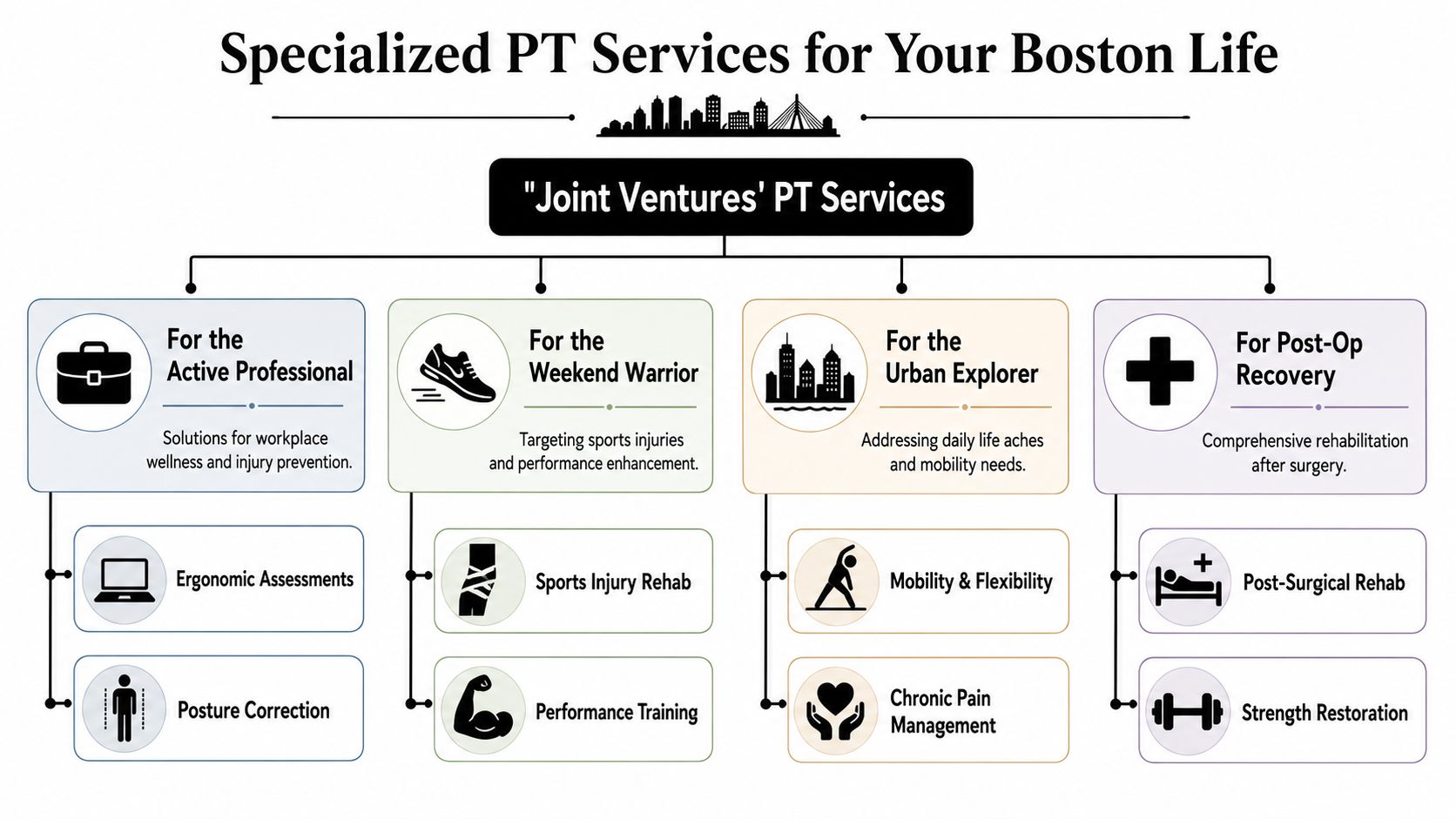
The strongest clinics in Back Bay don't treat every patient the same way. A runner training through winter mileage, a new parent managing pelvic floor symptoms, and a consultant with TMJ pain from stress and travel don't need the same plan. They need different tools, different pacing, and different goals.
For the Boston athlete
Back Bay attracts patients who don't just want pain relief. They want return to performance. That includes runners preparing for the Boston Marathon, gym athletes, recreational tennis players, college athletes, and golfers who notice mobility limits before they notice pain.
Services that matter most here often include:
- Running performance evaluations that look at movement patterns, loading tolerance, and how your body handles mileage.
- Sports rehab for common setbacks like knee pain, ankle issues, shoulder irritation, and return-to-sport progression.
- Titleist performance evaluations for golfers who want better movement quality and fewer swing-related aggravations.
- Concussion baseline screening when athletes want a clearer reference point before a season starts.
For patients dealing with stiffness, guarded movement, or soft tissue irritability, hands-on treatment can also help as part of a broader plan. If you want a deeper look at that approach, this guide to manual physical therapy is a useful starting point.
For the driven professional
Back Bay professionals often arrive with symptoms that build slowly. Neck tension. Mid-back stiffness. Headaches linked to posture or jaw clenching. Wrist and hand irritation from computer use. Hip tightness from too much sitting and not enough movement variety.
These patients usually do better when treatment is practical, not abstract.
A strong plan may include:
- TMJ treatment for jaw pain, clenching, and related neck symptoms.
- Workplace ergonomics for people whose setup is feeding the problem every day.
- Hand and upper extremity therapy when typing, mousing, lifting, or commuting starts affecting function.
- Trigger point dry needling when it's appropriate to reduce muscular guarding and support movement restoration.
Clinical reality: You can't out-exercise a workstation problem if you return to the same aggravating setup every day.
For specialized health needs
Some of the most meaningful work in a Back Bay clinic happens outside the usual sports-and-orthopedics conversation. Patients may be dealing with dizziness, postpartum recovery, chronic balance concerns, or persistent symptoms that need a more specific lens.
That often includes:
| Patient need | Service that may help | Practical goal |
|---|---|---|
| Postpartum or pelvic symptoms | Pelvic floor therapy | Restore comfort, confidence, and daily function |
| Dizziness or unsteadiness | Vestibular and balance therapy | Improve steadiness and reduce movement-related symptoms |
| Recovery with reduced weight-bearing tolerance | Aquatic therapy | Rebuild movement with less joint stress |
| Ongoing maintenance | Wellness or tune-up visits | Stay active and address small issues early |
For broader educational content on conditions, recovery principles, and movement-related questions, visit Highbar Health. That site is the right place for deeper explainers, while local clinic decisions should stay grounded in your schedule, your goals, and the demands of life in Boston.
The Joint Ventures Difference True 1-on-1 Care
Most patients don't realize how much clinic structure affects results until they've experienced both models. In one model, a therapist evaluates you, starts the session, and then the visit gets split across aides, overlapping patients, or semi-supervised exercise time. In the other, the licensed clinician stays with you from start to finish and adjusts the plan in real time.
That difference isn't cosmetic. It's clinical.
What true 1-on-1 care actually means
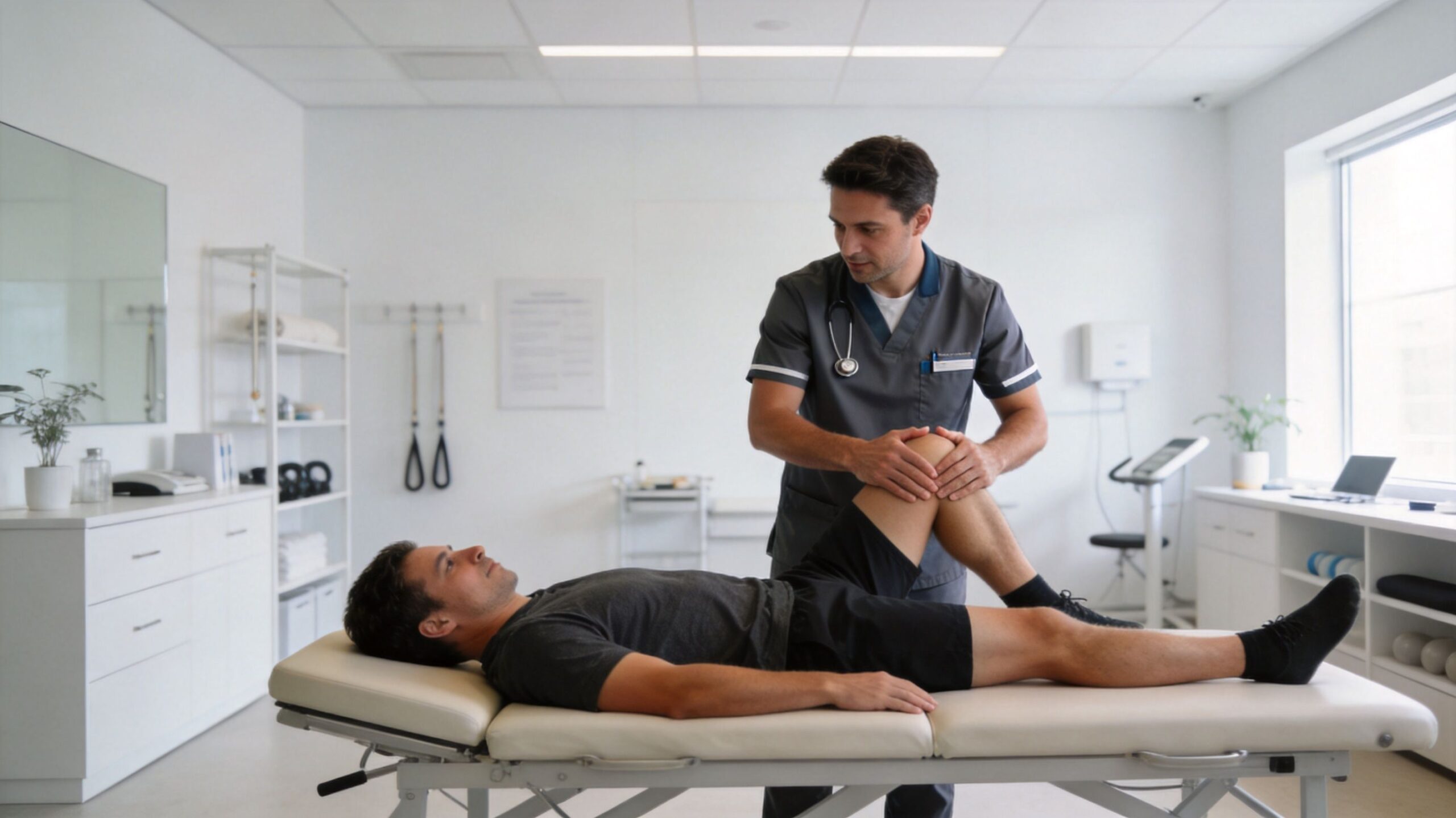
Joint Ventures Physical Therapy operates as the only practice in greater Boston delivering true 1-on-1 care exclusively, and the clinic's description of this model notes that continuous clinician-patient engagement can improve adherence by 30 to 40% while helping therapists identify issues earlier and reduce overall rehabilitation duration.
For a patient, that means your therapist can catch things that often get missed in a busier setup:
- Subtle compensation patterns when you're squatting, lunging, reaching, or running
- Symptom changes during a session instead of waiting until the next visit
- Technique breakdown before it becomes a setback
- Readiness for progression when your body is tolerating more than expected
What works and what usually doesn't
What works is concentrated attention. If a patient says, "My hip only hurts after the second mile," or "My jaw tightens more during stressful workweeks," those details matter. A one-on-one setting gives the therapist enough bandwidth to build around them.
What usually doesn't work is fragmented care. Patients often stall when sessions become generic, exercises don't evolve, or nobody is watching closely enough to see why the same area keeps flaring up.
If your therapist isn't seeing the full movement pattern, they're often treating the loudest symptom, not the main driver.
Why active Bostonians benefit from this model
Back Bay patients usually want efficiency as much as empathy. They don't want to spend extra weeks in care because the first few visits were too broad or too passive. They want a therapist who can move from assessment to targeted treatment to progression without losing continuity.
This is especially useful for patients returning to running, rehabbing after surgery, managing vestibular symptoms, or working through TMJ and pelvic floor concerns where small details change the plan quickly. In a city where time is limited and expectations are high, uninterrupted clinical attention is often the difference between "I'm attending PT" and "I'm getting better."
What to Expect at Your First Visit
The first appointment should answer two questions quickly. What's driving the problem, and what's the most sensible way to address it? If a first visit feels vague, patients usually leave uncertain about why they hurt and what happens next.
Before you arrive
Booking is usually straightforward by phone or online. Once you're scheduled, it's helpful to gather the basics ahead of time.
Bring or prepare:
- Your insurance information if you're planning to use benefits.
- Any referral or relevant paperwork if you were given one.
- Comfortable clothing that lets the involved area move easily.
- A short symptom history including when it started, what makes it worse, and what you're trying to get back to.
If you want a simple checklist before day one, this first appointment preparation guide covers the practical details.
During the evaluation
A strong initial evaluation isn't rushed. Your therapist should ask about symptom behavior, training or work demands, prior injuries, and your actual goals. "I want less pain" is part of the picture, but "I want to run without limping," "I want to carry my baby comfortably," or "I need to sit through a full workday" is more useful.
The physical portion typically includes movement testing, strength assessment, mobility checks, and task-specific observation. If you're a runner, that may mean looking at loading and control. If you're dealing with dizziness, the focus changes. If your issue is pelvic floor or TMJ related, the evaluation should reflect that specialization rather than forcing a standard orthopedic template.
Before you leave
By the end of the visit, you should have:
- A working explanation of what's likely contributing to the issue
- A plan of care matched to your goals and schedule
- A starting home program you can easily follow
- Clear expectations for what progress should look like
Practical rule: If you leave your first PT visit without a clear next step, ask more questions before the appointment ends.
Navigating Your Care Insurance Location and Hours
For many patients, the hardest part of starting PT isn't the injury. It's the logistics. Insurance questions, authorization requirements, commute timing, and scheduling can create enough friction that people delay care even when they know they need it.
That's not a small issue. A 2023 APTA survey found that 68% of patients delay care due to insurance confusion, and the Professional Physical Therapy Back Bay office page summarized that challenge while noting the value of upfront coverage verification and authorization support.

Why insurance help matters more than patients expect
A good front desk doesn't just hand you forms. They help remove uncertainty before uncertainty becomes a reason to postpone treatment. That includes verifying benefits, clarifying likely out-of-pocket responsibility, and helping manage authorizations when they apply.
For patients comparing clinics, this is worth paying attention to because many websites talk about services but say very little about how they help people access care. If you want to review the administrative side before booking, Joint Ventures' insurance resource page outlines the basics.
What local access should feel like
In Back Bay, location isn't just a convenience feature. It changes whether people keep their appointments consistently. A clinic near Copley Square, the Prudential area, or common Green Line routes fits more naturally into the workday and makes early morning or after-work visits easier to maintain.
Patients usually benefit most from care access that supports:
- Before-work appointments for professionals who don't want treatment disrupting the day
- After-work availability for commuters and students
- A predictable route from office, home, or transit
- Administrative follow-through so billing questions don't linger between visits
The concierge standard
Concierge-level support in PT doesn't mean luxury for its own sake. It means fewer dropped balls. Your visit starts on time. Your benefits are reviewed early. Questions get answered clearly. Authorizations don't become your second job.
For active people in Boston, that's part of good clinical care, not separate from it. When the logistics are smooth, patients stay consistent. When patients stay consistent, treatment has a much better chance of doing what it should do.
Frequently Asked Questions about Back Bay PT
Do I need a doctor's referral to start physical therapy?
Sometimes yes, sometimes no. It depends on your insurance plan and your situation. The easiest move is to ask when you book so the team can tell you what applies before your first visit.
How long is each appointment?
Visit length depends on the clinic model and the reason you're being seen. What matters more is how that time is used. Patients usually do best when the appointment includes direct therapist attention, targeted treatment, and clear progression instead of long stretches of loosely supervised exercise.
What makes trigger point dry needling different from general exercise?
Dry needling is a specific tool, not a full plan by itself. Clinicians use it to address muscular irritability and help restore more comfortable movement when it's appropriate. It tends to work best when paired with exercise, movement retraining, and a diagnosis that corresponds to the problem.
Is pelvic floor, TMJ, or vestibular care something I need a specialist for?
Usually, yes. These areas respond best when the therapist understands that body region and the way those symptoms affect daily life. A generic orthopedic approach often misses key details in jaw issues, dizziness, postpartum recovery, and balance complaints.
What's the easiest way to book physical therapy back bay boston?
Book online or call the clinic directly. If you're choosing among locations, pick the one you can attend consistently. In Greater Boston, that usually means selecting the site closest to your home, office, or daily transit route so treatment stays realistic once your schedule gets busy.
If you're ready to start, book an appointment with Joint Ventures Physical Therapy. If you want local, one-on-one care in Back Bay that fits an active Boston schedule and includes support with the practical side of treatment, taking that first step now is usually better than waiting for the problem to become harder to fix.